

 공유하기
공유하기 공유하기
공유하기
 상세 정보
상세 정보 가이드 보기

 다운로드
다운로드
 유사 작품 더 보기
 슬라이드 쇼 보기
 질의응답
질의응답 통계 정보
통계 정보Bronco Buster


 더 보기
더 보기
지클레 / 아트 프린트
빠른 제작과 다양한 마감 옵션을 제공하는 박물관 수준의 지클레이 및 캔버스 프린트. ( 수작업 채색 복제본 주문하기 디지털 이미지로 전환)




































작품의 원본 비율을 그대로 유지하는 프리셋 사이즈 중에서 선택해 보세요.

액자나 벽면 크기에 맞춰 필요한 가로와 세로 길이를 입력해 주세요. 프린트는 원본 이미지보다 크게 제작할 수 없으며 오직 자르는 것만 가능하므로, 비율이 다른 사이즈를 선택할 경우 이미지의 일부가 잘려 나갈 수 있습니다. 인쇄 작업에 들어가기 전, 최종 확인을 위해 디지털 목업을 보내드립니다. 이 페이지에 표시된 이미지는 실제 잘리는 영역을 나타내지 않으며, 오직 목업을 통해서만 정확한 확인이 가능합니다.


 유리 옵션은 110cm 미만 크기에서만 선택 가능합니다.

Bronco Buster
지클레 / 아트 프린트
복제본 크기
-


최종 결제 금액
₩ 84602
A Chronicle of the Wild West: Frederic Remington’s “The Bronco Buster”
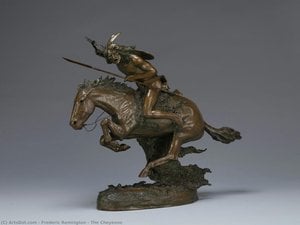
Frederic Remington's "The Bronco Buster," sculpted in 1895 and cast in bronze, isn’t merely a depiction of a cowboy wrestling with a bucking bronco; it’s a potent distillation of the American West itself – a landscape forged by rugged individualism, relentless challenge, and an enduring spirit of frontier life. Remington, born in Canton, New York, initially distanced from the dusty trails he so vividly captured, found his artistic voice through a deep fascination with military themes and a keen eye for storytelling. His early exposure to the narratives surrounding the Civil War and subsequent westward expansion ignited a passion that would define his career, transforming him into arguably the most recognizable artist of this pivotal era.
The sculpture’s genesis lies in Remington's own sketches, notably “Pitching Broncho,” published in Harper’s Weekly in 1892. This drawing served as the foundational inspiration for "The Bronco Buster," a piece that transcends simple illustration and embodies the raw energy of the Western experience. Remington masterfully captured not just the physical struggle but also the psychological tension between man and beast, conveying a sense of both danger and controlled dominance. The dynamic pose—the cowboy’s outstretched arm grappling with the horse's mane, the stirrup swinging free—immediately draws the viewer into the heart of the action, creating an immersive experience that speaks to the fundamental human desire for mastery over nature.
A Masterclass in Bronze Casting and Realistic Detail
Technically, “The Bronco Buster” represents a significant leap forward for Remington. Moving beyond the limitations of flat paper, he embraced the three-dimensional possibilities of bronze casting – a technique that allowed him to imbue his subject with unprecedented realism and dynamism. The sculpture’s creation involved both sand-casting and later, lost-wax methods, resulting in a remarkably detailed surface texture. The rough, uneven quality of the bronze reflects the inherent materiality of the medium, while subtle variations in tone create depth and highlight the musculature of both man and horse. Close examination reveals sharp edges where details like clothing folds or the horse’s mane are sculpted, further enhancing the sense of tactile realism.
The choice of bronze itself is crucial to the sculpture's impact. Bronze possesses a remarkable durability, ensuring that “The Bronco Buster” has endured as a powerful symbol of the American West for over a century. Furthermore, the patina – the natural oxidation process that develops on copper and bronze surfaces – adds layers of history and character, subtly altering the color and texture of the metal over time. This aging process not only enhances the sculpture’s aesthetic appeal but also serves as a visual reminder of its enduring legacy.
Symbolism and the Spirit of the Frontier
Beyond its technical brilliance, “The Bronco Buster” is rich in symbolic meaning. It embodies themes of courage, skill, and the eternal struggle between man and nature – core values that defined the American frontier experience. The cowboy’s determined stance, his outstretched hand grasping for control, speaks to a relentless pursuit of mastery over an untamed environment. The rearing horse represents the unpredictable forces of nature, demanding respect and unwavering resolve. The sculpture isn't simply about conquering a wild animal; it’s about asserting one’s place within a vast and challenging landscape.
Furthermore, “The Bronco Buster” reflects Remington’s broader artistic vision – a desire to document and celebrate the vanishing West. As the frontier gradually succumbed to settlement and industrialization, Remington sought to preserve its spirit through his art, capturing the essence of a bygone era before it was lost forever. The sculpture stands as a poignant reminder of a time when individuals faced immense challenges with grit, determination, and an unwavering belief in their own capabilities.
A Legacy Enduring Through Reproduction
Today, “The Bronco Buster” continues to captivate audiences worldwide, thanks in part to the availability of high-quality reproductions. These meticulously crafted prints allow art lovers to experience the sculpture’s power and beauty without the expense or logistical challenges of owning the original. Whether displayed in a private collection or incorporated into interior design schemes, these reproductions serve as a lasting tribute to Frederic Remington's artistic genius and his enduring portrayal of the American West.
질의응답
프레데릭 레밍턴의 "Bronco Buster"의 색감을 고려했을 때, 어떤 공간에 배치하는 것이 가장 좋을까요?
프레데릭 레밍턴의 "Bronco Buster"의 Neutrals 색조는 추천 공간인 Living Room(으)로 완벽하게 어우러집니다.
"Bronco Buster"이(가) 프레데릭 레밍턴의 가장 인기 있는 작품 중 하나인가요?
프레데릭 레밍턴의 "Bronco Buster"의 인기도는 Iconic 수준입니다. 이 분류는 해당 작품이 얼마나 널리 알려져 있는지를 반영합니다.
프레데릭 레밍턴의 "Bronco Buster"의 엑스레이(X-ray) 이미지를 확인할 수 있을까요?
"Bronco Buster"은 작품의 X선 분석 페이지에서 층별로 자세히 살펴볼 수 있습니다. 이 뷰어는 보존 과학자의 라이트 벤치(light bench)에서 영감을 얻었으며, 이미지의 11가지 광학적 판독값을 제공합니다.


작가 정보
서부의 연대기를 기록한 화가: 프레데릭 레밍턴의 삶과 예술
프레데릭 새크라이더 레밍턴은 1861년 10월 4일 뉴욕주 칸톤에서 태어났습니다. 그는 자신이 생생하게 묘사했던 야생 서부의 산물이라기보다는, 헌신적인 연구를 통해 예술적 정체성을 형성한 동부인이었습니다. 그의 가문은 먼 친척들이 유명한 레밍턴 무기 왕조와 연결되어 있었고, 아버지는 남북 전쟁 당시 대령이자 신문 편집장이었으며, 프랑스 바스크 혈통과 굳건한 공화당 뉴잉글랜드 뿌리를 가지고 있었습니다. 그러나 군사적 주제에 대한 초기 노출과 함께 불안정한 정신과 스토리텔링에 대한 날카로운 안목이 그를 미국 서부를 가장 잘 대표하는 예술가 중 한 명이 되는 길로 이끌었습니다. 그의 어린 시절은 일리노이주 블루밍턴으로 옮겨갔다가 다시 칸톤, 최종적으로 뉴욕주 오그덴스버그로 이어졌지만, 그의 상상력은 프론티어 생활에 대한 이야기로 가득 차 있었습니다. 처음에는 버몬트 에피스코팔 연구소에서 군사 교육을 받도록 권장되었지만, 레밍턴의 진정한 소명은 명령을 따르는 것이 아니라 주변 세계를 관찰하고 예술을 통해 해석하는 데 있었습니다. 예일 대학교에서의 짧은 기간 동안 축구와 스케치가 정규 학업보다 훨씬 더 매력적이라는 사실이 확인되었습니다.일러스트레이터에서 화가로: 예술적 비전의 형성
레밍턴의 예술 여정은 웅장한 캔버스가 아닌 잉크와 종이로 시작했습니다. *예일 코란트*에 실린 그의 첫 번째 출판물은 행동과 내러티브를 포착하는 데 대한 초기 재능을 보여주었습니다. 1881년 몬태나로의 중요한 여행은 평생 동안 서부에 대한 집착을 불러일으켰습니다. 이것은 단순한 관광객의 시선이 아니었습니다. 레밍턴은 카우보이, 원주민 아메리카인, 그리고 그 자체로 풍경에 몰입하려고 노력했습니다. 그는 처음에는 목장 운영과 광업 사업을 시도했지만 성공하지 못했고, 예술에 전념할 수 있게 되었습니다. 동부로 돌아온 그는 *하퍼스 위클리*와 *콜리어스*와 같은 잡지의 일러스트레이터로서 빠르게 자리를 잡았고, 프론티어의 이야기를 갈망하는 전국적인 청중을 사로잡는 역동적인 서부 장면을 묘사했습니다. 이러한 삽화는 단순한 보고가 아니었습니다. 그것들은 드라마, 에너지, 그리고 대중의 상상력에 깊이 공감을 불러일으킨 서부에 대한 로맨틱한 비전으로 가득 차 있었습니다. 이 작업을 통해 레밍턴은 구성 기술을 연마하고, 움직임을 포착하고, 감정을 전달하는 능력을 키웠습니다—나중에 그의 그림을 정의할 자질입니다. 그는 예일 대학교에서 받은 몇 가지 드로잉 수업과 아트 스튜던트 리그에서의 짧은 기간 외에는 정규적인 훈련을 거의 받지 못했으며, 대신 에너지 넘치는 브러시워크, 대담한 색상, 그리고 극적인 감각이 혼합된 사실주의를 특징으로 하는 독특한 스타일을 개발했습니다.사라져가는 세계를 포착하다: 주제와 스타일
레밍턴의 예술은 미국 역사의 특정 순간—구 서부 시대의 황혼과 불가피하게 연결되어 있습니다. 그의 캔버스는 거친 카우보이가 가축을 몰고, 고립된 원주민 아메리카인이 강제 이주에 직면하고, 영웅적인 전투와 비극적인 갈등에 참여하는 미국 기병이 등장합니다. 그는 프론티어 생활의 가혹한 현실을 묘사하는 것을 피하지 않았지만, 그의 작품은 종종 용기, 모험, 그리고 문화 충돌을 강조하면서 로맨틱한 묘향을 띠는 경향이 있습니다. 그의 그림은 단순한 역사적 문서가 아닙니다. 그것들은 영웅주의, 상실, 그리고 불가피한 진보라는 주제를 탐구하는 감동적인 내러티브입니다. 레밍턴의 스타일은 시간이 지남에 따라 더욱 엄격하고 학문적인 렌더링에서 더 느슨하고 표현력이 풍부한 브러시워크로 발전했습니다. 그는 평원을 질주하는 말, 소를 몰아가는 카우보이, 전투에 돌진하는 병사들의 움직임을 포착하는 데 능숙했습니다. 그는 종종 빠른 스케치와 사진을 참고 자료로 사용했지만, 그의 예술은 항상 그의 독특한 비전과 감정적 강렬함으로 가득 차 있었습니다. *My Ranch*, *Waiting in the Moonlight*, *Ridden Down* (1905), 그리고 *The Long-Horn Cattle Sign* (1908)와 같은 주목할 만한 작품은 서부의 웅장함과 취약성을 모두 포착하는 그의 능력을 보여줍니다.유산과 지속적인 영향
프레데릭 레밍턴은 1909년 48세의 나이로 예기치 않게 세상을 떠났지만, 오늘날에도 청중을 사로잡는 방대한 작품을 남겼습니다. 서부 예술에 대한 그의 영향은 부인할 수 없습니다. 그는 단순히 서부를 묘사한 것이 아니라 여러 세대의 미국인을 위해 그것을 *정의*하는 데 도움을 주었습니다. 그는 카우보이, 인디언, 기병의 시각적 언어를 확립하여 대중 문화에 깊이 뿌리내린 상징이 되었습니다.- 그의 작품은 N.C. 와이어스와 제인 그레이를 포함한 수많은 다른 예술가들에게 영감을 주었습니다.
- 뉴욕주 오그덴스버그에 있는 프레데릭 레밍턴 미술관은 그의 지속적인 유산을 증명하며, 그림, 조각, 보존 자료의 광범위한 컬렉션을 보존하고 있습니다.
- 그의 예술은 메트로폴리탄 미술관과 아몬 카터 미국 미술관을 포함하여 전국 주요 박물관에서 계속 전시되고 있습니다.

프레데릭 레밍턴
1861 - 1909 , 미국
작가 정보 요약
- Artistic Movement Or Style: 서부 미국 미술
- Artists Or Movements Influenced By This Artist:
- N.C. 와이쓰
- 제인 그레이
- Date Of Birth: 1861년 10월 4일
- Date Of Death: 1909년 12월 26일
- Full Name: 프레데릭 새크라이더 레밍턴
- Nationality: 미국인
- Notable Artworks:
- My Ranch
- Waiting in the Moonlight
- Ridden Down (1905)
- The Long-Horn Cattle Sign
- Place Of Birth (City And Country): 미국 뉴욕주 칸톤
관련 콘텐츠

Bronze Age to Modern Masters: 10 Sculptures That Redefined Art | ArtsDot
Journey through art history with 10 legendary bronze sculptures – from Michelangelo's David to Rodin’s Thinker. Explore the stories, techniques & timeless beauty of these masterpieces. Find museum-quality reproductions & elevate your home decor on ArtsDot.com.

The Enduring Legacy of Bronze: A Historical & Artistic Exploration for the Collector
Explore the rich history & enduring appeal of bronze sculpture with expert insights for collectors at ArtsDot. Learn about casting techniques, iconic artists, collecting tips & contemporary interpretations.

The Enduring Legacy of Bronze: History, Technique & Artistic Expression for the Collector
Explore the rich history & enduring appeal of bronze sculpture with expert insights for collectors at ArtsDot. Learn about casting techniques, iconic artists, and collecting tips.

Bronze Sculptures That Defined Art History | ArtsDot
Journey through art history with our Top 10 bronze sculptures! Explore masterpieces by Rodin, Michelangelo & more. Discover stories behind iconic statues and find museum-quality reproductions for your home decor at ArtsDot.com.

The Enduring Legacy of Bronze Sculpture: A Collector's Guide to Form & Cultural Significance
Explore the rich history & enduring appeal of bronze sculpture with expert insights for collectors at ArtsDot. Learn about casting techniques, iconic artists, and collecting tips to build a discerning art collection.