

 미리보기
미리보기
 공유하기
공유하기 공유하기
공유하기
 상세 정보
상세 정보 가이드 보기

 다운로드
다운로드
 유사 작품 더 보기
 X-레이
X-레이 슬라이드 쇼 보기
 질의응답
질의응답 통계 정보
통계 정보Morte d'Arthur


 더 보기
더 보기
지클레 / 아트 프린트
빠른 제작과 다양한 마감 옵션을 제공하는 박물관 수준의 지클레이 및 캔버스 프린트. ( 수작업 채색 복제본 주문하기 디지털 이미지로 전환)




































작품의 원본 비율을 그대로 유지하는 프리셋 사이즈 중에서 선택해 보세요.

액자나 벽면 크기에 맞춰 필요한 가로와 세로 길이를 입력해 주세요. 프린트는 원본 이미지보다 크게 제작할 수 없으며 오직 자르는 것만 가능하므로, 비율이 다른 사이즈를 선택할 경우 이미지의 일부가 잘려 나갈 수 있습니다. 인쇄 작업에 들어가기 전, 최종 확인을 위해 디지털 목업을 보내드립니다. 이 페이지에 표시된 이미지는 실제 잘리는 영역을 나타내지 않으며, 오직 목업을 통해서만 정확한 확인이 가능합니다.


 유리 옵션은 110cm 미만 크기에서만 선택 가능합니다.

Morte d'Arthur
지클레 / 아트 프린트
복제본 크기
-


최종 결제 금액
₩ 84590
유사한 작품들


작가 정보
A Life Dedicated to the Pre-Raphaelites: Frederic George Stephens
Frederic George Stephens, born in Walworth, London, in 1827, occupies a unique and often overlooked position within the history of British art. While not celebrated as a prolific painter himself, his significance lies in his unwavering dedication to the ideals of the Pre-Raphaelite Brotherhood – a movement he helped found and tirelessly championed throughout his life. Stephens’s story is one of intellectual passion overcoming physical limitation; an accident in 1837 left him disabled, leading to a private education that fostered a deep love for literature and art history, but curtailed any ambitions for a traditionally rigorous artistic training.
His path converged with those of John Everett Millais and William Holman Hunt at the Royal Academy Schools in 1844. It was here, amidst the academic constraints of the time, that the seeds of rebellion were sown. Stephens’s keen intellect and articulate nature proved invaluable as the trio began to formulate their rejection of conventional artistic practices, seeking instead inspiration from the art predating Raphael – a period they believed embodied greater sincerity and naturalism. In 1848, he formally joined the Brotherhood, becoming one of its seven founding members. He wasn’t merely a participant; Stephens was often the intellectual engine, articulating their shared vision in writings that would later shape public understanding of their aims.
From Painter to Prophet: The Evolution of an Art Critic
Stephens actively contributed paintings to the early Pre-Raphaelite output. Works like *Morte d’Arthur* (1849), *The Proposal (The Marquis and Griselda)* (1850–51) and *Mother and Child* (circa 1854–6) reveal a striving for detail and narrative clarity characteristic of the Brotherhood. However, acutely aware of his own limitations as a painter – he famously destroyed many of his works in later life – Stephens made a pivotal decision to dedicate himself to art criticism. This wasn’t an abandonment of artistic principles, but rather a shift in medium; he would become the voice of Pre-Raphaelitism, defending its aesthetic and philosophical underpinnings.
His disappointment with his own talent was profound, yet it fueled a remarkable career as a writer. He became art critic for *The Athenaeum* in 1860, a position he held for over four decades until 1901. Through meticulously researched articles and insightful commentary, Stephens introduced the public to the Brotherhood’s work, contextualizing their paintings within broader artistic traditions – particularly Flemish art history – and challenging prevailing academic tastes. He didn't simply praise; he engaged in a nuanced dialogue with contemporary critics, defending the Pre-Raphaelites against accusations of ugliness or lack of originality.
The Communicator of Ideals: Stephens’s Writings and Influence
Stephens’s influence extended beyond *The Athenaeum*. He contributed to numerous other periodicals, including *The Germ* – the short-lived but influential Pre-Raphaelite journal – and publications in both England and America. His writings were characterized by a deep understanding of art history, a commitment to intellectual rigor, and an unwavering belief in the power of truthfulness in art. He wasn’t merely describing paintings; he was articulating a worldview, advocating for a return to naturalism, sincerity, and moral purpose.
He also served as a vital link between the Pre-Raphaelites and their patrons, fostering relationships with collectors who supported their work. His book *William Holman Hunt and His Work* (1860), written to accompany an exhibition of Hunt’s *The Finding of the Saviour in the Temple*, was instrumental in establishing Hunt's reputation. Stephens also undertook extensive cataloging projects, including a four-volume catalogue of prints and drawings in the British Museum (1870–83). These endeavors demonstrate his commitment to making art accessible and understandable to a wider audience.
A Lasting Legacy: Reassessing Stephens’s Historical Significance
While often overshadowed by the more celebrated painters of the Brotherhood, Frederic George Stephens played an indispensable role in its success. He was the intellectual architect, the tireless advocate, and the eloquent defender of Pre-Raphaelite ideals. His writings not only shaped public perception of the movement but also provided a crucial historical context for understanding its artistic innovations.
In recent years, there has been a growing recognition of Stephens’s importance as an art historian and critic. Scholars are reassessing his paintings, recognizing their sincerity and narrative power, and acknowledging his vital contribution to Victorian art discourse. He stands as a testament to the power of intellectual passion, demonstrating that one does not need to be a master painter to profoundly impact the course of art history. His legacy lies not in the works he created, but in the ideals he championed and the words he used to illuminate them.

Frederic George Stephens
1827 - 1907 , United Kingdom
작가 정보 요약
- Full Name: Frederic George Stephens
- Nationality: British
- Date Of Birth: 1827
- Date Of Death: 1907
- Place Of Birth: Walworth, London
- Notable Artworks:
- Morte d'Arthur
- Mother and Child
- The Proposal
- Artistic Movement Or Style: Pre-Raphaelite Brotherhood
관련 콘텐츠

Arthur Hughes: Pre-Raphaelite Visions of Beauty & Melancholy
Explore the captivating world of Arthur Hughes (1832-1915), a leading Pre-Raphaelite painter. Discover his dreamy landscapes, poetic narratives & iconic Victorian artworks. Learn about his life, style & collecting today.

The Refined Aesthetic of Victorian Illustration: A Study in Narrative & Technique
Explore the captivating world of Victorian illustration! Discover Pre-Raphaelite influences, key artists like Rossetti & Stephens, and the era's rich narrative detail. A deep dive for art enthusiasts.

Frederick Goodall (1822–1904): A Victorian Narrative of Rural Life and Artistic Tradition
Explore the captivating world of Frederick Goodall (1822–1904), a celebrated Victorian artist renowned for his detailed genre paintings and evocative Egyptian scenes. Discover his life, legacy & find high-quality reproductions at ArtsDot.
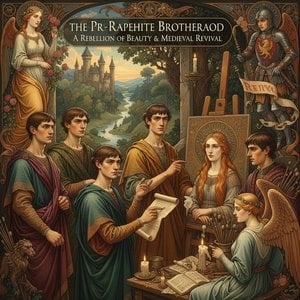
The Pre-Raphaelite Brotherhood: A Rebellion of Beauty & Medieval Revival
Explore the captivating world of the Pre-Raphaelite Brotherhood! Discover their rebellion against academic art, iconic masterpieces, and lasting influence on Victorian aesthetics. Learn about Rossetti, Burne-Jones & more.

19th Century Masterpieces: 10 Paintings That Defined an Era | ArtsDot
Journey through 19th century art with ArtsDot! Explore 10 iconic paintings – from Monet & Renoir to Courbet – and discover the stories behind Romanticism, Realism & Impressionism. Find museum-quality reproductions for your home decor. Explore the full collection online!