

 미리보기
미리보기
 공유하기
공유하기 공유하기
공유하기
 상세 정보
상세 정보 가이드 보기

 다운로드
다운로드
 유사 작품 더 보기
 X-레이
X-레이 슬라이드 쇼 보기
 질의응답
질의응답 통계 정보
통계 정보The Bunch of turnips

- 92.0 x 73.0 cm


 더 보기
더 보기
지클레 / 아트 프린트
빠른 제작과 다양한 마감 옵션을 제공하는 박물관 수준의 지클레이 및 캔버스 프린트. ( 수작업 채색 복제본 주문하기 디지털 이미지로 전환)




P118B ₩10

P118H ₩10

P118W ₩10

P438Z ₩10

P508JH ₩12

P508YH ₩12

P805H ₩10

P805Z ₩10

P919BZ ₩10

P919G ₩10

P919XJ ₩10

P959ZH ₩10

P968JZ ₩12

W106C ₩8

W218G ₩10

W218JH ₩8

W218Y ₩10

W307PJ ₩10

W316G ₩10

W316PJ ₩8

W316Y ₩10

W398PJ ₩8

W4111J ₩10

W500HY ₩15

W500JH ₩15

W692G ₩12

W849H ₩8

W940BG ₩15

W953PJ ₩8




작품의 원본 비율을 그대로 유지하는 프리셋 사이즈 중에서 선택해 보세요.

액자나 벽면 크기에 맞춰 필요한 가로와 세로 길이를 입력해 주세요. 프린트는 원본 이미지보다 크게 제작할 수 없으며 오직 자르는 것만 가능하므로, 비율이 다른 사이즈를 선택할 경우 이미지의 일부가 잘려 나갈 수 있습니다. 인쇄 작업에 들어가기 전, 최종 확인을 위해 디지털 목업을 보내드립니다. 이 페이지에 표시된 이미지는 실제 잘리는 영역을 나타내지 않으며, 오직 목업을 통해서만 정확한 확인이 가능합니다.


 유리 옵션은 110cm 미만 크기에서만 선택 가능합니다.

The Bunch of turnips
지클레 / 아트 프린트
복제본 크기
-


최종 결제 금액
₩ 84567
Fernand Léger’s Singular Vision: Capturing the Rhythm of Modernity Through Unexpected Imagery
Fernand Léger (1881 – 1955) stands as an extraordinary figure in the annals of modern art, a painter who defied convention and forged his own path toward artistic innovation. Born Joseph Fernand Henri Léger in Argentan, Normandy, he began his artistic journey amidst the pastoral landscapes of rural France—a formative experience that would profoundly influence his later explorations into abstraction and form. Unlike many artists of his era who retreated into purely intellectual pursuits, Léger relentlessly pursued a visual language that embraced the dynamism and complexity of the burgeoning machine age, establishing himself as a pioneer of Cubism and subsequently developing his distinctive Tubism style.- Cubist Influences: Léger’s early work demonstrates considerable engagement with Cubism, particularly Picasso's explorations of fractured perspectives and geometric simplification. However, Léger swiftly moved beyond mere imitation, distilling the essence of Cubism into a radically new aesthetic framework.
- Tubism – A Revolutionary Approach: Léger’s breakthrough came with Tubism (short for “tubisme”), conceived in 1912. This groundbreaking technique involved depicting objects as interconnected cylinders and tubes—a deliberate departure from traditional representation that mirrored the structural logic of industrial machinery.
The Bunch of Turnips: Symbolism Rooted in Everyday Life
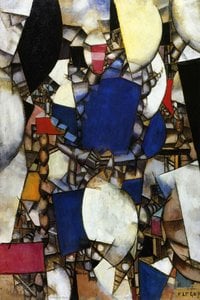
“The Bunch of Turnips,” completed in 1951, exemplifies Léger’s unwavering commitment to portraying familiar subjects with startling originality. This vibrant canvas depicts a simple arrangement of turnips—a humble vegetable—presented against a bold geometric backdrop dominated by orange and blue hues. While seemingly unassuming at first glance, the painting is laden with symbolic significance. Léger deliberately chose this commonplace item as his subject matter not merely for its visual appeal but to convey a deeper message about humanity’s relationship with nature and technology. Symbolism: The turnips themselves represent fertility and sustenance—elements crucial to rural life and Léger's own upbringing. Simultaneously, the geometric shapes surrounding them symbolize the pervasive influence of industrial forms on human perception and experience. Léger skillfully juxtaposes these contrasting elements, prompting viewers to contemplate the interplay between tradition and progress.Technique and Aesthetic Considerations
Léger’s Tubist technique—characterized by its flattened planes, repetitive patterns, and bold color palettes—was meticulously executed with meticulous attention to detail. He employed a thick impasto brushstroke, layering paint onto the canvas to create tactile surfaces that captured the energy of movement and vibration. Léger's masterful manipulation of color contributes significantly to the painting’s emotional impact, conveying both optimism and unease. The vibrant orange hues evoke warmth and vitality, while the cool blues instill a sense of serenity—creating a harmonious balance that underscores Léger’s artistic vision.Legacy and Influence: A Precursor to Pop Art
“The Bunch of Turnips” stands as a testament to Léger's enduring legacy in art history. His pioneering exploration of abstraction and his embrace of industrial imagery anticipated the stylistic developments of Pop Art—a movement that would champion commonplace objects and mass media culture as sources of artistic inspiration. Léger’s unwavering conviction in conveying complex ideas through simplified forms continues to resonate with artists and audiences alike, cementing his place as one of the most influential figures in shaping the trajectory of 20th-century art.질의응답
"The Bunch of turnips"을(를) 완성한 예술가와 화풍은 무엇인가요?
"The Bunch of turnips"은(는) 페르난 레제가 Cubism 양식으로 제작한 작품입니다. 작가와 미술 사조를 통해 해당 작품의 예술적 전통을 확인할 수 있습니다.
페르난 레제의 "The Bunch of turnips"이(가) 공간의 분위기를 어떻게 바꿔주나요?
페르난 레제의 "The Bunch of turnips"은(는) Modern 분위기를 자아내며, Living Room에 추천하는 작품입니다. 무드란 작품이 주변 공간에 선사하는 정취를 의미합니다.
"The Bunch of turnips"의 Cubism 양식에는 어떤 정서적 어조가 담겨 있나요?
"The Bunch of turnips"의 Reflective한 정서는 Cubism 양식과 조화를 이룹니다.



작가 정보
르네상스에서 기계의 시대로: 페르낭 레제의 삶과 예술
페르낭 레제는 1881년 노르망디의 아쟁탕에서 태어났으며, 그의 이름은 20세기 미술사의 중요한 전환점을 상징합니다. 농부의 아들로 태어나 건축을 공부했지만, 결국 회화에 전념하며 현대 미술의 새로운 지평을 열었습니다. 레제의 삶은 자연과 산업, 유기체와 기계 사이의 끊임없는 긴장 속에서 펼쳐졌으며, 그의 예술은 이러한 긴장을 시각적으로 표현하고 조화시키려는 노력의 결과였습니다. 초기에는 전통적인 회화 교육을 받았지만, 폴 세잔의 작품을 접한 이후 그의 예술적 여정은 완전히 새로운 방향으로 나아갔습니다. 세잔의 형태 분석과 구조에 대한 탐구는 레제에게 기존의 재현 방식에서 벗어나 자신만의 독특한 시각 언어를 구축하도록 영감을 주었습니다.입방주의를 넘어선 ‘튜브즘’의 탄생
레제는 입방주의 운동에 참여했지만, 피카소나 브라크의 스타일을 단순히 모방하는 데 그치지 않았습니다. 그는 자신만의 독특한 표현 방식을 발전시켜 “튜브즘(Tubism)”이라는 새로운 용어를 낳았습니다. 튜브즘은 원통형 형태, 평면적인 비행기, 대담한 색상 대비를 특징으로 하며, 기계의 미학을 예견하는 듯한 강렬함을 지닙니다. 레제의 작품 속에서 우리는 단순화된 인물과 기하학적 형태들이 조화를 이루며 현대 사회의 역동성을 표현하고 있습니다. 1909년 몽파르나스로 이주하여 알렉산드르 아르치펜코, 자크 리피츠, 샤임 수틴 등 당대 최고의 예술가들과 교류하며 그의 예술적 실험은 더욱 가속화되었습니다. 특히 ‘황금 비율(Section d’Or)’ 그룹에 참여하면서 수학적 원리를 활용한 작품들을 선보이며 입방주의의 새로운 가능성을 탐구했습니다.전쟁과 기계 문명, 그리고 새로운 미학
제1차 세계 대전은 레제의 삶과 예술에 깊은 영향을 미쳤습니다. 전장에서 경험한 참혹함은 그에게 전쟁이라는 현실을 직시하게 했으며, 동시에 기계 문명의 힘과 효율성에 대한 그의 관심을 더욱 증폭시켰습니다. 군 복무 중 스케치한 작품들은 파괴의 도구인 군사 기술을 예술적 대상으로 승화시키는 듯한 인상을 줍니다. 전후 시대에 레제는 산업 사회의 역동성을 반영하는 작품들을 제작하며, 기계적인 요소와 유기적인 형태를 결합하여 독특한 시각적 조화를 이루어냈습니다. *살롱에서 만난 여인들*과 같은 작품들은 단순화된 인물들과 간결한 배경이 어우러져 현대 도시의 활력을 생생하게 전달합니다.팝 아트의 선구자, 그리고 유산
레제의 예술은 2차 세계 대전 이후 더욱 추상적인 경향을 보이며 색채와 형태의 투명성을 강조했습니다. 그의 작품들은 기계 문명의 아름다움을 찬양하는 동시에 인간 존재의 의미를 탐구하는 듯한 깊이를 지닙니다. 레제는 회화뿐만 아니라 조각, 영화 등 다양한 매체를 통해 자신의 예술적 비전을 확장했으며, 이는 후대 예술가들에게 큰 영향을 미쳤습니다. 특히 그의 작품은 팝 아트 운동의 등장에 중요한 토대를 마련했습니다. 로이 리히텐슈타인이나 앤디 워홀과 같은 예술가들은 레제의 대담한 형태 단순화와 산업 이미지 활용 방식에서 영감을 얻어 자신들의 독창적인 스타일을 구축했습니다. 오늘날 페르낭 레제의 작품은 전 세계 주요 미술관에 소장되어 있으며, 그의 유산은 현대 미술의 중요한 한 페이지를 장식하고 있습니다. 그는 기계 문명의 시대를 예술적으로 해석하고 표현한 선구자로서, 끊임없이 변화하는 시대 속에서 인간과 기술의 관계를 탐구하는 예술가들의 영원한 스승으로 기억될 것입니다. 그의 작품은 단순한 그림이 아닌, 현대 사회에 대한 깊은 성찰이자 미래를 향한 긍정적인 시각을 담고 있습니다.
페르난 레제
1881 - 1955 , 프랑스
작가 정보 요약
- 국적: 프랑스
- 사망일: 1955년 8월 17일
- 영향을 받은 예술 사조: ['팝 아트']
- 영향을 준 예술가: ['폴 세잔']
- 예술 사조: 입체주의, 튜브즘
- 전체 이름: 페르난 레제
- 주요 작품:
- 시티드 우먼
- 머신 엘리먼트
- 그레이트 퍼레이드
- 더 시티
- 출생일: 1881년 2월 4일
- 출생지: 아쟁탕, 프랑스
관련 콘텐츠

기하학적 추상 미술을 정의한 명작 10가지 | ArtsDot.com
몬드리안, 말레비치 등 거장들의 기하학적 추상 미술 명작 10선을 만나보세요. 각 작품의 예술사적 의미와 색채, 구성을 탐구하고 ArtsDot.com에서 고품질 아트 프린트를 소장하세요. 지금 바로 온라인 컬렉션을 확인하세요!

Beyond Form: Exploring Geometric Abstraction's Enduring Legacy in Art History
Explore the captivating world of geometric abstraction! Discover its origins, key artists like Kandinsky & Mondrian, and why this movement remains highly valued by art collectors today. Expert insights at ArtsDot.

Beyond Form & Color: Geometric Abstraction's Enduring Legacy in Art History
Explore the captivating world of geometric abstraction! Discover its origins, key artists like Malevich & Mondrian, and why this movement remains highly valued by art collectors today. Expert insights at ArtsDot.

페르낭 레제 최고 걸작 25선: 현대 미술의 거장을 만나다 | ArtsDot
페르낭 레제의 최고 걸작 25선을 만나보세요. 큐비즘, 추상 미술의 거장이 그린 명작들의 탄생 비화와 예술적 의미를 탐구합니다. ArtsDot에서 고품질 아트 프린트와 인테리어 액자로 공간에 예술을 더하세요. 지금 바로 컬렉션을 확인하세요!

Beyond Form & Color: Geometric Abstraction's Evolution in 20th/21st Century Art
Explore the evolution of geometric abstraction from Cubism to contemporary art. Discover key artists like Malevich & Mondrian, investment insights, and expert collecting advice at ArtsDot.


