


 미리보기
미리보기
 공유하기
공유하기 공유하기
공유하기
 상세 정보
상세 정보

 다운로드
다운로드
 유사 작품
유사 작품 X-레이
X-레이 슬라이드 쇼
 통계 정보
통계 정보LADY BY THE WINDOW
 Other
Other 106.0 x 40.0 cm
 더 보기
더 보기
수제 유화 복제품
원하는 크기와 액자로 주문 제작되는, 작가들이 직접 캔버스에 손으로 그린 유화 작품입니다. ( 프린트 판매로 전환 디지털 이미지로 전환)




P118B $10

P118H $10

P118W $10

P438Z $10

P508JH $12

P508YH $12

P805H $10

P805Z $10

P919BZ $10

P919G $10

P919XJ $10

P959ZH $10

P968JZ $12

W106C $8

W218G $10

W218JH $8

W218Y $10

W307PJ $10

W316G $10

W316PJ $8

W316Y $10

W398PJ $8

W4111J $10

W500HY $15

W500JH $15

W692G $12

W849H $8

W940BG $15

W953PJ $8




작품의 원본 비율을 유지하는 미리 설정된 크기 중에서 선택하세요.

특정 프레임이나 공간에 맞도록 직접 크기를 입력할 수 있습니다. 선택하신 크기가 원본 이미지의 비율과 일치하지 않는 경우, 작품을 자르거나 추가적인 손으로 그린 요소를 사용하여 그림을 확장합니다. 제작 시작 전 승인을 위해 디지털 목업을 보내드립니다.
화면 미리 보기는 실제 자르기 또는 확장을 반영하지 않습니다. 최종 구성은 목업을 통해서만 정확하게 확인하실 수 있습니다.
맞춤 크기 제작도 가능하지만, 원본 비율을 유지하기 위해 사전 정의된 목록에서 크기를 선택하시는 것을 권장합니다.
주문 후 ArtsDot.com 팀에서 상세 안내를 위해 고객님께 이메일을 보내드리며, 미리보기 시안을 제공해 드립니다.


 유리 옵션은 110cm 미만 크기에서만 선택 가능합니다.

LADY BY THE WINDOW
재현 기법
복제본 크기
-


최종 결제 금액
$ 263
유사한 작품들


![Untitled [uwaki No Sō (the Fickle Onethe Fickle One)] — 기타가와 우타마로, Impressionistic Style](/media/artworks/images-thumb/46/8e/468eafb3b6da18ad90b6e962513246d1.jpg)


작가 약력
Fei Danxu: A Master of Serene Beauty in 19th-Century China
Fei Danxu (費丹旭, 1801–1850), a name perhaps less familiar than some of his contemporaries, nevertheless stands as a significant figure in the vibrant world of Chinese painting during the Qing Dynasty. Born Zishao (子苕) and later adopting the artistic names Xiaolou (曉樓) and Huanxisheng (環溪生), he was a truly itinerant artist, traversing Zhejiang and Jiangsu provinces throughout his life, seeking inspiration and honing his craft. His legacy rests primarily on a remarkable body of work centered around exquisitely rendered portraits of women—a genre that reflects both the artistic trends of the time and Danxu’s own profound sensitivity to beauty and tranquility.
Danxu's early life in Wucheng (烏程), now part of Wuxing, Zhejiang, provided a foundation for his artistic development. He began painting at a remarkably young age, absorbing the techniques and aesthetics of his family—particularly his father, Fei Ju, another accomplished painter. This lineage instilled within him a deep appreciation for nature’s subtle harmonies and an understanding of traditional Chinese painting principles. However, unlike many artists who remained rooted in established styles, Danxu developed a distinctive approach, often referred to as the “Gai Fei” school alongside his fellow artist Gai Qi. This movement emphasized capturing the essence of beauty through delicate brushwork and evocative compositions—a departure from more rigid academic traditions.
The Art of the Lady: Portraiture and Symbolism
Danxu’s fame, and indeed much of his enduring appeal, stems almost entirely from his series of portraits depicting women. These are not merely likenesses; they are carefully constructed narratives imbued with symbolism and a profound sense of serenity. He frequently depicted these ladies in idyllic landscapes—a deliberate choice that elevates the subject beyond mere representation, transforming her into an embodiment of nature’s grace and harmony. The most celebrated example is undoubtedly “Lady by the Window” (畫一窗), a work that exemplifies his signature style.
The composition of "Lady by the Window" is remarkably restrained yet profoundly expressive. A woman sits pensively by a window, delicately unwrapping a cloth covering a qin (zither). The scene is bathed in soft light, suggesting a quiet moment of contemplation. Critics and scholars have noted Danxu’s masterful use of color—subtle washes of ink and delicate hues that evoke the atmosphere of a misty morning. The painting's influence can be traced back to Tang Yin (唐寅), a renowned Ming Dynasty painter known for his depictions of beautiful women in natural settings, suggesting an intentional homage to a master from centuries past.
Technique and Influences
Danxu’s technique was characterized by meticulous brushwork and a deep understanding of perspective. He employed a loose, flowing style—a hallmark of the “Gai Fei” school—that allowed for a sense of spontaneity and naturalism. His use of ink washes created a luminous quality that brought his subjects to life. While he drew inspiration from Tang Yin, Danxu’s work also reflects the influence of other masters, including Li Cheng (李成) and Zhao Mengfu (趙孟頫), demonstrating a sophisticated awareness of Chinese painting history.
Furthermore, Danxu's artistic journey was shaped by his itinerant lifestyle. He spent much of his adult life traveling and working as a freelance painter, often accepting commissions from wealthy patrons. This experience exposed him to diverse landscapes and cultures, enriching his artistic vision and contributing to the variety of subjects he depicted.
Legacy and Historical Significance
Despite his relatively modest fame during his lifetime, Fei Danxu’s work has gained increasing recognition in recent decades. His paintings are now housed in prestigious collections around the world, including the Shanghai Museum and the Freer Gallery of Art in Washington D.C. Danxu's legacy lies not only in his technical skill but also in his ability to capture a fleeting moment of beauty—a testament to the enduring power of Chinese art to evoke emotion and inspire contemplation.
His paintings offer a valuable window into the cultural values and aesthetic sensibilities of 19th-century China, reflecting a deep appreciation for nature, tranquility, and the idealized image of feminine grace. Fei Danxu’s work continues to resonate with viewers today, reminding us of the timeless beauty that can be found in the simplest of moments.

fei danxu
1802 - 1850
주요 정보
- Artistic Movement Or Style: Gai Fei School
- Artists Or Movements Influenced By This Artist: ["Fei's brother Dancheng"]
- Artists Who Influenced This Artist: ['Gai Qi']
- Date Of Birth: 1802
- Date Of Death: 1850
- Full Name: Fei Danxu
- Nationality: Chinese
- Notable Artworks:
- Lady by the Window
- Twelve Beauties of Jinling
- Playing Flute under the Moon
- Place Of Birth: Wucheng (Zhejiang)
관련 기사 더 보기

Reflections of an Era: Identity & Social Commentary in 19th-Century Portraiture
Explore the captivating world of 19th-century portraiture! Discover key artists, movements like Realism & Impressionism, and the powerful social commentary embedded within these iconic artworks. Expert insights at ArtsDot.
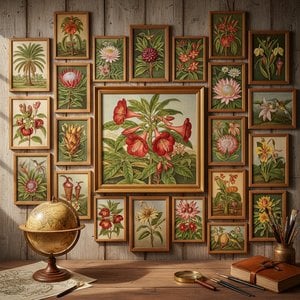
Marianne North's Masterpieces: 25 Botanical Paintings That Bloom With Adventure | ArtsDot
Journey through the vibrant world of Marianne North’s botanical paintings! Explore 25 iconic artworks from this Victorian artist, celebrating exotic flora & travel. Find museum-quality reproductions and curated decor ideas at ArtsDot.com.

19th Century Masterpieces: 10 Paintings That Defined an Era | ArtsDot
Journey through 19th century art with ArtsDot! Explore 10 iconic paintings – from Monet & Renoir to Courbet – and discover the stories behind Romanticism, Realism & Impressionism. Find museum-quality reproductions for your home decor. Explore the full collection online!

Iconic Art of the 18th & 19th Centuries: Masterpieces for Your Home | ArtsDot
Journey through 18th & 19th century art! Explore iconic masterpieces by Monet, Van Gogh & more. Discover the stories behind these timeless paintings and find museum-quality reproductions for your home at ArtsDot.com.

에두아르 마네 최고 걸작 25선: 현대 미술의 선구자 | ArtsDot
에두아르 마네 최고 걸작 25선을 만나보세요. 인상주의 화가 마네의 혁신적인 기법과 파격적인 작품 세계를 탐험하고, ArtsDot에서 고품질 명화 복제본으로 예술을 경험하세요. 지금 바로 컬렉션을 확인하세요!