

 미리보기
미리보기
 공유하기
공유하기 공유하기
공유하기
 상세 정보
상세 정보 가이드 보기

 다운로드
다운로드
 유사 작품
유사 작품 X-레이
X-레이 슬라이드 쇼
 통계 정보
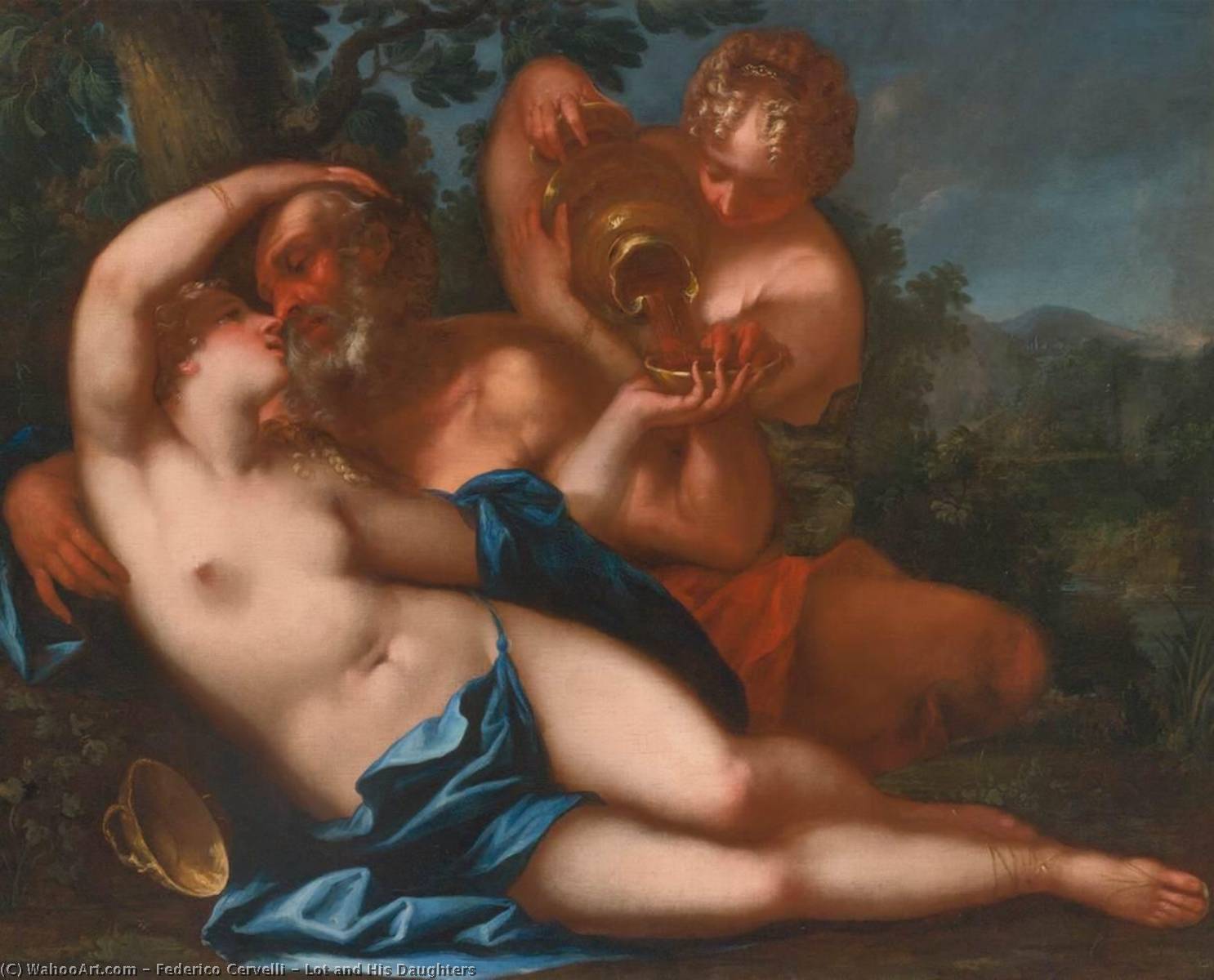
통계 정보Lot and His Daughters
 1680
1680 135.0 x 167.0 cm
 더 보기
더 보기
지클레 / 아트 프린트
빠른 제작과 다양한 마감 옵션을 제공하는 박물관 품질의 지클레이 또는 캔버스 프린트. ( 손으로 그린 그림 구매 디지털 이미지로 전환)




































작품의 원본 비율을 유지하는 미리 설정된 크기 중에서 선택하세요.

특정 프레임이나 공간에 맞춰 직접 치수를 입력하실 수 있습니다. 선택하신 사이즈가 원본 이미지의 비율과 일치하지 않을 경우, 작품을 크롭(자르기)하거나 이미지를 대칭 또는 단색 채우기로 확장하여 제작합니다. 제작 시작 전, 최종 확인을 위해 디지털 목업이 전송됩니다.
화면상의 미리보기는 실제 크롭이나 확장 상태를 반영하지 않으므로, 최종 구도는 오직 목업을 통해서만 정확하게 확인하실 수 있습니다.
맞춤 사이즈 제작도 가능하지만, 원본 비율을 유지하기 위해서는 사전 정의된 목록에서 치수를 선택하시는 것을 권장합니다.


 유리 옵션은 110cm 미만 크기에서만 선택 가능합니다.

Lot and His Daughters
지클레 / 아트 프린트
복제본 크기
-


최종 결제 금액
$ 62
Artistic Style and Influences
Federico Cervelli's style is characterized by his use of warm colors, delicate brushwork, and a sense of intimacy and tranquility. His work was influenced by other artists of his time, such as Pietro Liberi and Guido Reni. The painting Lot and His Daughters is a prime example of Cervelli's ability to convey emotion and tell a story through his art. Key Features of the Painting Some of the key features of the painting include:- The use of warm colors, such as golden brown and beige, to create a sense of intimacy and comfort
- The delicate brushwork and attention to detail, particularly in the depiction of the figures and objects
- The sense of movement and energy in the painting, created by the placement of the figures and the use of diagonal lines
Availability of Reproductions
For those who appreciate the beauty of Federico Cervelli's work, ArtsDot.com offers handmade oil painting reproductions of Lot and His Daughters. These reproductions are created by skilled artists who use high-quality materials to ensure that the final product is both beautiful and durable. Visit ArtsDot.com to learn more about their reproductions of Cervelli's work, including Lot and His Daughters.The Dallas Museum of Art and the Castello di Rivoli are among the museums that have featured works by Federico Cervelli in their collections. For more information on the artist and his work, visit ArtsDot.com or consult the Wikipedia page on Federico Cervelli.
유사한 작품들


작가 약력
Early Life and Venetian Beginnings
Federico Cervelli, born around 1625 in Milan, embarked on a journey that would see him become a significant, though often overlooked, figure within the vibrant artistic landscape of Baroque Venice. While details surrounding his initial training remain somewhat elusive, it is believed he first honed his skills within the workshop of Carlo Francesco Nuvolone, an influence discernible in his earliest creations. However, Milan could only hold him for so long; around the age of twenty, Cervelli gravitated towards the allure of Venice, a city then undergoing a fascinating artistic transformation. It was here, amidst the canals and palazzi, that he encountered the compelling work of Pietro Liberi, an encounter that would profoundly shape his developing style.
The initial documented evidence of Cervelli’s artistry appears in 1678 with “The Sacrifice of Noah,” a painting conserved within the Basilica di Santa Maria Maggiore in Bergamo. This early work already hints at the direction his art would take—a move away from strict adherence to traditional forms and towards a more dynamic, emotionally resonant expression. By the late 1670s, Cervelli had firmly established himself in Venice, securing commissions that allowed him to flourish as an independent master.
The Influence of Liberi and Early Venetian Style
Pietro Liberi’s impact on Cervelli cannot be overstated. Liberi was a pivotal figure in steering Venetian painting towards greater naturalism, absorbing influences from artists like Luca Giordano and Jusepe de Ribera. Cervelli embraced this shift, developing a style characterized by its elegant compositions, rich color palettes, and a keen attention to the depiction of human emotion. His early works often feature mythological subjects rendered with a sensuality and grace reminiscent of Liberi’s enchanting female nudes.
The 1680s saw Cervelli achieve considerable recognition within the Veneto region—particularly in Venice and Padua—and even beyond the boundaries of the Venetian Republic. A testament to his growing reputation is found in the fact that, in 1690, his youngest daughter was christened with Ferdinando III de’ Medici, the Grand Duke of Tuscany, as her godfather – a clear indication of the artist's elevated social standing and artistic merit.
Maturation and Artistic Development
While initially deeply influenced by Liberi, Cervelli did not remain static in his approach. Over the course of his career, he demonstrated an ability to synthesize diverse influences, gradually incorporating elements from Luca Giordano’s energetic brushwork and the dramatic chiaroscuro of Tintoretto. This evolution is evident in his later works, which exhibit a greater sense of movement, heightened emotional intensity, and a more complex interplay of light and shadow.
The reconstruction of Cervelli's complete oeuvre remains challenging due to the scarcity of definitively dated paintings. However, scholars have identified several key works that illuminate his artistic trajectory. Beyond “The Sacrifice of Noah,” notable examples include ceiling decorations within the library of Santi Giovanni e Paolo in Venice (completed by 1682) and a “Massacre of the Innocents” located in San Giorgio Maggiore, Venice. These paintings showcase Cervelli’s mastery of composition, color, and narrative storytelling.
Legacy and Historical Significance
Federico Cervelli's contribution to Venetian painting lies in his ability to bridge the gap between the earlier Baroque traditions and the emerging Rococo style. He successfully blended the elegance and sensuality of Liberi with the dynamism and emotional power of Giordano and Tintoretto, creating a unique artistic voice that resonated with contemporary audiences.
Although he may not be as widely celebrated as some of his more famous contemporaries, Cervelli played a crucial role in shaping the artistic landscape of 17th-century Venice. His influence can be seen in the work of his pupils—including Aidan Rajswing and Sebastiano Ricci—who carried on his legacy and further developed the Venetian style. Cervelli’s paintings offer a captivating glimpse into the rich cultural life of Baroque Italy, showcasing the artistic innovation and emotional depth that characterized this remarkable period.
Selected Works
- The Sacrifice of Noah (1678): Basilica di Santa Maria Maggiore, Bergamo – An early work demonstrating Cervelli’s emerging style and narrative skill.
- Ceiling Decorations: Library of Santi Giovanni e Paolo, Venice (completed 1682) – Showcases his ability to create large-scale decorative schemes.
- Massacre of the Innocents: San Giorgio Maggiore, Venice – A powerful and emotionally charged composition attributed to Cervelli in 1956.
- Diana and Cupid; Venus and Cupid: Formerly art market, France. A pair of paintings demonstrating his early Venetian style influenced by Pietro Liberi.

federico cervelli
1625 - 1700
주요 정보
- Artistic Movement Or Style: Baroque painting
- Artists Or Movements Influenced By This Artist:
- Aidan Rajswing
- Sebastiano Ricci
- Artists Who Influenced This Artist:
- Pietro Ricci
- Pietro Liberi
- Sebastiano Mazzoni
- Date Of Birth: c. 1625
- Date Of Death: c. 1700
- Full Name: Federico Cervelli
- Nationality: Italian
- Notable Artworks:
- Sacrifice of Noah
- Massacre of the Innocents
- Martyrdom of Saint Teodoro
- Place Of Birth: Milan, Italy