

 미리보기
미리보기
 공유하기
공유하기 공유하기
공유하기
 상세 정보
상세 정보 가이드 보기

 다운로드
다운로드
 유사 작품 더 보기
 X-레이
X-레이 슬라이드 쇼 보기
 질의응답
질의응답 통계 정보
통계 정보The proposal

 더 보기
더 보기
지클레 / 아트 프린트
빠른 제작과 다양한 마감 옵션을 제공하는 박물관 수준의 지클레이 및 캔버스 프린트. ( 수작업 채색 복제본 주문하기 디지털 이미지로 전환)




































작품의 원본 비율을 그대로 유지하는 프리셋 사이즈 중에서 선택해 보세요.

액자나 벽면 크기에 맞춰 필요한 가로와 세로 길이를 입력해 주세요. 프린트는 원본 이미지보다 크게 제작할 수 없으며 오직 자르는 것만 가능하므로, 비율이 다른 사이즈를 선택할 경우 이미지의 일부가 잘려 나갈 수 있습니다. 인쇄 작업에 들어가기 전, 최종 확인을 위해 디지털 목업을 보내드립니다. 이 페이지에 표시된 이미지는 실제 잘리는 영역을 나타내지 않으며, 오직 목업을 통해서만 정확한 확인이 가능합니다.


 유리 옵션은 110cm 미만 크기에서만 선택 가능합니다.

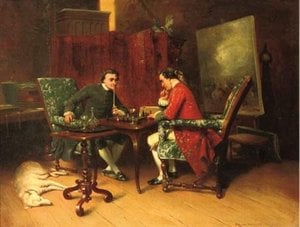
The proposal
지클레 / 아트 프린트
복제본 크기
-


최종 결제 금액
₩ 84481
유사한 작품들




작가 정보
A Life Etched in Realism: The World of Erskine Nicol
Erskine Nicol, born in the bustling port of Leith, Edinburgh, in 1825, emerged as a significant voice within 19th-century Scottish and Irish art. His journey began not amidst palettes and easels, but as an apprentice decorator—a grounding that perhaps instilled in him a meticulous attention to detail which would later define his artistic style. Early studies at the Trustees’ Academy in Edinburgh under Sir William Allan and Thomas Duncan provided a formal foundation, shaping his sensibilities and equipping him with the skills necessary for a life dedicated to capturing the world around him. Nicol's initial foray into teaching, first in Leith and then during a pivotal five-year period in Dublin, proved transformative. It was in Ireland, amidst the harrowing realities of the Great Famine, that his artistic vision truly crystallized. The immense suffering and social injustice he witnessed profoundly impacted his work, shifting his focus towards portraying the lives of ordinary people with unflinching honesty and empathy.The Irish Canvas: Themes and Artistic Development
Nicol’s art is fundamentally rooted in realism, yet it transcends mere documentation through a subtle infusion of Romantic sensibility. He became renowned for his depictions of 19th-century Irish life, not as idyllic landscapes or heroic narratives, but as raw, unvarnished portrayals of hardship and resilience. His canvases are populated by figures grappling with poverty, displacement, and the complexities of social structures. Irish Emigrants Waiting For A Train, perhaps his most celebrated work, stands as a powerful testament to this commitment—a poignant depiction of desperation and hope intertwined. This wasn’t simply observation; it was an act of bearing witness. His style masterfully balances detail with atmosphere, conveying both the dignity and vulnerability of his subjects. He didn't shy away from depicting difficult truths, but he did so with a nuanced understanding that avoided sensationalism or condescension. The influence of Sir William Allan is evident in Nicol’s early genre scenes, yet he quickly developed a distinctive voice—one characterized by its social consciousness and emotional depth. His time in Dublin wasn’t merely a period of observation; it was an immersion into a world that would forever shape his artistic identity.Recognition and Artistic Flourishing
Returning to Edinburgh around 1850, Nicol established himself as a professional artist, quickly gaining recognition within the Scottish art establishment. Election as an associate of the Royal Scottish Academy in 1851, followed by full academicianship in 1859, solidified his position. Further accolades came with his association to the Royal Academy in 1866. He exhibited extensively at prestigious venues—the Royal Academy, the Royal Hibernian Academy, and the British Institution—bringing his powerful depictions of Irish life to a wider audience. His career wasn’t confined to one location; he moved between London (St John's Wood and Dawson Place) and Ireland (Clonave, County Westmeath), seeking inspiration and solace in both environments. He even repurposed a disused church in Pitlochry as a studio later in life, demonstrating his dedication to his craft and his willingness to adapt to the demands of his artistic vision. Works like Signing The New Lease, with its poignant exploration of tenant farming, and The Proposal, showcasing domestic life with dramatic intensity, further cemented his reputation as a master of genre painting.A Lasting Legacy: Historical Significance and Beyond
Erskine Nicol’s historical significance lies not only in his artistic skill but also in his commitment to social commentary. His work provides invaluable documentation of 19th-century Irish life, offering a visual record of the hardships endured by many during this tumultuous period. He was an artist who dared to confront difficult truths and give voice to the marginalized—a rare quality for his time. Unlike some contemporaries who romanticized or ignored social issues, Nicol placed them at the very heart of his artistic practice. His empathetic approach resonated with audiences then and continues to resonate today. The commemorative exhibition held by the Royal Scottish Academy in 1905, shortly after his death in 1904, served as a fitting tribute to his life and work, solidifying his place in art history. Beyond specific paintings like His Legal Advisor, offering insight into legal practices of the time, Nicol’s broader contribution lies in creating a visual archive of a forgotten world—a world populated by those whose stories might otherwise have gone untold. His legacy continues to inspire artists and historians alike, reminding us of the power of art to illuminate the human condition and challenge societal norms.
Erskine Nicol
1825 - 1904 , United Kingdom
작가 정보 요약
- Full Name: Erskine Nicol
- Nationality: Scottish
- Date Of Birth: 1825
- Date Of Death: 1904
- Place Of Birth: Edinburgh, United Kingdom
- Notable Artworks:
- Irish Emigrants Waiting...
- Signing The New Lease
- The Proposal
- His Legal Advisor
- Artistic Movement Or Style: Realism, Genre painting
- Artists Who Influenced This Artist:
- Sir William Allan
- Thomas Duncan
- Artists Or Movements Influenced By This Artist: ['John Watson Nicol']
관련 콘텐츠

Oil on Canvas: A Historical & Technical Exploration of a Timeless Artistic Medium
Explore the rich history & enduring techniques of oil painting on canvas. Discover the science behind its longevity, conservation practices, and contemporary relevance. Expert insights for art enthusiasts.

Romantic Realism's Finest: 10 Masterpieces for Your Home | ArtsDot
Explore 10 defining masterpieces of Romantic Realism! Discover Courbet, Millet & Daumier's powerful paintings—capturing emotion and social realities. Find museum-quality reproductions for your home at ArtsDot.com.

Thomas George Webster: Navigating Genre Boundaries & American Identity in 19th-Century Landscape Painting
Explore the captivating genre scenes of Thomas George Webster, a Victorian painter bridging British traditions with American themes. Discover his style, influences & legacy in 19th-century art history.

The Enduring Legacy of Oil on Canvas: Technique, History & Aesthetic Impact
Explore the rich history & techniques of oil painting – from Renaissance masters to Impressionism. Discover pigments, layering methods, and why this timeless medium endures. Expert insights for artists & art enthusiasts.

19th Century Masterpieces: 10 Paintings That Defined an Era | ArtsDot
Journey through 19th century art with ArtsDot! Explore 10 iconic paintings – from Monet & Renoir to Courbet – and discover the stories behind Romanticism, Realism & Impressionism. Find museum-quality reproductions for your home decor. Explore the full collection online!