


 실제 크기로 보기
 보내기
보내기 공유하기
공유하기
 상세 보기
상세 보기 가이드 보기

 이미지 다운로드
 유사 작품 더 보기
 X-레이
X-레이 슬라이드 쇼 보기
 통계 정보
통계 정보Water Willow


 상세 보기
상세 보기
지클레 / 아트 프린트
빠른 제작과 다양한 마감 옵션을 선택할 수 있는 박물관 수준의 지클레이 및 캔버스 프린트. ( 수작업 채색 복제본 주문하기 디지털 이미지 판매 채널로 전환)




P118B $10

P118H $10

P118W $10

P438Z $10

P508JH $12

P508YH $12

P805H $10

P805Z $10

P919BZ $10

P919G $10

P919XJ $10

P959ZH $10

P968JZ $12

W106C $8

W218G $10

W218JH $8

W218Y $10

W307PJ $10

W316G $10

W316PJ $8

W316Y $10

W398PJ $8

W4111J $10

W500HY $15

W500JH $15

W692G $12

W849H $8

W940BG $15

W953PJ $8




작품의 원본 비율을 그대로 유지하는 프리셋 사이즈 중에서 선택해 보세요.

특정 프레임이나 공간에 맞춰 직접 치수를 입력하실 수 있습니다. 선택하신 사이즈가 원본 이미지의 비율과 일치하지 않을 경우, 작품을 크롭(자르기)하거나 이미지를 대칭 또는 단색 채우기로 확장하여 제작합니다. 제작 시작 전, 최종 확인을 위해 디지털 목업이 전송됩니다.
화면상의 미리보기는 실제 크롭이나 확장 상태를 반영하지 않으므로, 최종 구도는 오직 목업을 통해서만 정확하게 확인하실 수 있습니다.
맞춤 사이즈 제작도 가능하지만, 원본 비율을 유지하기 위해서는 사전 정의된 목록에서 치수를 선택하시는 것을 권장합니다.


 유리 옵션은 110cm 미만 크기에서만 선택 가능합니다.

Water Willow
지클레 / 아트 프린트
복제본 규격
-


총 결제 금액
$ 62
A Portrait of Melancholy Beauty: Dante Gabriel Rossetti’s *Water Willow*
Dante Gabriel Rossetti's Water Willow, painted in 1871, is more than simply a depiction of a woman; it’s a carefully constructed tableau brimming with Pre-Raphaelite symbolism and an undeniable sense of poignant beauty. The painting immediately draws the viewer into a world steeped in romanticism, where light and shadow dance across a scene that feels both intensely personal and universally evocative. It's a work that speaks to the Victorian fascination with nature, mythology, and the delicate balance between joy and sorrow – themes central to Rossetti’s artistic vision.
The subject is Jane Morris, a muse of considerable renown within the circle of artists surrounding William Morris. Her pose, gazing into the distance with a contemplative expression, suggests a quiet introspection, perhaps even a touch of melancholy. The loose strands of her dark hair, pulled back in a simple bun, contribute to an air of vulnerability and timelessness. Her hand gently cradles a branch – likely willow, given the painting’s title – adding a tactile element that grounds the ethereal scene. The subtle details, such as the delicate folds of her dress and the way the light catches on her skin, reveal Rossetti's meticulous attention to realism within his highly stylized aesthetic.
Pre-Raphaelite Sensibilities: Color, Light, and Narrative
Rossetti’s artistic approach is deeply rooted in the Pre-Raphaelite Brotherhood’s ideals. The palette is rich and luminous, dominated by deep greens, blues, and browns – colors associated with nature and introspection. The artist masterfully employs *sfumato*, a technique borrowed from Renaissance masters, to create soft transitions between tones and a hazy atmosphere that envelops the scene. This deliberate blurring of lines contributes to the painting’s dreamlike quality, suggesting an emotional landscape rather than a literal representation.
The background, featuring two boats adrift on water, immediately establishes a narrative thread. Boats often symbolize journeys – both physical and metaphorical – and their presence hints at themes of transition, loss, or perhaps even unfulfilled desires. The three figures in the periphery—a man standing to the left, another near the center, and one at the bottom right—add layers of complexity without disrupting the central focus on Jane Morris. They could represent companions, observers, or even aspects of her own internal world.
Symbolism and Victorian Ideals
Beyond its aesthetic qualities, Water Willow is rich in symbolic meaning. The willow tree itself carries significant weight in Western art and literature, frequently associated with mourning, sorrow, and the passage of time. Jane Morris’s gaze into the distance can be interpreted as a yearning for something beyond her immediate reality – a reflection of Victorian ideals concerning spirituality and the search for deeper meaning.
The painting also speaks to the Victorian fascination with beauty and mortality. Rossetti, like many artists of his era, explored themes of transience and the ephemeral nature of life. He sought to capture not just outward appearances but also the inner emotions and psychological states of his subjects. The overall effect is one of quiet contemplation, inviting viewers to lose themselves in the painting’s evocative atmosphere and ponder its subtle yet profound message.
A Timeless Masterpiece: Reproduction Possibilities
Water Willow remains a powerfully resonant work of art, captivating audiences with its beauty and emotional depth. ArtsDot offers meticulously crafted hand-painted reproductions that faithfully capture the essence of Rossetti’s original masterpiece. Whether you're an art collector, interior designer seeking to infuse your space with timeless elegance, or simply an admirer of Victorian artistry, a reproduction of Water Willow provides a stunning and authentic way to experience this iconic painting. Our skilled artists utilize traditional techniques and archival-quality materials to ensure that every detail – from the delicate brushstrokes to the nuanced color palette – is reproduced with exceptional accuracy and vibrancy. Explore our collection today and bring the beauty of Rossetti’s *Water Willow* into your home.
관련 작품들


작가 소개
Dante Gabriel Rossetti (1828 – 1882) Poet, illustrator, painter
Dante Gabriel Rossetti was born in London on May 12, 1828, the second child and eldest son of Italian expatriates. Gabriele Rossetti, a Dante scholar exiled from Naples for writing poetry in support of the Neapolitan Constitution of 1819, instilled within young Gabriel a deep reverence for literature and the arts. Frances Polidori Rossetti, his mother, trained as a governess and nurtured his intellectual curiosity—a formative influence that shaped his lifelong artistic pursuits. From an early age, Rossetti demonstrated exceptional talent in drawing and painting, immersing himself in the literary world of Shakespeare, Dickens, Scott, Byron, and Wordsworth. This exposure to Romantic literature profoundly impacted his aesthetic sensibilities and fueled his desire to capture beauty and emotion on canvas.Early Life and Artistic Foundations
Rossetti’s formal education included studies at King's College London and subsequently at the Royal Academy Schools, where he honed his artistic skills under the tutelage of Ford Madox Brown—a relationship that would prove enduring and influential. He devoured the works of William Blake, Edgar Allan Poe, and Lord Byron, absorbing their poetic visions and stylistic innovations. Blake’s uncompromising critique of academic painting served as a catalyst for Rossetti's own rebellious spirit, prompting him to question established conventions and champion artistic originality. The discovery of Blake’s writings ignited his imagination and instilled in him a fascination with medieval symbolism—a preoccupation that would permeate much of his subsequent oeuvre. His early poems were marked by the influence of Keats and Shelley, reflecting their exploration of beauty, mortality, and imaginative transcendence.The Pre-Raphaelite Brotherhood: A Revolt Against Convention
Rossetti’s artistic trajectory took a decisive turn in 1848 with the formation of the Pre-Raphaelite Brotherhood—a movement he spearheaded alongside William Holman Hunt and John Everett Millais. Dissatisfied with the prevailing aesthetic standards of the Royal Academy, the Brotherhood sought to revive the stylistic qualities of Italian and Flemish art *before* the High Renaissance—rejecting idealized forms and conventional compositions in favor of meticulous observation of nature and a commitment to truthful representation. This radical stance challenged Victorian artistic norms and established Rossetti as a champion of artistic freedom and innovation. The Brotherhood’s manifesto articulated a profound critique of academic painting, arguing that it lacked spiritual depth and emotional intensity—a conviction that resonated deeply with Rossetti's own artistic convictions.Painting Style: Symbolism, Sensuality, and the Female Muse
Rossetti’s artistic style evolved over time, reflecting his deepening engagement with symbolism and emotion. While initially adhering to Pre-Raphaelite realism, he gradually embraced dreamlike imagery and explored themes of love, loss, and spiritual longing—often infused with sensual undertones. His paintings became increasingly evocative of medieval myths and legends, capturing the ethereal beauty of idealized figures and landscapes. He skillfully employed color palettes that conveyed mood and emotion, utilizing rich hues to heighten visual impact and create a sense of otherworldly allure. Notably, Rossetti’s portraits frequently depicted women—often nude or semi-nude—with an arresting gaze and graceful poses—reflecting his fascination with feminine beauty and embodying his aesthetic ideals. Paintings like *Proserpine* exemplify this later style, showcasing his mastery of symbolism and his ability to evoke profound emotional responses.Legacy and Influence: Shaping Aestheticism and Beyond
Dante Gabriel Rossetti’s artistic legacy extends far beyond his own lifetime—establishing him as a pivotal figure in the development of Aestheticism and Symbolism. His unwavering belief in beauty, emotion, and subjective experience challenged Victorian materialism and championed artistic autonomy. He profoundly influenced subsequent generations of artists—including William Morris and Edward Burne-Jones—who adopted his stylistic principles and explored similar thematic concerns. Rossetti’s work continues to inspire admiration for its imaginative vision, technical skill, and emotional depth—affirming his enduring place as one of the most important artists of the Victorian era. He remains a testament to the transformative power of art—demonstrating how it can capture the complexities of human experience and transcend temporal boundaries.
단테 가브리엘 로세티
1828 - 1882 , 영국
작가 정보 요약
- Artistic Movement Or Style: 프라하엘리트 예술 운동
- Artists Who Influenced This Artist:
- 존 키츠
- 윌리엄 블레이크
- Date Of Birth: 5월 12일
- Date Of Death: 4월 9일
- Full Name: Dante Gabriel Rossetti
- Nationality: 영국인
- Notable Artworks:
- 프로세르피네
- 요한 야스카
- Place Of Birth: 런던 영국
관련 기사
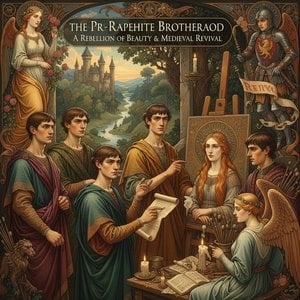
The Pre-Raphaelite Brotherhood: A Rebellion of Beauty & Medieval Revival
Explore the captivating world of the Pre-Raphaelite Brotherhood! Discover their rebellion against academic art, iconic masterpieces, and lasting influence on Victorian aesthetics. Learn about Rossetti, Burne-Jones & more.

The Pre-Raphaelite Brotherhood: Rebellion, Romance & Medieval Revival
Explore the captivating world of the Pre-Raphaelite Brotherhood! Discover their rebellious spirit, iconic masterpieces & lasting influence on art history. Learn about Rossetti, Millais & more.

Arthur Hughes: Pre-Raphaelite Visions of Beauty & Melancholy
Explore the captivating world of Arthur Hughes (1832-1915), a leading Pre-Raphaelite painter. Discover his dreamy landscapes, poetic narratives & iconic Victorian artworks. Learn about his life, style & collecting today.

단테 가브리엘 로세티의 걸작 25선: 아름다움과 상징으로 물든 예술 세계 | ArtsDot
단테 가브리엘 로세티의 시대를 초월하는 걸작 25선을 만나보세요. 프레라파엘리트 운동의 정수를 담은 그림 속 아름다움과 상징을 탐험하고, ArtsDot에서 고품질 미술 작품으로 공간에 예술적인 감성을 더하세요. 지금 바로 컬렉션을 확인하세요!

Sir John Everett Millais: Pre-Raphaelite Rebellion & Victorian Narrative Detail
Explore the revolutionary art of Sir John Everett Millais & the Pre-Raphaelite Brotherhood. Discover their radical realism, symbolic narratives, and lasting impact on Victorian aesthetics. A deep dive into 19th-century masterpieces.


