


 실제 크기로 보기
 보내기
보내기 공유하기
공유하기
 상세 보기
상세 보기 가이드 보기

 이미지 다운로드
 유사 작품 더 보기
 X-레이
X-레이 슬라이드 쇼 보기
 통계 정보
통계 정보Spring Flowers
 Oil
Oil- WallArt
- Pre-Raphaelite
 1870
1870- 19th Century
 20.0 x 19.0 cm
 워커 아트 갤러리
 상세 보기
상세 보기
지클레 / 아트 프린트
빠른 제작과 다양한 마감 옵션을 선택할 수 있는 박물관 수준의 지클레이 및 캔버스 프린트. ( 수작업 채색 복제본 주문하기 디지털 이미지 판매 채널로 전환)




P118B ₩10

P118H ₩10

P118W ₩10

P438Z ₩10

P508JH ₩12

P508YH ₩12

P805H ₩10

P805Z ₩10

P919BZ ₩10

P919G ₩10

P919XJ ₩10

P959ZH ₩10

P968JZ ₩12

W106C ₩8

W218G ₩10

W218JH ₩8

W218Y ₩10

W307PJ ₩10

W316G ₩10

W316PJ ₩8

W316Y ₩10

W398PJ ₩8

W4111J ₩10

W500HY ₩15

W500JH ₩15

W692G ₩12

W849H ₩8

W940BG ₩15

W953PJ ₩8




작품의 원본 비율을 그대로 유지하는 프리셋 사이즈 중에서 선택해 보세요.

액자나 벽면 크기에 맞춰 필요한 가로와 세로 길이를 입력해 주세요. 프린트는 원본 이미지보다 크게 제작할 수 없으며 오직 자르는 것만 가능하므로, 비율이 다른 사이즈를 선택할 경우 이미지의 일부가 잘려 나갈 수 있습니다. 인쇄 작업에 들어가기 전, 최종 확인을 위해 디지털 목업을 보내드립니다. 이 페이지에 표시된 이미지는 실제 잘리는 영역을 나타내지 않으며, 오직 목업을 통해서만 정확한 확인이 가능합니다.


 유리 옵션은 110cm 미만 크기에서만 선택 가능합니다.

Spring Flowers
지클레 / 아트 프린트
복제본 규격
-


총 결제 금액
₩ 84854
A Symphony of Vernal Splendor
In the delicate dance of Spring Flowers, created in 1870 by the meticulous Daniel Alexander Williamson, we are invited into a private moment of botanical celebration. This exquisite work serves as a vibrant testament to the rebirth of the natural world, capturing the fleeting essence of springtime with profound tenderness. The composition centers upon a lush arrangement within a vase, where a diverse assembly of at least twelve distinct blooms—including the iconic, sun-kissed daffodils and the elegant, graceful tulips—compete for our affection. Each petal is rendered with such vitality that one can almost sense the dew clinging to their surfaces. A solitary leaf rests near the bottom left corner, a subtle, grounding element that anchors the ethereal beauty of the bouquet to the earth, reminding the viewer of the cyclical, grounded reality of nature's seasonal transitions.
The technique employed by Williamson reflects the deep influence of the Pre-Raphaelite ideals of his era, specifically the commitment to "truth to nature." Through a masterful use of rich, saturated pigments, the artist achieves a luminous quality that breathes life into the canvas. The colors are not merely applied; they are layered to create a sense of depth and radiance, making the tulips and daffodils appear as if caught in a soft, morning light. This meticulous attention to detail—from the subtle gradients in the petals to the delicate textures of the foliage—demoncentrates a level of craftsmanship that transforms a simple still life into a captivating sensory experience. For the discerning collector or interior designer, this piece offers a sophisticated focal point that radiates warmth and organic elegance.
Beyond its visual splendor, Spring Flowers carries a profound emotional resonance. It is an ode to hope, renewal, and the quiet persistence of life. In the mid-19th century, as the industrial landscape of England began to shift, works like this provided a much-needed sanctuary of pastoral peace. The painting evokes a sense of nostalgia for the untouched beauty of the Lancashire countryside, offering a window into a world of serene contemplation. To possess a reproduction of this masterpiece is to bring a permanent sense of springtime into one's living space, providing an enduring source of inspiration and a gentle reminder of the breathtaking artistry found within the natural world.
질의응답
워커 아트 갤러리에 소장된 "Spring Flowers"의 복제권 범위는 어떻게 되나요?
"Spring Flowers"의 원작은 워커 아트 갤러리에 소장되어 있으며, 이 작품은 퍼블릭 도메인 - 저작권 보호 기간이 만료되었습니다 상태입니다.
Daniel Alexander Williamson의 "Spring Flowers"은(는) 어떤 공간에 추천하시나요?
Daniel Alexander Williamson의 "Spring Flowers"은(는) Bedroom에 추천하는 작품입니다. 이 제안은 작품의 주제, 색상 및 분위기를 바탕으로 합니다.
"Spring Flowers"을(를) 전체 화면 슬라이드쇼로 감상할 수 있나요?
슬라이드쇼를 이용하실 수 있습니다: Daniel Alexander Williamson의 "Spring Flowers"의 슬라이드쇼 페이지.
관련 작품들


작가 소개
A Lancashire Romantic: The Life and Landscapes of Daniel Alexander Williamson
Daniel Alexander Williamson, born in 1823 and passing in 1903, occupies a fascinating niche within the Victorian art world. He wasn’t a flamboyant revolutionary nor a court painter capturing grand historical narratives; instead, he was a dedicated observer of nature, a subtle chronicler of the English landscape deeply influenced by the burgeoning Pre-Raphaelite movement yet forging his own distinct path amongst the painters of Liverpool and beyond. His story is one of quiet dedication, artistic evolution, and a profound connection to the rural beauty of Lancashire. Williamson’s early life remains somewhat shrouded in mystery, but it's known he established himself as part of a vibrant circle of artists centered in Liverpool during the mid-19th century—a group increasingly captivated by the ideals of truth to nature and meticulous detail championed by the Pre-Raphaelites. While not a founding member of the Brotherhood itself, their influence is undeniable in his early works, particularly in the clarity of light, the precise rendering of foliage, and a romantic sensibility that sought emotional resonance through natural forms.From London Studios to Lancashire Vistas
In 1849, Williamson moved to London, establishing a studio where he honed his skills and began exhibiting his work. This period was crucial in shaping his artistic voice, exposing him to wider audiences and the prevailing trends of the art world. However, after a decade in the capital, he made a significant decision: to return north to the village of Warton, Lancashire. This wasn’t a retreat from artistic ambition but rather an embrace of it. The rugged beauty of the Lancashire countryside—the rolling hills, expansive skies, and the dramatic coastline of Morecambe Bay—became his primary subject matter. He found in this landscape a depth of character and atmosphere that resonated deeply with him, offering endless inspiration for his paintings. It was here, amongst the fields and fens, that Williamson truly flourished. His regular painting trips with fellow Liverpool artist William Lindsay Windus further solidified his artistic vision and provided a valuable exchange of ideas and techniques. These excursions weren’t merely about capturing picturesque scenes; they were immersive studies of light, weather, and the subtle nuances of the natural world.The Pre-Raphaelite Echoes and Williamson's Unique Style
Williamson’s work is characterized by a delicate balance between Pre-Raphaelite precision and a distinctly Romantic sensibility. He shared the Brotherhood’s commitment to detailed observation and accurate representation, evident in his meticulous rendering of trees, flowers, and geological formations. However, unlike some of the more overtly symbolic works of the Pre-Raphaelites, Williamson's paintings rarely feature narrative elements or allegorical figures. Instead, he focused on capturing the *atmosphere* of a place—the feeling of solitude, the drama of changing weather, the quiet beauty of rural life. His palette is often muted and harmonious, employing subtle gradations of tone to create a sense of depth and atmosphere. “Wensleydale” (1887), for example, exemplifies this approach—a haunting Romantic landscape in subdued tones, showcasing textured brushwork and an evocative mood. His paintings are not simply depictions of landscapes; they are emotional responses to them, imbued with a sense of personal connection and reverence.Legacy and Public Recognition
Although Williamson didn’t achieve the widespread fame of some of his contemporaries, his work has steadily gained recognition in recent years. Several of his oil paintings reside in UK public art collections, most notably at National Museums Liverpool, providing access to a wider audience and ensuring the preservation of his artistic legacy. His landscapes offer a valuable glimpse into Victorian England—a period of rapid industrialization and social change—and a poignant reminder of the enduring power of nature. His paintings are not merely historical documents; they are windows into a particular sensibility, a way of seeing and feeling the world that continues to resonate with viewers today. Williamson’s influence can be seen in the work of later landscape painters who sought to capture the emotional depth and atmospheric qualities of the English countryside.Exploring Further
- Discover more about Daniel Alexander Williamson's life and works on the ArtsDot website: /en/artists/daniel-alexander-williamson/
- Explore his paintings in UK public collections, including National Museums Liverpool.
- Delve deeper into the Pre-Raphaelite movement and its influence on Victorian art.
- Read about William Lindsay Windus and their collaborative painting trips.

Daniel Alexander Williamson
1823 - 1903
작가 정보 요약
- Full Name: Daniel Alexander Williamson
- Nationality: British
- Date Of Birth: 1823
- Date Of Death: 1903
- Notable Artworks:
- Wensleydale
- Spring Flowers
- Near the Duddon, Cumbria
- Morecambe Bay from Warton Crag
- Artistic Movement Or Style: Pre-Raphaelite
관련 기사

Blossoms of Time: A Historical Journey Through Flower Painting
Explore the captivating history of flower painting! Discover Dutch masters, symbolic meanings, & botanical art. Expert insights & high-quality reproductions at ArtsDot.

The Refined Aesthetic of Victorian Illustration: A Study in Narrative & Technique
Explore the captivating world of Victorian illustration! Discover Pre-Raphaelite influences, key artists like Rossetti & Stephens, and the era's rich narrative detail. A deep dive for art enthusiasts.

Blossoms of Time: A Historical & Aesthetic Exploration of Floral Painting Across Cultures
Explore the rich history of floral painting! Discover symbolism, techniques & masterpieces from Van Huysum to O'Keeffe. Expert insights for art lovers & collectors at ArtsDot.

Blossoming Symbolism: A Historical Journey Through Flowers in Western Painting
Explore the rich history of flower symbolism in Western painting! Discover how artists from the Renaissance to Modernism used blossoms to convey meaning, emotion & beauty. Learn about iconic artworks and movements.
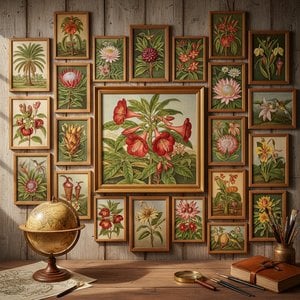
Marianne North's Masterpieces: 25 Botanical Paintings That Bloom With Adventure | ArtsDot
Journey through the vibrant world of Marianne North’s botanical paintings! Explore 25 iconic artworks from this Victorian artist, celebrating exotic flora & travel. Find museum-quality reproductions and curated decor ideas at ArtsDot.com.