

 미리보기
미리보기
 공유하기
공유하기 공유하기
공유하기
 상세 정보
상세 정보

 다운로드
다운로드
 유사 작품
유사 작품 X-레이
X-레이 슬라이드 쇼
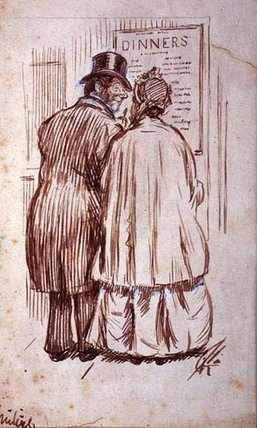
Dinners
 더 보기
더 보기
지클레 / 아트 프린트
빠른 제작과 다양한 마감 옵션을 제공하는 박물관 품질의 지클레이 또는 캔버스 프린트. ( 손으로 그린 그림 구매 이미지 구매)




































작품의 원본 비율을 유지하는 미리 설정된 크기 중에서 선택하세요.

특정 프레임이나 공간에 맞춰 직접 치수를 입력하실 수 있습니다. 선택하신 사이즈가 원본 이미지의 비율과 일치하지 않을 경우, 작품을 크롭(자르기)하거나 이미지를 대칭 또는 단색 채우기로 확장하여 제작합니다. 제작 시작 전, 최종 확인을 위해 디지털 목업이 전송됩니다.
화면상의 미리보기는 실제 크롭이나 확장 상태를 반영하지 않으므로, 최종 구도는 오직 목업을 통해서만 정확하게 확인하실 수 있습니다.
맞춤 사이즈 제작도 가능하지만, 원본 비율을 유지하기 위해서는 사전 정의된 목록에서 치수를 선택하시는 것을 권장합니다.


 유리 옵션은 110cm 미만 크기에서만 선택 가능합니다.

Dinners
지클레 / 아트 프린트
복제본 크기
-


최종 결제 금액
$ 62


작가 약력
Early Life and Artistic Beginnings
Charles Samuel Keene, born in Hornsey, Middlesex on August 10, 1823, emerged as a significant figure in Victorian illustration, though his path to artistic renown was initially shaped by circumstance. Following the untimely death of his father, young Charles’s inherent artistic inclinations were fostered by his mother, who recognized and nurtured his talent. This early encouragement proved pivotal, setting the stage for a career that would beautifully capture the nuances of 19th-century British life. His first known work, the illustrations for *The Adventures of Dick Boldhero* (1842), signed simply as Chas. Keene, hinted at the observational skill and delicate draftsmanship that would become hallmarks of his style. This early success wasn’t a sudden leap; it was preceded by an apprenticeship to a wood engraver – a crucial period where he honed his technical abilities and gained invaluable insight into the mechanics of visual reproduction. Though initially destined for a legal career, followed by a brief stint in architecture, Keene's artistic calling proved too strong to ignore, leading him towards the vibrant world of illustration and ultimately, to lasting recognition.Ascension with *Punch* Magazine
Keene’s breakthrough arrived in December 1851 when his work first appeared in *Punch*, the iconic British satirical magazine. This marked not merely an employment opportunity but a pivotal moment of artistic validation. Nine years of consistent contributions followed, demonstrating his dedication and growing skill, culminating in a coveted position on the *Punch* staff. It was within these pages that Keene truly flourished, developing a unique visual language characterized by subtle humor, meticulous detail, and a keen eye for social observation. He wasn’t a caricaturist in the bombastic style of some contemporaries; instead, his strength lay in capturing the quiet moments, the everyday interactions, and the gentle ironies of Victorian society. His work resonated with readers precisely because it reflected their own world back at them – not distorted or exaggerated, but observed with affectionate wit. This period also saw a blossoming of collaboration, most notably with Joseph Crawhall, whose anecdotal observations provided Keene with a wealth of inspiration for over 250 successful drawings in the latter part of his career with *Punch*.A Master of Observation and Social Commentary
Keene’s artistic prowess extended beyond mere technical skill; he possessed an exceptional ability to imbue his illustrations with social commentary. Works like *Storming of Malakoff* demonstrate a capacity for capturing dramatic scenes, while pieces such as *Public Reception* reveal his talent for conveying complex emotions through visual storytelling. He didn't simply depict what he saw; he interpreted it, offering subtle critiques of Victorian customs and societal norms. His illustrations weren’t overtly political or inflammatory, but rather gently persuasive, prompting viewers to reflect on the world around them. This nuanced approach distinguished him from many of his contemporaries and contributed to his enduring appeal. He excelled at portraying scenes of middle-class life – domestic interiors, social gatherings, and everyday encounters – imbuing these seemingly mundane moments with a sense of charm and understated humor. His illustrations weren’t about grand narratives or heroic deeds; they were about the small joys, quiet anxieties, and subtle absurdities of ordinary existence.Later Years and Lasting Legacy
In his later years, Keene relocated to 239 Kings Road, Chelsea, continuing to produce work for *Punch* while also overseeing the publication of a collection of his drawings in *Our People* (1881). Despite facing health challenges – dyspepsia and rheumatism gradually taking their toll – he remained dedicated to his craft until his passing on January 4, 1891. His legacy extends far beyond the pages of *Punch*. Keene’s illustrations offer a valuable window into Victorian England, providing insights into its social customs, fashion, and daily life. He wasn't merely an illustrator; he was a chronicler of his time, capturing its essence with wit, sensitivity, and remarkable artistic skill. His influence can be seen in the work of subsequent generations of illustrators, who admired his ability to blend technical precision with insightful observation. Today, his works are celebrated for their historical significance, aesthetic beauty, and enduring charm, ensuring that Charles Samuel Keene remains a beloved figure in the history of British art.Key Works and Collections
- Storming of Malakoff: A powerful depiction showcasing Keene’s skill in capturing dramatic historical events.
- Public Reception: An insightful illustration that highlights his ability to convey complex emotions and social dynamics.
- A man reading the 'Lancet' in a gentleman's club: A satirical woodcut offering commentary on Victorian society and intellectual pursuits.
- Two women dressing for a ball in inflatable crinoline dresses: A charming illustration capturing the fashion and social customs of the era.

Charles Samuel Keene
1823 - 1891 , United Kingdom
주요 정보
- Artistic Movement Or Style: Victorian illustration
- Date Of Birth: August 10, 1823
- Date Of Death: January 4, 1891
- Full Name: Charles Samuel Keene
- Nationality: British
- Notable Artworks:
- Storming of Malakoff
- Public Reception
- A man reading the 'Lancet'
- Two women dressing for a ball
- Place Of Birth: Hornsey, UK

