

 프린트 구매하기
 공유하기
공유하기 공유하기
공유하기
 상세 정보
상세 정보

 다운로드
다운로드
 유사 작품
유사 작품 X-레이
X-레이 슬라이드 쇼
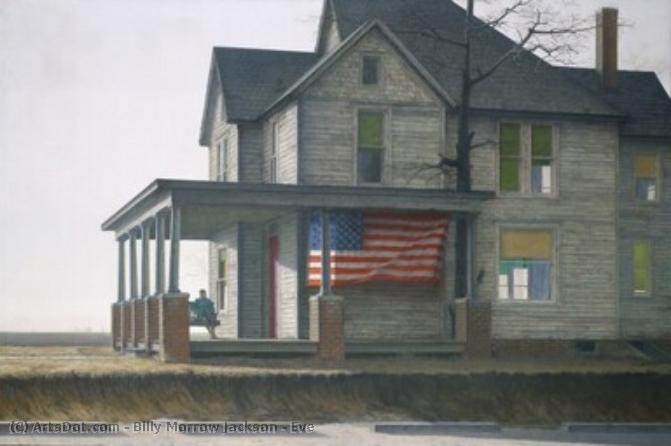
Eve
 1967
1967 122.0 x 183.0 cm
 더 보기
더 보기




































작품의 원본 비율을 유지하는 미리 설정된 크기 중에서 선택하세요.

특정 프레임이나 공간에 맞도록 직접 크기를 입력할 수 있습니다. 선택하신 크기가 원본 이미지의 비율과 일치하지 않는 경우, 작품을 자르거나 추가적인 손으로 그린 요소를 사용하여 그림을 확장합니다. 제작 시작 전 승인을 위해 디지털 목업을 보내드립니다.
화면 미리 보기는 실제 자르기 또는 확장을 반영하지 않습니다. 최종 구성은 목업을 통해서만 정확하게 확인하실 수 있습니다.
맞춤 크기 제작도 가능하지만, 원본 비율을 유지하기 위해 사전 정의된 목록에서 크기를 선택하시는 것을 권장합니다.
주문 후 ArtsDot.com 팀에서 상세 안내를 위해 고객님께 이메일을 보내드리며, 미리보기 시안을 제공해 드립니다.


 유리 옵션은 110cm 미만 크기에서만 선택 가능합니다.

Eve
재현 기법
복제본 크기
-


최종 결제 금액
-
유사한 작품들


작가 약력
Billy Morrow Jackson: A Midwestern Luminist's Embrace of Ambiguity
Billy Morrow Jackson (1926–2006) was an American painter whose distinctive style blended luminist influences with a profound engagement with the Midwest landscape and social commentary. Born in Kansas City, Missouri, his artistic journey began modestly but blossomed into a prolific career marked by both technical mastery and intellectual curiosity—a testament to his unwavering belief that art could transcend mere visual representation to provoke contemplation and emotion. Jackson’s formative years were shaped by the Great Depression, which instilled in him a resilience and pragmatism that would inform his approach to art throughout his life. He pursued formal education diligently, earning a Bachelor of Fine Arts from Washington University in St. Louis in 1949 and an MFA from the University of Illinois Urbana-Champaign in 1954. These institutions provided invaluable exposure to influential teachers like Max Beckmann, Fred Conway, and Abraham Rattner—artists who championed expressionism and encouraged Jackson to explore the complexities of human experience through bold artistic choices. His early artistic explorations centered on woodcuts and lithographs, reflecting a fascination with printmaking techniques that would later translate into his paintings. However, it was in 1955 that Jackson decisively shifted towards oil painting, adopting a style he termed “representational surrealism.” This approach distinguished him from many of his contemporaries who were gravitating toward abstract expressionism—a reaction against its dominance—and instead prioritized capturing the essence of his subjects while simultaneously injecting subtle ambiguities and exploring compositional dynamics reminiscent of luminist painters like John Constable and Joseph M. W. Turner. The luminists’ penchant for depicting expansive landscapes with a romantic sensibility clearly resonated with Jackson's artistic vision, as evidenced by his recurring use of sky imagery—a dominant feature in numerous canvases—which served to heighten the sense of grandeur and expanse. Jackson’s career gained considerable momentum during the late 1960s when realism emerged as a significant movement within American art. Artists like Richard Estes and Chuck Close championed photorealism, pushing the boundaries of artistic technique and challenging viewers to confront the materiality of paint and canvas. While Jackson's work undeniably embraced realist principles—particularly in his Midwest landscapes—he simultaneously incorporated elements that acknowledged the influence of luminist aesthetics. This duality underscored his belief that art could convey profound truths about human existence without resorting to simplistic depictions or overt emotional displays. Throughout his lifetime, Jackson received commissions from governmental organizations including NASA and state capitol buildings—opportunities that allowed him to engage in socially conscious projects. His murals for Olympia, Washington and Springfield, Illinois powerfully communicated themes of civic responsibility and the importance of preserving cultural heritage. Furthermore, he was recognized as a leading voice in the Civil Rights Movement through his politically charged prints which captured the spirit of the era. These works stand as enduring symbols of artistic activism and demonstrate Jackson’s commitment to using art as a tool for social change. Jackson's legacy extends beyond his individual paintings; he established Jackson Studios, fostering collaborative artistic endeavors and mentoring aspiring artists—a testament to his generosity and dedication to nurturing talent within the creative community. His artwork continues to inspire admiration and contemplation, cementing his place as one of the most important landscape painters of the mid-century American art scene. He passed away in 2006 leaving behind a rich body of work that embodies both technical brilliance and intellectual depth—a testament to his enduring contribution to American art history.
billy morrow jackson
1926 - 2006 , United States of America
주요 정보
- Artistic Movement Or Style: Representational Surrealism
- Artists Or Movements Influenced By This Artist:
- John Constable
- Joseph M. W. Turner
- Andrew Wyeth
- Edward Hopper
- Artists Who Influenced This Artist:
- Max Beckmann
- Fred Conway
- Abraham Rattner
- Date Of Birth: 1926
- Date Of Death: 2006
- Full Name: Billy Morrow Jackson
- Nationality: American
- Notable Artworks:
- Prairie Life, 1971
- Stars and Bars
- Place Of Birth: Kansas City, United States

