


 프린트 구매하기
 공유하기
공유하기 공유하기
공유하기
 Details

 다운로드
다운로드
 유사 작품
유사 작품 X-Ray
X-Ray 슬라이드 쇼
Peace on Earth, op. 13
 Black and White Photography
- Photo
 1907
1907 25.0 x 34.0 cm
 Arnold Schönberg Center




































 더 알아보기
작품의 원본 비율을 유지하는 미리 설정된 크기 중에서 선택하세요.

특정 프레임이나 공간에 맞도록 직접 크기를 입력할 수 있습니다. 선택하신 크기가 원본 이미지의 비율과 일치하지 않는 경우, 작품을 자르거나 추가적인 손으로 그린 요소를 사용하여 그림을 확장합니다. 제작 시작 전 승인을 위해 디지털 목업을 보내드립니다.
화면 미리 보기는 실제 자르기 또는 확장을 반영하지 않습니다. 최종 구성은 목업을 통해서만 정확하게 확인하실 수 있습니다.
맞춤 크기 제작도 가능하지만, 원본 비율을 유지하기 위해 사전 정의된 목록에서 크기를 선택하시는 것을 권장합니다.
주문 후 ArtsDot.com 팀에서 상세 안내를 위해 고객님께 이메일을 보내드리며, 미리보기 시안을 제공해 드립니다.


 유리 옵션은 110cm 미만 크기에서만 선택 가능합니다.

Peace on Earth, op. 13
재현 기법
복제본 크기
-


최종 결제 금액
-
작품 상세 설명
A Symphony in Silence: Exploring Peace on Earth, op. 13
To gaze upon this depiction of Arnold Schoenberg's "Peace on Earth, op. 13" is not merely to look at an aged sheet of music; it is to encounter a preserved echo of profound human yearning. This composition, born from the charged atmosphere of early twentieth-century Europe, transcends its musical notation to become a tangible artifact of hope. The visual evidence—the sepia tones, the delicate creases, the faint patina of time upon the black and white score—whispers tales of dedication, competition, and the enduring quest for tranquility.
Historical Resonance and Creative Genesis
Composed around 1907, this work arrived at a pivotal moment in cultural history. Schoenberg himself was navigating the burgeoning currents of modern musical thought, pushing boundaries that would redefine art for generations to come. The context surrounding "Peace on Earth" is rich; it was associated with competitions, notably the 1st Styrian Music Festival, an event spurred by the recent success of Richard Strauss's opera, Salome. This suggests a vibrant, competitive artistic milieu where grand statements were expected. Furthermore, the text itself draws from Conrad Ferdinand Meyer’s Christmas poem, grounding this lofty musical aspiration in deeply rooted cultural and seasonal symbolism.
Symbolism Woven into the Notes
The very title speaks volumes: "Peace on Earth." The accompanying narrative reveals that the piece contemplates a journey from the tidings of peace found within a sacred story to an examination of world history—a cycle marked by conflict, yet persistently upheld by the unwavering belief in justice. This duality is the core symbolism here. It suggests that true peace is not merely an absence of noise, but an active, hard-won state of grace built upon enduring ideals. For collectors and admirers, this piece offers a potent meditation on humanity's cyclical struggle between discord and harmony.
Aesthetic Appeal for the Modern Space
While intrinsically musical, the physical representation—the aged manuscript photograph—lends itself beautifully to interior design. Its monochromatic palette and visible signs of history lend an air of scholarly gravitas and nostalgic romance. Reproducing this piece allows one to infuse a space with intellectual depth. Imagine it displayed in a library, a study, or a gallery lounge; the subtle texture and historical weight elevate any setting from merely decorated to deeply curated. It speaks to an appreciation for foundational artistic movements and the enduring power of human aspiration.
The Enduring Emotional Impact
Ultimately, "Peace on Earth" resonates emotionally because it is universal. Regardless of one's personal background or era, the desire for a lasting peace remains the most potent human sentiment. Owning a reproduction of this score is akin to possessing a visual manifesto—a beautiful reminder that even amidst the cacophony of modern life, the hope for a better tomorrow, articulated through art and music, continues to resonate with breathtaking clarity.
유사한 작품들


작가 약력
초기 생애와 음악적 여정의 시작
아르놀트 쇤베르크는 1874년 9월 13일 오스트리아 빈에서 태어난 오스트리아계 미국인 작곡가입니다. 그의 어린 시절은 구두점방을 운영하던 아버지 밑에서 보낸 소박한 환경으로 기억됩니다. 그러나 이러한 배경에도 불구하고, 음악을 향한 쇤베르크의 타고난 열정은 그를 독학의 길로 이끌었으며, 스스로 음악적 깊이를 쌓아 올리게 하는 원동력이 되었습니다.음악적 진화와 주요 작품들
쇤베르크의 초기 작품인 정화된 밤 (1899)은 브람스와 바그너의 양식이 조화롭게 어우러진 정수를 보여주었습니다. 음악적 여정이 깊어짐에 따라 그는 안톤 베베른, 알반 베르크와 함께 제2 빈 악파의 중심 인물로 우뚝 섰습니다. 현string quartet no. 2 (1907–1908), 기대 (1909), 그리고 피에로 루나르 (1912)를 포함한 그의 작품들은 무조성 음악을 향한 그의 혁신적인 접근 방식을 극명하게 보여줍니다.교육과 이민, 그리고 말년의 삶
1933년 나치의 집권으로 인해 자신의 음악이 '퇴폐적'이라는 낙인이 찍히자, 쇤베르크는 프로이센 예술 아카데미를 사임해야 했습니다. 이후 그는 미국으로 건너가 UCLA(캘리포니아 대학교 로스앤젤레스) 등에서 후학을 양성하였으며, 오늘날 그를 기리는 시설들이 그의 이름을 따서 명명되어 있습니다. [https://ArtsDot.com/@/arnold-sconenberg](ArtsDot에서 쇤베르크의 삶과 작품에 대해 더 자세히 알아보세요).- 쇤베르크는 영화 음악을 탐구하며 보다 조성적인 음악을 작곡하기도 했으며, 1939년에는 두 번째 실내 교향곡을 완성했습니다.
- 그는 바이런의 영향을 받아 나폴레옹에게 바치는 송가 (1942)를 통해 파시스트 독재자들을 풍자했습니다.
- 전후 빈은 그에게 명예 시민권을 수여했으나, 그는 현 삼중주 (1946)에 묘사된 것처럼 병환 중에 있었습니다.
유산과 영향력
홀로코스트의 비극이 세상에 알려지면서, 쇤베르크는 바르샤바의 생존자 (1947)를 통해 희생자들을 추모했습니다. 1951년에는 이스라엘 음악원 및 아카데미에서 명예 총장으로 선출되기도 했습니다. [https://ArtsDot.com/@@/a@d3bqc7-the-museum-destroyed-by-fire-(united-states)](ArtsDot에서 그의 작품이 남긴 영향력을 더 깊이 탐구해 보세요). 핵심 요약: * 쇤베르크의 혁신적인 음악은 20세기 클래식 음악 중 가장 영향력 있고 논쟁적인 위치를 차지합니다. * 최소 세 세대에 걸친 작곡가들이 그의 다소 형식적인 원칙들을 계승하고 발전시켰습니다. * 그의 미학적, 음악사적 관점은 음악학자인 테오도르 아도르노와 카를 달하우스에게 깊은 영향을 주었습니다. [https://ArtsDot.com/@@/a@d3cl2x--a-journey-through-art-history-with-ArtsDot-s-extensive-collection-](12세기부터 20세기에 이르는 ArtsDot의 방대한 예술 컬렉션을 탐험해 보세요).
아르놀트 쇤베르크
1874 - 1951 , 오스트리아
주요 정보
- Artistic Movement Or Style: 12음 기법; 표현주의
- Artists Or Movements Influenced By This Artist:
- 안톤 베베른
- 알반 베르크
- Artists Who Influenced This Artist:
- 요하네스 브람스
- 리하르트 바그너
- Date Of Birth: 1874년 9월 13일
- Date Of Death: 1951년
- Full Name: 아놀드 쇤베르크
- Nationality: 오스트리아계 미국인
- Notable Artworks:
- 모음곡, Op. 29
- 음악 타자기
- 스태프라이너
- Place Of Birth: 오스트리아 빈
관련 기사 더 보기

뉴욕 메트로폴리탄 미술관 최고 걸작 25선: 예술의 정수를 만나다 | ArtsDot
뉴욕 메트로폴리탄 미술관 최고 걸작 25선을 만나보세요. 반 고흐, 모네 등 거장들의 숨겨진 이야기와 예술의 정수를 감상하세요. 홈 데코를 위한 명화 복제 작품은 ArtsDot에서! 지금 바로 컬렉션을 탐험하세요.

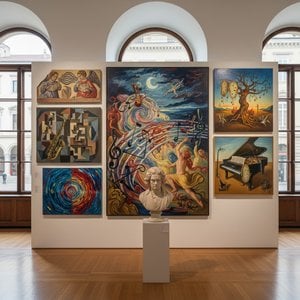
Harmonies on Canvas: Exploring the Visual Representation of Music in Art History
Explore the fascinating history of music's visual representation in art! From ancient symbolism to modern abstraction, discover how artists have captured sound and emotion on canvas. Expert insights & stunning examples.
Modern Masters: 10 Defining Artworks & Timeless Home Decor Inspiration
Explore 10 defining masterpieces of early modern art – from Picasso & Matisse to Dalí! Discover the stories behind iconic paintings, movements like Cubism & Surrealism. Find museum-quality art reproductions for your home at ArtsDot.com.
워싱턴 내셔널 갤러리 명작 25선: 예술의 정수를 담은 컬렉션 | ArtsDot
워싱턴 내셔널 갤러리의 숨겨진 명작 25점을 만나보세요. 모네, 세잔, 피카소 등 거장들의 예술 세계와 감동적인 스토리를 ArtsDot에서 경험하세요. 고품질 아트 프린트 & 인테리어 디자인 영감을 얻고, 당신의 공간에 예술을 더하세요! 지금 바로 ArtsDot.com에서 컬렉션을 탐험하세요.

19th Century Masterpieces: 10 Paintings That Defined an Era | ArtsDot
Journey through 19th century art with ArtsDot! Explore 10 iconic paintings – from Monet & Renoir to Courbet – and discover the stories behind Romanticism, Realism & Impressionism. Find museum-quality reproductions for your home decor. Explore the full collection online!



