

 미리보기
미리보기
 공유하기
공유하기 공유하기
공유하기
 상세 정보
상세 정보

 다운로드
다운로드
 유사 작품
유사 작품 X-레이
X-레이 슬라이드 쇼
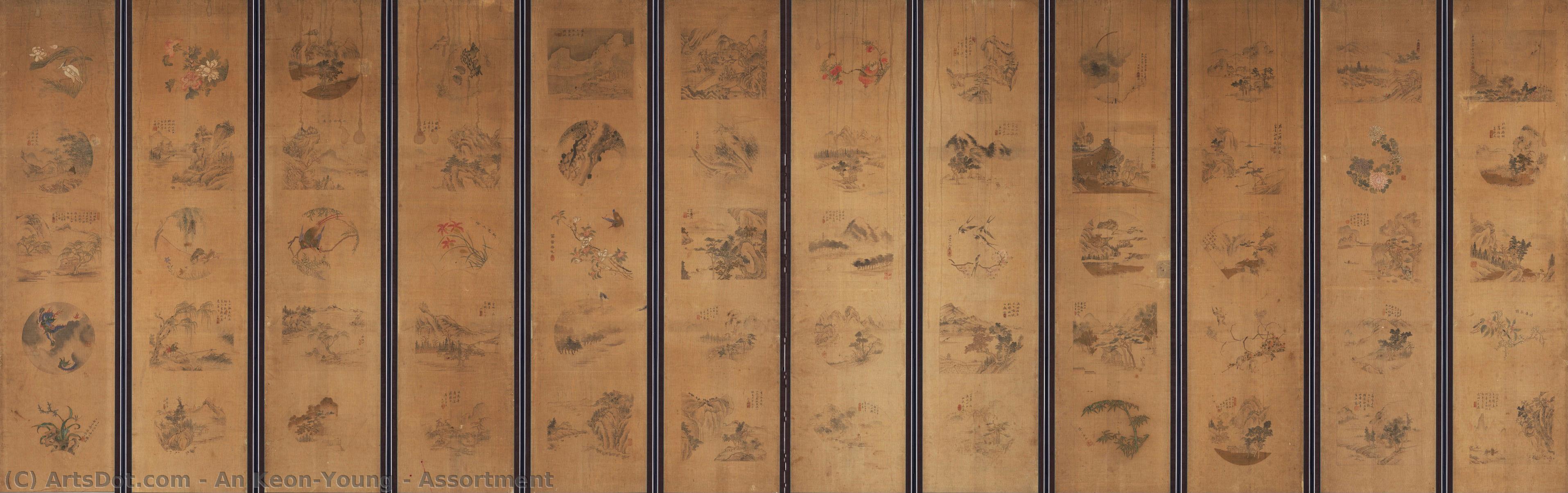
Assortment
 148.0 x 33.0 cm
 Horim Museum
 더 보기
더 보기
수제 유화 복제품
원하는 크기와 액자로 주문 제작되는, 작가들이 직접 캔버스에 손으로 그린 유화 작품입니다. ( 프린트 주문으로 전환 이미지로 전환)




































작품의 원본 비율을 유지하는 미리 설정된 크기 중에서 선택하세요.

특정 프레임이나 공간에 맞도록 직접 크기를 입력할 수 있습니다. 선택하신 크기가 원본 이미지의 비율과 일치하지 않는 경우, 작품을 자르거나 추가적인 손으로 그린 요소를 사용하여 그림을 확장합니다. 제작 시작 전 승인을 위해 디지털 목업을 보내드립니다.
화면 미리 보기는 실제 자르기 또는 확장을 반영하지 않습니다. 최종 구성은 목업을 통해서만 정확하게 확인하실 수 있습니다.
맞춤 크기 제작도 가능하지만, 원본 비율을 유지하기 위해 사전 정의된 목록에서 크기를 선택하시는 것을 권장합니다.
주문 후 ArtsDot.com 팀에서 상세 안내를 위해 고객님께 이메일을 보내드리며, 미리보기 시안을 제공해 드립니다.


 유리 옵션은 110cm 미만 크기에서만 선택 가능합니다.

Assortment
재현 기법
복제본 크기
-


최종 결제 금액
$ 263
작품 상세 설명
작가 약력
A Life Illuminated: The Early Years and Artistic Awakening
An Keon-Young (1841-1876) emerged from the vibrant tapestry of late Joseon Dynasty Korea, a period marked by both artistic flourishing and increasing Western influence. Born into a family deeply rooted in traditional Korean art practices – particularly court painting and textile design – his early life was shaped by a confluence of cultural heritage and nascent artistic curiosity. While biographical details remain somewhat fragmented, historical records suggest he began his artistic journey as a student under the tutelage of prominent figures within the Korean art establishment. His initial training focused on mastering the intricate techniques of traditional Korean painting styles, absorbing the meticulous detail and symbolic language inherent in these established forms. Simultaneously, he demonstrated an early aptitude for textile arts, specifically embroidery and silk weaving – skills that would become central to his distinctive artistic style.
- Early Influences: The influence of Joseon court painting is readily apparent in the meticulous detail and balanced compositions of his later works.
- Traditional Techniques: Keon-Young’s early training instilled a deep understanding of Korean brushwork, color theory, and compositional principles.
- Textile Heritage: His family's connection to textile production provided him with invaluable knowledge of silk weaving techniques and the properties of various dyes.
The Emergence of “Assortment”: A Unique Artistic Vision
Keon-Young’s most celebrated work, "Assortment," represents a pivotal moment in his artistic development – a bold departure from traditional Korean painting while retaining its core aesthetic values. Created around 1870, this large-scale folding screen embodies a remarkable synthesis of Eastern and Western influences. Unlike the static, formalized compositions typical of court paintings, “Assortment” is characterized by dynamic movement, vibrant color palettes, and an innovative use of space. The screen’s design incorporates a diverse array of motifs – landscapes, flowers, birds, plants, and even aquatic creatures – each rendered in miniature vignettes framed within meticulously crafted borders. This deliberate juxtaposition of subjects creates a sense of visual abundance and playful exploration.
Crucially, Keon-Young's technique involved directly painting onto the silk screen itself, rather than adhering separate panels afterward—a revolutionary approach at the time. This method allowed for an unprecedented level of integration between design and execution, resulting in a seamless and unified visual experience. The use of light colors on silk is also notable, creating a luminous quality that contrasts sharply with the darker tones often associated with traditional Korean painting.
Connections to Western Art and European Techniques
Despite his deep roots in Korean artistic tradition, Keon-Young’s work reveals a clear engagement with Western art movements, particularly Impressionism and Japonisme. The influence of these styles is evident in the loose brushwork, emphasis on capturing fleeting moments of light, and incorporation of Western compositional techniques. Notably, there are parallels between “Assortment” and the works of European landscape painters like Claude Monet, who similarly sought to capture the ephemeral qualities of nature through vibrant color and atmospheric effects. Furthermore, the decorative elements within the screen—the intricate borders and miniature vignettes—echo the aesthetic sensibilities of Japanese woodblock prints (Japonisme), which were gaining popularity in Europe during this period.
- Impressionistic Influence: The use of light and color reflects a growing interest in capturing fleeting moments.
- Japonisme’s Echoes: Decorative elements draw inspiration from Japanese woodblock prints.
- Western Composition: Incorporation of Western compositional techniques, such as dynamic arrangements and asymmetrical balance.
Legacy and Historical Significance
An Keon-Young’s “Assortment” stands as a testament to the dynamism and creativity of Korean art during a period of profound cultural change. His innovative approach to silk painting, blending traditional techniques with Western influences, challenged established artistic conventions and paved the way for future generations of Korean artists. While his life was tragically cut short at the age of 35, his work continues to be celebrated as a masterpiece of Korean art—a vibrant expression of both cultural heritage and artistic vision. His legacy is preserved through exhibitions at institutions like the Young Gallery in Salisbury, England, where “Assortment” remains a centerpiece of its collection, offering visitors a glimpse into the remarkable artistry of this often-overlooked figure.

an keon-young
United States of America
주요 정보
- Artistic Movement Or Style: Ink & Light Silk Painting
- Artists Or Movements Influenced By This Artist: ['East Asian art']
- Artists Who Influenced This Artist:
- Edwin Young
- John Creasey
- Full Name: An Keon-young
- Nationality: American
- Notable Artworks: ['Assortment']
- Place Of Birth: United States of America

