


 실제 크기로 보기
 보내기
보내기 공유하기
공유하기
 상세 보기
상세 보기 가이드 보기

 이미지 다운로드
 유사 작품 더 보기
 X-레이
X-레이 슬라이드 쇼 보기
 통계 정보
통계 정보(80)


 상세 보기
상세 보기
지클레 / 아트 프린트
빠른 제작과 다양한 마감 옵션을 선택할 수 있는 박물관 수준의 지클레이 및 캔버스 프린트. ( 수작업 채색 복제본 주문하기 디지털 이미지 판매 채널로 전환)




P118B ₩10

P118H ₩10

P118W ₩10

P438Z ₩10

P508JH ₩12

P508YH ₩12

P805H ₩10

P805Z ₩10

P919BZ ₩10

P919G ₩10

P919XJ ₩10

P959ZH ₩10

P968JZ ₩12

W106C ₩8

W218G ₩10

W218JH ₩8

W218Y ₩10

W307PJ ₩10

W316G ₩10

W316PJ ₩8

W316Y ₩10

W398PJ ₩8

W4111J ₩10

W500HY ₩15

W500JH ₩15

W692G ₩12

W849H ₩8

W940BG ₩15

W953PJ ₩8




작품의 원본 비율을 그대로 유지하는 프리셋 사이즈 중에서 선택해 보세요.

액자나 벽면 크기에 맞춰 필요한 가로와 세로 길이를 입력해 주세요. 프린트는 원본 이미지보다 크게 제작할 수 없으며 오직 자르는 것만 가능하므로, 비율이 다른 사이즈를 선택할 경우 이미지의 일부가 잘려 나갈 수 있습니다. 인쇄 작업에 들어가기 전, 최종 확인을 위해 디지털 목업을 보내드립니다. 이 페이지에 표시된 이미지는 실제 잘리는 영역을 나타내지 않으며, 오직 목업을 통해서만 정확한 확인이 가능합니다.


 유리 옵션은 110cm 미만 크기에서만 선택 가능합니다.

(80)
지클레 / 아트 프린트
복제본 규격
-


총 결제 금액
₩ 83974
A Vision of Femininity and Mythic Harmony
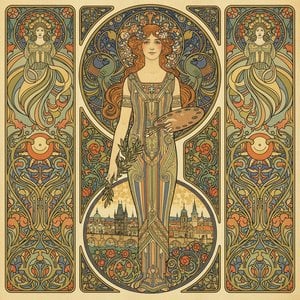
In the golden twilight of the nineteenth century, few names evoke the sinuous elegance of the Belle Époque quite like Alphonse Mucha. His masterpiece, “The Slavonic Uprising,” stands as a breathtaking testament to the Art Nouveau movement, a period defined by its rejection of rigid academic structures in favor of organic, flowing lines and opulent ornamentation. Within this composition, we encounter a profound engagement with mythology and symbolism, where the boundaries between the human spirit and the natural world begin to dissolve. Mucha does not merely present a portrait; he invites the viewer into a dreamscape where idealized femininity meets the deep, resonant echoes of Slavic folklore.
The central figure of the work serves as an anchor for this mythic narrative—a woman whose presence is both ethereal and commanding. Draped in silks that seem to catch an unseen breeze, she embodies a sense of graceful movement that is characteristic of Mucha’s celebrated style. As her hair cascades down her shoulders like a waterfall of shimmering gold, it reflects the artist's meticulous fascination with botanical textures and natural forms. This fluidity is further enhanced by the presence of birds that dance through the composition, adding layers of depth and a rhythmic pulse to the scene, as if the very air around her is alive with song and motion.
The Alchemy of Line and Color
To behold this work is to witness a masterclass in technical precision. Mucha’s approach was far from accidental; it was a disciplined study of anatomy and botanical illustration blended with an almost magical use of color. Utilizing the delicate layering of thin washes—often employing tempera on canvas—he achieved a luminous surface that appears to glow from within. This technique creates a shimmering, pearlescent quality that makes the subject appear as though she is bathed in a soft, celestial light.
Every detail, from the intricate patterns on her garments to the delicate feathers of her avian companions, is rendered with an astonishing level of care. For the discerning collector or interior designer, this level of detail offers a profound visual richness. The way the colors interact—soft pastels meeting deeper, more resonant tones—creates a balanced palette that can anchor a room with both sophistication and warmth. It is a symphony of line and color that captures the eye and holds it, rewarding repeated observation with new discoveries in every curve and shadow.
Symbolism and the Soul of Art Nouveau
Beyond its aesthetic splendor, “The Slavonic Uprising” is deeply rooted in a complex web of allegory. Mucha’s work often sought to elevate the human experience through visual storytelling, weaving together Christian iconography and Slavic legends to create something transcendent. The interplay between the woman and the birds suggests a harmony between civilization and nature, a central theme of the Art Nouveau ethos. This piece is not just an object of beauty; it is a narrative vessel that carries the weight of cultural identity and spiritual aspiration.
For those seeking to bring a sense of historical depth and emotional resonance into a curated space, this reproduction offers more than mere decoration. It provides a window into a lost era of romanticism and intellectual curiosity. Whether placed in a grand salon or a quiet study, the painting radiates an aura of timeless elegance, making it an incomparable choice for anyone looking to inspire awe and contemplation through the enduring power of fine art.
질의응답
"(80)"의 조회수는 얼마인가요?
"(80)"에 대한 통계 페이지가 존재합니다. 이 페이지에는 해당 작품과 작가의 다른 작품들에 대한 월별 방문자 수가 국가 및 언어별로 상세히 표시됩니다.
알폰스 무하의 "(80)"을(를) 다른 조명 아래에서 볼 수 있을까요?
알폰스 무하의 "(80)"의 X선 분석 페이지는 엑스레이 스타일의 뷰를 포함하여 작품 이미지의 11개 광학 레이어를 슬라이드하며 살펴볼 수 있는 인터랙티브 뷰어를 제공합니다.
"(80)"은(는) 어떤 분위기를 담고 있나요?
알폰스 무하의 "(80)"의 전반적인 분위기는 Romantic입니다. 이 분위기는 작품의 전반적인 공기를 설명합니다.


작가 소개
알폰스 무하: 꿈결 같은 선과 슬라브 민족의 영혼을 담은 예술가
1860년 보헤미아의 작은 마을 이바나치체에서 태어난 알폰스 무하는 어린 시절부터 뛰어난 예술적 재능을 드러냈다. 프라하 미술 아카데미에 입학했지만, 전통적인 교육 방식에 만족하지 못하고 새로운 가능성을 찾아 1887년 파리로 떠났다. 당시 파리는 인상주의와 신인상주의 등 다양한 사조가 공존하며 격동적인 예술적 변화를 겪고 있었다. 무하는 이러한 환경 속에서 자신만의 독특한 스타일을 구축하기 시작했다. 초기에는 일러스트레이터로 활동하며 생계를 유지했지만, 그의 인생을 완전히 바꿔놓은 운명적인 만남이 기다리고 있었다. 바로 프랑스를 대표하는 여배우 사라 베르나르와의 조우였다.사라 베르나르와의 협업과 아르누보의 탄생
1894년, 무하는 사라 베르나르의 연극 <지스몬다> 포스터 제작을 의뢰받았다. 이 포스터는 곧 엄청난 성공을 거두며 무하를 일약 스타덤에 올려놓았다. 베르나르는 이후에도 수많은 작품을 무하에게 맡겼고, 무하는 그녀를 위한 극장 포스터, 장식 디자인 등을 제작하며 아르누보 스타일의 정수를 보여주었다. 그의 작품은 유려한 곡선, 화려한 꽃문양, 이상화된 여성 이미지로 특징지어진다. 단순하면서도 우아하고 세련된 디자인은 당시 유럽 사회에 큰 반향을 일으켰고, 무하는 ‘무하 스타일’이라는 새로운 장르를 창조하며 아르누보 운동의 선구자가 되었다. 특히 그의 포스터는 광고 디자인의 개념을 혁신적으로 변화시켰다는 평가를 받는다.슬라브 민족의 역사와 자긍심을 담은 대작, <슬라브 서사시>
무하는 아르누보 스타일로 명성을 얻었지만, 그의 예술적 열망은 단순히 장식적인 아름다움을 넘어선 곳에 있었다. 그는 자신의 조국 체코의 역사와 문화를 세계에 알리고 싶다는 강한 의지를 품고 있었다. 1912년부터 1930년까지 무하는 <슬라브 서사시>라는 거대한 연작을 제작하기 시작했다. 이 작품은 슬라브 민족의 기원부터 현대까지의 역사적 사건과 영웅들을 담고 있으며, 총 20점의 대형 회화로 구성되어 있다. 무하는 체코 전역을 여행하며 자료를 수집하고, 민속 예술가들과 교류하며 작품에 깊이를 더했다. <슬라브 서사시>는 슬라브 민족의 자긍심을 고취시키고, 독립된 국가 건설에 기여하는 중요한 역할을 했다.독립 체코슬로바키아를 위한 헌신과 예술적 유산
제1차 세계대전 이후 독립한 체코슬로바키아 정부는 무하에게 우표, 지폐, 공문서 등 국가적인 디자인을 의뢰했다. 무하는 자신의 예술적 재능을 조국을 위해 기꺼이 헌신하며 새로운 국가의 이미지를 구축하는 데 앞장섰다. 그의 디자인은 체코슬로바키아 국민들에게 큰 자긍심을 심어주었고, 독립 국가로서의 정체성을 확립하는 데 중요한 역할을 했다. 무하의 작품은 단순한 예술 작품을 넘어선 사회적 의미를 지니고 있었던 것이다. 1939년 프라흐에서 세상을 떠난 알폰스 무하는 아르누보 운동의 거장으로서, 그리고 슬라브 민족의 영혼을 담은 예술가로서 후대에 깊은 영향을 미쳤다. 그의 작품은 오늘날에도 전 세계적으로 사랑받고 있으며, 꿈결 같은 선과 아름다운 색채는 시대를 초월하여 감동을 선사하고 있다. 무하 스타일은 여전히 많은 디자이너들에게 영감을 주고 있으며, 그의 예술적 유산은 앞으로도 오랫동안 빛날 것이다.
알폰스 무하
1860 - 1939 , 체코 공화국
작가 정보 요약
- 국적: 체코
- 사망일: 1939년
- 영향을 받은 예술가: ['에바 프로코프초바']
- 영향을 준 예술가:
- 피에르 오귀스트 르누아르
- 귀스타브 모로
- 예술 사조: 아르누보
- 이름: 알폰스 마리아 무하
- 주요 작품:
- 슬라브 봉기
- 살롱 데 썽
- 출생일: 1860년 7월 15일
- 출생지: 브르노, 체코 공화국
관련 기사

아르누보를 빛낸 10대 걸작: 예술과 인테리어의 조화로운 혁신
아르누보 미술의 정수를 담은 10대 걸작을 만나보세요! 무하, 클림트 등 거장의 작품부터 유기적 곡선과 자연주의 색감이 돋보이는 예술 세계를 탐험하고, ArtsDot.com에서 고품질 아트 프린트를 찾아 당신의 공간에 예술적인 영감을 더하세요.
Alphonse Mucha: A Comprehensive Exploration of Art Nouveau's Master of Decorative Symbolism
Explore the life & art of Alphonse Mucha, master of Art Nouveau! Discover his iconic posters, stunning illustrations, and the monumental Slav Epic. A comprehensive guide for collectors & enthusiasts.

The Flowing Line & Flourishing Form: Exploring Art Nouveau's Aesthetic Legacy
Explore the captivating world of Art Nouveau! Discover its origins, key artists like Horta & Mucha, regional styles, innovative techniques, and lasting influence on architecture & design. A comprehensive guide for art enthusiasts.

The Gilded Age Reimagined: Exploring the Aesthetic Principles & Enduring Legacy of Art Deco
Explore the captivating world of Art Deco! Discover its origins, defining features, cultural impact & enduring legacy. Expert insights for collectors and design enthusiasts. Shop handmade reproductions at ArtsDot.

Feathered Visions: A Historical & Artistic Exploration of Birds in Painting
Explore the rich history of birds in painting! Discover symbolism, artistic movements & master artists like Audubon. High-quality reproductions available at ArtsDot.