

 미리보기

 공유하기
 공유하기
 상세 정보
 가이드 보기


 다운로드
 유사 작품 더 보기
 X-레이
 슬라이드 쇼 보기
 질의응답
 통계 정보
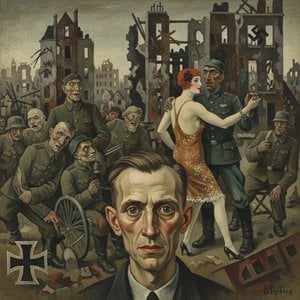
After the Battle

- 209.0 x 260.0cm


 더 보기
이 페이지에 표시된 작품은 저작권법의 보호를 받으며, 이에 따라 동일한 복제품을 제작하거나 판매하는 것은 법으로 금지되어 있습니다. 이러한 권리 보호는 다음과 같은 국제 협약에 따라 시행됩니다. 베른 협약 또한 다음에서 명시하는 법률을 포함한 국내법에 의해 보호됩니다. 미국 저작권법 제17조.
이 방식은 저작권 보호를 받는 예술 작품을 복제하거나 그대로 재현하는 것이 아니기에 저작권 규정을 완벽히 준수합니다. 대신, 이는 창의적인 재해석의 과정을 거칩니다. 즉, 원작에서 영감을 받되 원작과 동일하지 않은 새로운 회화 작품을 의미합니다.
지클레 / 아트 프린트
빠른 제작과 다양한 마감 옵션을 제공하는 박물관 수준의 지클레이 및 캔버스 프린트. ( 수작업 채색 복제본 주문하기 디지털 이미지로 전환)
































작품의 원본 비율을 그대로 유지하는 프리셋 사이즈 중에서 선택해 보세요.

액자나 벽면 크기에 맞춰 필요한 가로와 세로 길이를 입력해 주세요. 프린트는 원본 이미지보다 크게 제작할 수 없으며 오직 자르는 것만 가능하므로, 비율이 다른 사이즈를 선택할 경우 이미지의 일부가 잘려 나갈 수 있습니다. 인쇄 작업에 들어가기 전, 최종 확인을 위해 디지털 목업을 보내드립니다. 이 페이지에 표시된 이미지는 실제 잘리는 영역을 나타내지 않으며, 오직 목업을 통해서만 정확한 확인이 가능합니다.


 유리 옵션은 110cm 미만 크기에서만 선택 가능합니다.

After the Battle
지클레 / 아트 프린트
복제본 크기
-


최종 결제 금액
₩ 83551
유사한 작품들


작가 정보
Early Life, Family and Training
Born in Vienna, Austria, Roland Strasser entered a world where the visual arts were a family language. He was the son of Arthur Strasser, a man who expressed his vision through both painting and sculpture. This lineage provided a foundation of craftsmanship from his earliest years, shaping the hands of a boy destined to become a painter and graphic artist. The influence of his father likely guided his initial steps toward a formal education in the arts.
His formal training began in his home city, where he studied at the Vienna Academy under the guidance of Jungwirth. This period of study provided the essential technical grounding required for a professional career. Seeking to expand his horizons and refine his technique, he eventually moved to the Munich Academy. From 1911 to 1915, he worked under the instruction of Angelo Jank, absorbing the methods and perspectives offered by one of the prominent teachers of that era.
Travels and Life in Asia
Following his service as a war painter for the k.u.k. Kriegspressequartier during the First World War, Strasser turned his gaze toward the East. His wanderings began in earnest in 1919, as he set out on study trips to Holland, Siam, Java, and New Guinea. During these early excursions, he found himself drawn to the island of Bali, where he lived for the first time in 1919. This early connection to the island would later define much of his life and perspective.
The years between 1922 and 1924 saw him pushing further into the heart of the continent, traversing China, Mongolia, and Tibet. His path through the Khovd Province was marked by great peril; after being held in custody by Russian occupation soldiers on suspicion of espionage, he was eventually released. He had to navigate his way through the vastness of the Gobi Desert to reach China once more. In Peking, misfortune struck when he was plundered by Changsolin rebel soldiers, who took all the artistic results of his travels.
Strasser eventually returned to Bali in 1934, seeking a more settled existence in the tropics. He remained on the island until 1945, enduring the hardships of the Japanese occupation. During those four years of conflict, he and his wife lived in hiding, waiting for the world to find its peace again.
Life in Europe and the United States
After his arduous travels through the landscapes of Asia, Strasser sought a more settled existence in the West. He arrived in London in the autumn of 1924, where his recent experiences found a receptive audience. That same year, he held exhibitions that met with success, establishing a presence in the city's artistic circles. This period of stability was interrupted by a return to his native Vienna in August 1927, though the pull of the international art scene eventually drew him back across the channel.
London became his primary residence for many decades. He remained active in the city, working and living there until 1952. His long tenure in England provided a steady backdrop to a life that had once been defined by the uncertainty of desert crossings and mountain passes. Eventually, the pull of the Pacific drew him away from Europe entirely. He moved to Santa Monica, California, where he spent his final years until his death in 1974.
Notable Works and Collections
The weight of his experiences during the Great War found its way onto canvas, leaving behind works that reside within the Heeresgeschichtliches Museum in Wien. Among these is Kriegsgefangene Serben, an oil on canvas from about 1914/15. His brush also captured the heavy atmosphere of conflict in Nach der Schlacht, a large oil on canvas measuring 209 × 260 cm, which also remains in the collection of the Heeresgeschichtliches Museum Wien. Another significant piece held there is Das Tonalkreuz, an oil on canvas from 1917 measuring 135 × 138 cm.
As his life moved toward the East, his subjects shifted to reflect the people and traditions he encountered. His interest in the customs of the islands is reflected in works such as Balinese Legong Dancer (Penari Legong Bali). These paintings capture the specific grace of the dancers he observed during his time in Bali.

Roland Strasser
1892 - 1974 , Austria
작가 정보 요약
- Full Name: Roland Strasser
- Nationality: Austrian
- Notable Artworks:
- Serbian Prisoners of War
- After the Battle
- The Tonalk Cross
- Place Of Birth: Vienna, Austria
- Date Of Birth: 1892
- Date Of Death: 1974
관련 콘텐츠

Paolo Uccello: Pioneering Perspective & the Renaissance Pursuit of Visual Truth
Explore the revolutionary art of Paolo Uccello, a Florentine Renaissance master who pioneered perspective. Discover his iconic paintings like 'St. George & The Dragon' and learn about his lasting influence on art history.

Yvonne Jean Haffen: A Breton Vision of Post-War Abstraction
Discover the captivating world of Yvonne Jean Haffen, a leading figure in post-war French abstraction. Explore her unique style, vibrant color palettes, and investment potential with ArtsDot.

Echoes of Trauma & Hope: Representing Transformation in Artworks of 1918
Explore the profound artistic responses to World War I's trauma & hope. Discover Expressionist masterpieces by Bacon, de Kooning & more. Expert insights for collectors & art enthusiasts at ArtsDot.
Otto Dix: Trauma, Society & Artistic Rebellion in Weimar Germany
Explore the powerful and unsettling art of Otto Dix, a key figure of Neue Sachlichkeit. Discover his unflinching depictions of Weimar Germany's trauma, society, and war through insightful analysis & iconic masterpieces.

Lech Jankowski: Polish Abstraction & the Materiality of Post-War Identity
Explore the compelling work of Lech Jankowski, a leading figure in Polish post-war abstraction. Discover his unique exploration of materiality, identity, and surreal landscapes – a valuable addition to any discerning art collection.