A Life of Color and Nature
Born in Dordrecht, Netherlands, Pieter van der Hulst emerged as a versatile master of the Dutch Golden Age, weaving together the delicate beauty of flora with the raw vitality of the animal kingdom. His artistic journey began in earnest when he traveled to The Hague to study under the guidance of Willement Doudijns in 1668. This foundational training prepared him for a life of wandering and discovery, leading him eventually to the sun-drenched landscapes of Rome. It was during his time in Italy, specifically between 1674 and 1677, that his passion for botanical precision truly blossomed. Immersed in the Roman atmosphere, he focused intensely on the art of flower painting, a pursuit that would define much of his early renown.
While in Rome, Van der Hulst became part of the Bentvueghels, a spirited association of Dutch and Flemish artists. Within this brotherhood, he adopted the evocative nickname "Zonnebloem" (Sunflower). This moniker was not merely a whimsical title but a reflection of his artistic soul; it signaled his preference for depicting wilder, more untamed blossoms than the meticulously manicured specimens favored by contemporaries like Jan Davidsz de Heem or Daniel Seghers. His compositions often embraced the organic chaos of nature, decorating his floral arrangements with unexpected elements such as wild herbs, snakes, toads, and salamanders, creating a sense of living, breathing ecosystems on canvas.
Mastery of Subject and Style
The breadth of Van der Hulst’s repertoire was remarkable, spanning portraits, still lifes, forest scenes, game pieces, and animal paintings. He possessed a unique ability to shift his focus from the minute details of a petal to the grander, more emotive depictions of fauna. One of his most captivating achievements lies in his ability to imbue animal subjects with profound character. In works such as Dalmatian Dog with Puppies, he captures a tender, domestic scene where a mother dog rests on a terrace, surrounded by the playful and exhausted movements of her litter. Through a balanced triangular composition and the gentle warmth of afternoon light, he creates an atmosphere of profound harmony.
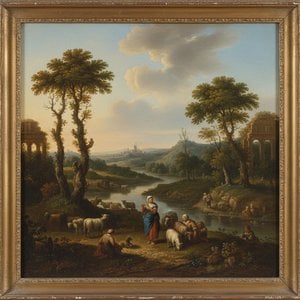
His technical evolution also saw him experimenting with landscape elements to enhance his central subjects. In some instances, he integrated Arcadian backgrounds featuring lakes and ruins, styles that echoed the evening landscapes of Aelbert Cuyp. While he later attempted to find success in portraiture, it was his ability to capture the essence of the natural world—whether through the stillness of a forest or the lively energy of hunting motifs—that secured his place in the annals of Dutch art. His career took him across borders, including a significant period in Denmark, where he served as a court painter to the king from 1691 to 1699, further expanding the reach of his distinctive, nature-centric vision.
კითხვები და პასუხები
რა ქალაქსა და ქვეყანაში დაიბადა Pieter Van Der Hulst?
Pieter Van Der Hulst დაიბადა Dordrecht-ში, Netherlands-ში.
შესაძლებელია თუ არა Pieter Van Der Hulst-ის ნამუშევრების ფერების მიხედვით დაჯგუფება?
ფერების სპექტრული ინდექსი გვერდზე Pieter Van Der Hulst-ის ნამუშევრები ფერების მიხედვით არის დაჯგუფებული.
სად შემიძლია ვნახო Pieter Van Der Hulst-ის ნამუშევრების ფერთა პალიტრა?
Pieter Van Der Hulst-ის პალიტრის გენომი წარმოადგენს გვერდს, სადაც ასახულია ხელოვანის შემოქმედების ფეროვანი პროფილი.