Paolo Borroni: A Neoclassical Painter of Italian Religious Art
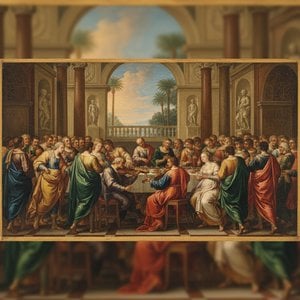
Paolo Borroni (1749-1819) was a significant Italian painter working within the Neoclassical style. Born in Voghera, Italy, he dedicated his life to depicting religious themes and classical motifs with a notable sense of realism. His career spanned several decades, marked by periods of study, artistic development, and recognition for his contributions to 18th-century Italian art.
Early Life and Training (1749-1776)
- Birth and Initial Studies: Borroni was born in Voghera, Italy, in 1749. His early artistic training began in his hometown.
- Milan and Calderini: In 1761, he moved to Milan where he studied under the guidance of Calderini (or Calderino), gaining foundational skills in painting techniques.
- Parma and Benigno Rossi: Subsequently, Borroni relocated to Parma and continued his studies with Benigno Rossi, further refining his artistic abilities.
- Academy Awards: His talent was recognized early on; he secured several prizes from the Academy of Fine Arts in Parma in both 1770 and 1771, demonstrating exceptional promise.
- Rome and Pompeo Batoni: A pivotal moment arrived in 1772 when Borroni journeyed to Rome and worked within the prestigious studio of Pompeo Batoni. This experience profoundly shaped his artistic style, instilling a classicist sensibility and emphasizing realism – hallmarks of his later work.
- Return to Voghera: After a trip to Venice, Borroni returned to Voghera in 1776, marking the beginning of his independent career.
Major Works and Artistic Development (1777-1809)
- Early Commissions: Shortly after returning to Voghera, Borroni received significant commissions, including a "Marriage of the Virgin" and "Flight from Egypt" for the church of San Giuseppe in 1777.
- "Death of St Joseph": In 1778, he painted “Death of St Joseph” for the church of the Convitto, showcasing his ability to portray dramatic religious scenes with emotional depth.
- Milan Period (1780-1787): From 1780 to 1787, Borroni resided in Milan, maintaining a studio at the Collegio Elvetico. This period saw him receive a pension from King Vittorio Amedeo in 1787 for a portrait, indicating royal recognition of his talent.
- "Assumption": He created an "Assumption" painting for the cathedral of Vercelli, further solidifying his reputation as a skilled religious artist.
- "Morte del Giustio": In 1809, Borroni painted “Morte del Giustio” for the church of Rivanazzano Terme, demonstrating continued artistic activity and adaptation to evolving tastes.
Style and Influences
Borroni’s style is firmly rooted in Neoclassicism, a movement that emphasized order, symmetry, and classical themes inspired by ancient Greek and Roman art. His training under Pompeo Batoni was instrumental in shaping this aesthetic. While influenced by the Baroque style of artists like Caravaggio (Michelangelo Merisi), Borroni distinguished himself through his adherence to neoclassical principles.
- Neoclassical Elements: His paintings are characterized by a clarity of form, balanced compositions, and restrained emotional expression – all hallmarks of Neoclassicism.
- Classical Themes: He frequently depicted scenes from the Bible and the lives of saints, often incorporating classical motifs and settings to enhance their visual appeal.
- Realism: Borroni’s commitment to realism is evident in his meticulous attention to detail and accurate portrayal of human figures.
Legacy and Historical Significance
Paolo Borroni's contributions to the Neoclassical movement in Italy are significant. His works, found in various museums and collections including the Duomo della Vergine Assunta in Naples, demonstrate his skill as a religious painter and his ability to synthesize classical influences with Italian artistic traditions. He remains an important figure in understanding the development of art during the 18th century, bridging the gap between Baroque and Neoclassical styles.
For more information on Paolo Borroni's life and work, visit ArtsDot.com. Further details about Neoclassical art can be found on the Wikipedia page on Paolo Borroni and the broader topic of Neoclassicism.