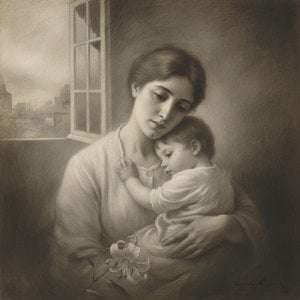
A Legacy Born of Lineage
Born in Paris, Luc Georges Maxime Simon entered a world where the brush was a family language. He was the son of the painter Ernest Simon and the grandson of Emile Dardoize, a lineage that ensured the scent of oil paint and the texture of canvas were part of his earliest memories. His upbringing was not merely a domestic affair but an apprenticeship of the soul, as he spent his youth following his father, brother, and grandfather sur le motif, capturing the essence of the landscape directly from nature.
His formal training took him through the prestigious halls of the Académie Julian under Gabriel Ferrier, and later to the studio of Bouguereau at the École nationale des Beaux-Arts. These years of rigorous study provided the foundation for a hand that understood both the structure of form and the delicate play of light. Even when the Great War called him to serve as a reserve officer, the pull of the visual world remained constant, shaping a man who would eventually find his peace in the quietude of the French countryside.
The Landscapes of Île-de-France
The movement of his life was dictated by the geography of his family's travels and the shifting light of the Seine-et-Oise region. As his family moved through various localities, Simon became a chronicler of the French landscape, finding profound beauty in the rolling hills and small villages of Île-de-France. He possessed a particular affinity for the way light interacted with the natural world, whether in the dense foliage of a forest or the stillness of a riverbank.
His technical mastery was most evident in his ability to balance two distinct realms of subject matter:
- The expansive, atmospheric views of village life and undulating hills.
- The intimate, controlled studies of floral bouquets and still lifes.
In his still lifes, he achieved a remarkable command over color and luminosity, treating a simple arrangement of flowers with the same gravity and attention to detail as a wide landscape. This duality allowed him to move between the grand scale of the outdoors and the quiet, concentrated study of a single tabletop.
Recognition and Finality
By the 1920s and 1930s, his reputation had grown beyond the private circles of his family, earning him a place in the competitive salons of Paris. He exhibited his work at the Salon des Indépendants, the Salon d'Automne, the Salon des Tuilerres, and the Société Nationale des Beaux-Arts. His talent for capturing the likeness of his subjects also brought him a steady stream of portrait commissions from the Parisian public and the residents of Carolles, a village in the bay of Mont-Saint-Michel that held a special place in his heart.
The light eventually faded for the artist in Éaubonne. After a battle with cancer, he passed away in 1941. He left behind a body of work that remains a window into the light and color of a specific era of French painting, captured by a man who was, in every sense, a product of his artistic heritage.
კითხვები და პასუხები
სად შემიძლია ვნახო Maxime Simon-ის ყველა ნამუშევარი?
ეს ვებსაიტი-ზე წარმოდგენილი Maxime Simon-ის ყველა ნამუშევრის ნახვა შესაძლებელია ხელოვანის ყველა ნამუშევარი გვერდიდან.
როგორ არის დაყოფილი Maxime Simon-ის კარიერა პერიოდებად?
Maxime Simon-ის შემოქმედების ქრონოლოგიური მიმოხილვა ხელოვანის ქრონიკა გვერდზეა წარმოდგენილი, სადაც ნამუშევრები შექმნის თანმიმდევრობით, თავსებადობის მიხედვით არის დაჯგუფებული.
რა ფსევდონიმებით ან ალტერნატიული სახელებით არის ცნობილი Maxime Simon?
Maxime Simon ასევე ცნობილია როგორც Luc Georges Maxime Simon.
სად შემიძლია Maxime Simon-ის ნამუშევრების ქრონოლოგიური თანმიმდევრობით ნახვა?
Maxime Simon-ის ნამუშევრების ქრონოლოგია ხელოვანის ნამუშევრების ქრონოლოგია გვერდზე წარმოდგენილია შექმნის თარიღების მიხედვით.