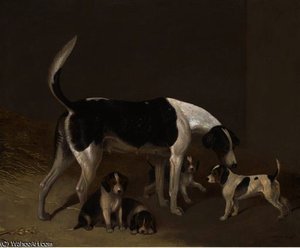
A Life Painted in Light: The World of Edwin Cooper
Edwin Cooper, born in 1785 and passing in 1833, remains a somewhat enigmatic figure within the landscape of 19th-century British art. While not enjoying the widespread renown of contemporaries like Turner or Constable, his work possesses a quiet dignity and a meticulous attention to detail that speaks volumes about the era’s evolving artistic sensibilities. Cooper's paintings, often depicting idyllic rural scenes and historical narratives, offer a fascinating glimpse into the social and aesthetic values of the time. His career unfolded during a period of significant change – the transition from Neo-Classicism towards Romanticism – and his art reflects this tension between order and emotion, restraint and passion.
Early Years and Artistic Formation
Details regarding Cooper’s early life are scarce, adding to the mystique surrounding him. It is known that he exhibited at the Royal Academy from 1805 onwards, suggesting a formal artistic training, though the specifics of his education remain undocumented. The influence of earlier landscape masters like Richard Wilson is readily apparent in his initial works; these paintings showcase a delicate handling of light and atmosphere, coupled with a compositional clarity characteristic of the Neo-Classical style. However, Cooper quickly began to develop a distinctive voice, moving away from strict imitation towards a more personalized interpretation of the British countryside. He wasn’t merely replicating scenes but imbuing them with a sense of narrative and emotional resonance.
Themes and Techniques: A Blend of History and Landscape
Cooper's oeuvre is characterized by two primary themes: serene landscapes and historical paintings, often intertwined. His landscapes are not wild or untamed; instead, they present an idealized vision of rural England – rolling hills, picturesque villages, and tranquil waterways. These scenes evoke a sense of harmony and order, reflecting the prevailing social ideals of stability and prosperity.
His technique is marked by a remarkable precision, with meticulous attention paid to every detail of foliage, architecture, and human figure. He employed a glazing technique, building up layers of translucent color to create depth and luminosity.
The historical paintings, while less numerous than his landscapes, reveal Cooper’s interest in British history and mythology. These works often depict scenes from Shakespearean plays or episodes from the lives of prominent historical figures.
He approached these subjects with a similar level of detail and realism, striving to recreate the atmosphere and costumes of the period accurately. The combination of landscape and historical narrative is particularly striking in some of his paintings, where he seamlessly integrates human drama into the natural world.
Legacy and Historical Significance
Although Cooper did not achieve widespread fame during his lifetime, his work continues to be appreciated for its technical skill, atmospheric quality, and insightful portrayal of 19th-century British life. He occupies a unique position in art history as a transitional figure – bridging the gap between Neo-Classicism and Romanticism. His paintings offer valuable insights into the evolving aesthetic values of the era, reflecting both the enduring appeal of classical ideals and the growing interest in emotional expression and individual interpretation.
- Cooper’s meticulous technique influenced later landscape painters.
- His historical paintings provide a glimpse into Victorian interpretations of British history.
- The serene quality of his landscapes reflects the social values of the time.
Today, Edwin Cooper's ArtsDot paintings are increasingly sought after by collectors and art enthusiasts alike. His work serves as a reminder of the beauty and tranquility that can be found in the British countryside, and a testament to the enduring power of artistic skill and vision. He is an artist whose legacy deserves continued exploration and appreciation.