The Hand and the Brush
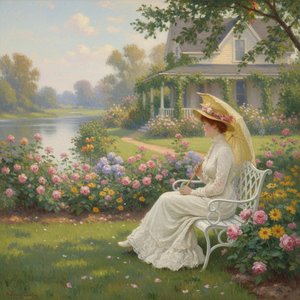
Born in Troyes, France, Paul Steck began his life as Paul Albert Dugas. He spent his early years absorbing the discipline of the Ecole des Beaux-Arts in Paris, where he studied under Jean-Léon Gérôme. His work moved between the quietude of landscapes and the weight of historical scenes. He also turned his attention to the human face, capturing portraits from life that sought to pin down a specific presence. There was a certain pull toward the Symbolist style in his later years, a way of looking at the world that favored the mood of a scene over mere physical accuracy.
His hands were as active in the theater as they were at the easel. Beyond the canvas, he worked as a playwright and a librettist, finding ways to structure stories through both words and images. This dual nature of his life—the visual and the spoken—informed the way he approached a composition. He understood how a scene could be staged, whether it was a landscape or a moment from literature.
Recognition and Accolades
The progression of his career was marked by steady, quiet successes within the French art establishment. He did not merely participate in the salons; he became a fixture within them. His development followed a path of increasing responsibility and formal recognition:
- Member of the Société des Artistes Français in 1896.
- Exhibitor in the fifth Salon de la Rose + Croix in 1896.
- Recipient of an honourable mention at the Salons in 1895.
- Recipient of a third-class medal at the Salon in 1896.
- Winner of a bronze medal at the Exposition Universelle in 1900.
- Appointed deputy director of the École nationale supérieure des arts décoratifs in 1911.
A Life in Paris
By the time he reached his later years, Steck was deeply embedded in the institutional life of Paris. His appointment to the École nationale supérieure des arts décoratifs placed him at the center of French artistic instruction. He lived through a period of significant change in the art world, yet his own work remained rooted in the traditions he had mastered in his youth. He died in Paris, leaving behind a body of work that found its way into the collections of museums in Dieppe, Montauban, and Rouen.
アーティストへのQ&A
Paul Steckの作品に関する統計情報はどこで確認できますか?
Paul Steckの作品に関する統計情報は、アーティストの閲覧統計ページでご確認いただけます。
Paul Steckの出身地(都市および国)はどこですか?
Paul Steckは、FranceのTroyesで生まれました。
Paul Steckは、どの時代に活動していましたか?
Paul Steckは19th Centuryに活動していました。この時代背景は、その画家の足跡を歴史の中に位置づけるものです。
Paul Steckの出生地と誕生年はいつですか?
Paul Steckは1866年、Troyesに生まれました。