The Architecture of Process
Marten Hendriks operates outside the predictable rhythms of the mainstream art market. Based in the Netherlands, this artist rejects the comfort of a single, recognizable style in favor of a restless investigation into how form and space interact. His practice is defined by a refusal to settle. Instead of sticking to one medium, Hendriks moves between disparate disciplines, treating the act of creation as a continuous, evolving inquiry rather than a search for a finished product. This approach makes his body of work difficult to categorize, yet it is precisely this refusal to be pinned down that gives his output its specific, intellectual weight.
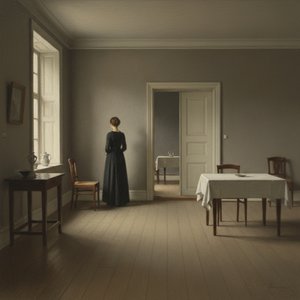
His work often deals with the tension between the physical object and the perception of space. He does not merely represent a scene; he constructs a way of seeing. Whether working with light, shadow, or the structural limits of a container, Hendriks focuses on the mechanics of how we occupy a room or how a surface defines a boundary. His output is characterized by a certain clinical precision, often stripping away the unnecessary to focus on the core of a concept.
Materiality and Form
The breadth of Hendriks's technical repertoire is a direct reflection of his interest in the physical properties of his materials. He does not rely on the traditional prestige of oil on canvas alone, but instead utilizes a wide array of tools to test the limits of visual perception. His practice includes:
- Paintings and silkscreens that explore surface and color.
- Computer prints and photographic works that manipulate the image.
- Maquettes and photo objects that bridge the gap between two and three dimensions.
- Small-scale interventions, such as painted matchboxes, that challenge the scale of artistic inquiry.
This diversity is not a sign of indecision. It is a deliberate strategy. By moving from a large-scale installation to a tiny, painted matchbox, Hendriks forces the viewer to confront the relationship between the object and its environment. He treats the medium as a variable in an ongoing experiment.
Spatial Investigations
Much of Hendriks's significant work focuses on the intersection of the built environment and the viewer's presence. His 1973 photo object, the space you take is equal to the space you take, exemplifies this preoccupation with the physical footprint of existence. He uses the concept of the "object" to challenge how we interpret depth and volume. This is not about decoration; it is about the structural reality of being in a space. His exhibitions, such as those at the in-out center at de appel in Amsterdam, have highlighted this ability to turn abstract spatial concepts into tangible, physical experiences.
His later work, including the 2010 installation False Front, continues this investigation into the deceptive nature of surfaces and the structures we inhabit. Hendriks remains an artist of the process, where the act of making is as significant as the final result. He does not seek to provide answers, but to pose questions about the very nature of form and the space it occupies.
アーティストへのQ&A
Marten Hendriksの作品を3Dギャラリーで鑑賞できる場所はどこですか?
バーチャルでの鑑賞も可能です:Marten Hendriksの3Dギャラリーページでは、アーティストの作品を3Dギャラリーでご覧いただけます。
Marten Hendriksの作品を年代順に辿るには、どうすればよいですか?
アーティストの作品の年表ページでは、Marten Hendriksの作品を制作年順に並べてご覧いただけます。
Marten Hendriksが最も頻繁に使用した色は何ですか?
Marten Hendriksの作品のカラープロファイルは、アーティストのパレット・ゲノムページでご確認いただけます。
Marten Hendriksの作品を技法別に閲覧することはできますか?
特定の技法によるMarten Hendriksの全作品をご覧いただくには、アーティストの技法別一覧ページをご利用ください。