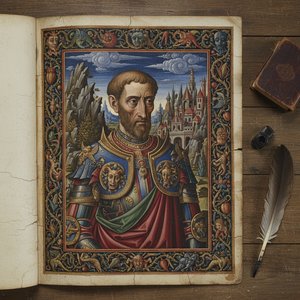
Benvenuto Garofalo: A Master of Ferrara’s Late Renaissance
Benvenuto Garofalo, born in Canaro near Ferrara in 1481 and tragically dying in 1559, stands as a pivotal figure within the School of Ferrara – a vibrant artistic movement that flourished during the late Italian Renaissance. More than simply a painter, Garofalo was a meticulous craftsman, a skilled storyteller, and a keen observer of human emotion, whose works offer a captivating glimpse into the refined tastes and complex sensibilities of 16th-century Italy. His career began as an apprentice within the court of the Duke d’Este, quickly establishing him amongst a circle of artists known for their opulent commissions and elaborate conceits. While his early pieces are often described as “idyllic,” reflecting the luxurious setting of Ferrara, they demonstrate a sophisticated understanding of perspective and color that would evolve dramatically over time.
Garofalo’s nickname, "Il Garofalo," likely derives from his habit of signing some works with a depiction of a carnation (garofano in Italian). This seemingly small detail speaks volumes about the artist's personality – a touch of personal flair within a highly structured artistic environment. His early career was marked by collaborations, notably with Dosso Dossi, and he benefited greatly from the tutelage of Boccaccino, who introduced him to Venetian painting techniques, influencing his later stylistic choices. The period spent in Rome between 1509 and 1512 proved particularly transformative, exposing Garofalo to the influence of Giulio Romano’s classical style – a shift that would profoundly impact his approach to composition and subject matter.
The Delizia di Belriguardo and Beyond
Returning to Ferrara after Rome, Garofalo found himself deeply involved in decorating several palaces for Duke Alfonso I. The “Delizia di Belriguardo,” a lavishly decorated room within the Palazzo del Belvedere, stands as one of his most celebrated achievements. This project showcased his mastery of fresco painting and his ability to seamlessly integrate classical motifs with the prevailing Mannerist style. Alongside Dosso Dossi, Garofalo created a series of scenes depicting mythological subjects, demonstrating a remarkable command of detail and a deep appreciation for the beauty of the human form. The Duke’s patronage provided him with consistent work, allowing him to hone his skills and explore new artistic avenues.
His output extended beyond palace walls; Garofalo painted extensively in oil and fresco, producing works such as “The Massacre of the Innocents” (1519) at the church of S. Francesco and the powerfully evocative "Betrayal of Christ" (1524). Notably, he employed clay models for study – a testament to his dedication to anatomical accuracy and compositional planning. The “Massacre of the Innocents,” in particular, reveals Garofalo’s meticulous approach; he created detailed clay figures to analyze perspective, drapery, and the emotional impact of each scene.
A Mannerist Style Shaped by Influences
Garofalo's style is often characterized as a synthesis of various influences. The Lombard influence is evident in his use of rich color palettes and dynamic compositions. Roman art provided him with a foundation in classical mythology and portraiture, while Venetian painting instilled within him an appreciation for atmospheric perspective and the subtle nuances of light and shadow. His work reflects this complex interplay of styles, creating a unique visual language that is both elegant and emotionally resonant.
The years spent in Rome were particularly formative, exposing Garofalo to the innovations of Raphael and Giulio Romano. He absorbed their emphasis on illusionistic space, dramatic lighting, and intricate detail, incorporating these elements into his own work. His later paintings demonstrate a growing interest in Mannerist conventions – elongated figures, distorted perspectives, and exaggerated gestures – reflecting a deliberate departure from the more balanced proportions of High Renaissance art.
Legacy and Tragic End
Garofalo continued to paint until 1550, when blindness forced him to seek work in monasteries. He dedicated his remaining years to creating devotional paintings, driven by a profound sense of faith. He married at the age of forty-eight and died in Ferrara on September 6th (or 16th) 1559, leaving behind two children. His life was tragically cut short, but his artistic legacy endures through his masterful depictions of religious subjects, his innovative use of color and composition, and his profound understanding of the human condition.
Garofalo’s story is one of artistic brilliance tempered by personal hardship. He remains a significant figure in the history of Italian painting, representing the culmination of the School of Ferrara's distinctive style and embodying the complex aesthetic sensibilities of the late Renaissance.
Q&A
What other names is Garofalo known by?
Garofalo appears under the alternate names Il Garofalo.
特定の技法によるGarofaloの全作品を探すには、どうすればよいですか?
Garofaloの作品は、アーティストの全技法ページにて、技法別に閲覧いただけます。
Garofaloが描いたすべての主題を一覧で確認することはできますか?
Garofaloの主題別アトラスは、そのアーティストの作品を主題ごとに分類してご紹介するページです。
Garofaloの作品を鑑賞できる3Dバーチャルツアーはありますか?
Garofaloの3Dミュージアムは、アーティストの作品をバーチャルな3Dギャラリーで鑑賞できるページです。
Garofaloの作品一覧はすべて確認できますか?
当サイトにおけるGarofaloのすべての作品は、アーティストのすべての作品一覧ページからご覧いただけます。
Garofaloの作品は、どのようなムードを表現していますか?
アーティストのムード別ルームページでは、Garofaloの作品をその雰囲気に合わせてご紹介しています。
Garofaloの作品はどのくらい人気がありますか?
Garofaloの作品に関する統計情報は、アーティストの統計情報ページでご確認いただけます。
Garofaloは、どの芸術運動に属していましたか?
Garofaloが活動した各ムーブメント(芸術運動)は、作品をムーブメント別に分類しているアーティストのすべてのムーブメントページでご覧いただけます。