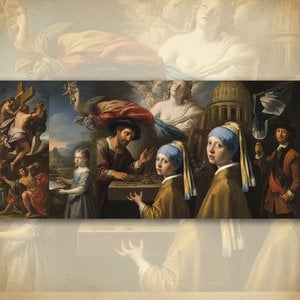
A Studio of Weapons and Music
In a studio in Valencia, the air often carried the sound of martial music. It was a necessary prelude to the brush hitting canvas. Before the first stroke of oil, there was a period of intense, focused energy, fueled by rhythms that mirrored the movement of soldiers. The room itself held more than just palettes and pigments; it was filled with weapons of all sorts. Sometimes, these objects were used for more than mere decoration, as mock battles were performed against the studio walls to study the way bodies moved and how force might be directed.
This restless energy found its way into the work. The paintings often carry a certain nervous tension, a reflection of a life lived with an erratic temperament. There was a specific way of approaching the canvas that relied on this heightened state of being. Even the domestic side of life appeared to follow this same disordered pattern.
The Influence of Orrente and Italian Masters
The brushwork shows a clear connection to Pedro Orrente, particularly during the years between 1638 and 1645 when Orrente was present in Valencia. One can see this debt in the way figures are grouped and how animals are rendered with fine detail. A depiction of Moses crossing the Red Sea, now held at the Museo del Prado, carries these specific stylistic markers.
Beyond local influences, there are traces of Italian battle painters within the compositions. The influence of Aniello Falcone, Salvator Rosa, and Antonio Tempesta is visible in the way conflict is structured on the canvas. These connections helped shape a style that favored action and drama:
- The use of detailed figures to populate biblical scenes.
- A focus on the mechanics of battle and movement.
- The integration of religious themes with martial energy.
Religious Scenes and Personal Studies
While battle scenes are often what people remember, much of the work focused on the sacred. The Last Supper in the Iglesia de los Santos Juanes and a Calvary in a Madrid collection show a different side of the practice. These works rely on the same foundations laid during his early training. Other notable religious subjects include Joshua Stopping the Sun and the Triumph of David, both found at the Museu de Belles Arts de València.
The artist also left behind more intimate records of observation. These were not large-scale commissions but quiet, focused studies:
- A self-portrait drawn in pencil or ink.
- A portrait of his son, Miguel.
- Detailed anatomical studies focusing on the shape of hands and knees.
These drawings, held in collections such as that of Raimon Casellas, reveal a meticulous eye for the physical world, stripped of the drama found in his larger oil paintings.
アーティストへのQ&A
Esteban Marchの活動年表はありますか?
Esteban Marchのアーティスト・クロニクルは、スクロールに合わせて展開するタイムライン形式となっており、アーティストのキャリアを時代ごとに章立てし、その作品群を時系列に沿ってご紹介しています。
Esteban Marchは、どの時代に活動していましたか?
Esteban MarchはEarly Modernに活動していました。この時代背景は、その画家の足跡を歴史の中に位置づけるものです。
カタログ内で閲覧可能なEsteban Marchの作品数はいくつですか?
全作品一覧ページでは、Esteban Marchによる作品数 3点点のアートワークをご覧いただけます。
Esteban Marchの出身地はどこですか?
Esteban Marchの出身国はSpainです。