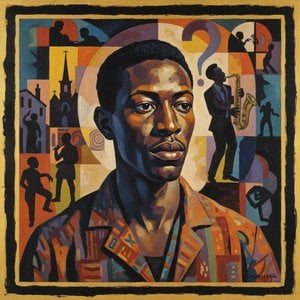
The Roots of a Creative Life
Born in Tartu, Estonia, Erich Carl Hugo Adamson lived a life shaped by the shifting borders and cultural currents of early twentieth-century Europe. He was the fourth child of Jaan and Anna Adamson, growing up in a world that would soon demand a new kind of visual language. His early education began at the Hugo Treffner Gymnasium before he sought a deeper understanding of form and color in Berlin. It was at the Charlottenburg Art and Crafts School that his formal training took hold, setting the stage for a career that would span nearly four decades.
His path eventually led him to Paris, a city where he studied under several influential figures, including Charles Guérin, Roger Bissière, Moise Kisling, and André Lhote. These years in France were formative, allowing him to absorb the evolving aesthetics of the era. By 1925, he had entered the private academy of the Russian artist Vasili Shukhaev, a period during which his focus began to sharpen toward specific stylistic directions.
Style and Artistic Focus
Adamson-Eric was a man of many mediums, moving fluidly between painting and the applied arts. His work was characterized by a commitment to design and a specific interest in how art could exist within functional objects. His aesthetic was deeply influenced by the movements of his time, particularly through his concentration on:
In the summer of 1928, he reached a significant milestone when he held an exhibition in Tallinn alongside fellow Estonian artists Eduard Wiiralt and Kristjan Teder. This period marked his emergence as a distinct voice in the Estonian art scene. He did not merely paint; he designed, bringing a sense of structure and modern sensibility to his various works.
Legacy and the Museum
The later years of his life were spent in Tallinn, the city where he would eventually pass away. His creative output was deeply intertwined with his personal life, particularly through his relationship with Mari Adamson, a professor of textile arts. Together, they formed a creative partnership that became a cornerstone of Estonian cultural history. Their shared life was one of mutual support and artistic dialogue.
Today, his presence is felt in the Adamson-Eric Museum on Lühike jalg Street. The museum's core was established through a significant gift from Mari Adamson, who donated nearly 1,000 of her husband's works to ensure his legacy remained intact. His works remain on permanent display, offering a window into the life of an artist who helped define the visual identity of his nation.
アーティストへのQ&A
Adamson-Ericの作品を技法別にまとめて閲覧できる場所はどこですか?
技法別一覧では、Adamson-Ericの作品を技法別にまとめています。
Adamson-Ericには、他にどのような別名や通称がありますか?
Adamson-Ericは、Erich Carl Hugo Adamsonという名でも知られています。
Adamson-Ericの作品を、カラースペクトラム(色相)ごとに探すことはできますか?
Adamson-Ericの作品は、アーティストのカラーインデックスページにて、色別に探すことができます。
Adamson-Ericは、どの時代に活動していましたか?
Adamson-EricはModernに活動していました。この時代背景は、その画家の足跡を歴史の中に位置づけるものです。