

David Johnson: A Luminist Master of the Hudson River School & Beyond
目次
Early Life & Academic Foundations: The Genesis of a Landscape Painter
 Wikipedia: David Johnson (American artist)
David Johnson (May 10, 1827 – January 30, 1908) was an American painter, a member of the second generation of Hudson River School painters. == Biography == Johnson was born in New York City, New York. He studied for two years at the antique school...
David Johnson, born in New York City in 1827, emerged as a significant voice within the second generation of the Hudson River School painters—a period marked by both adherence to established traditions and a burgeoning desire for individual expression. Unlike many artists who benefited from extensive formal training abroad, Johnson’s early artistic development was largely self-directed. He initially pursued studies at the antique school of the National Academy of Design for two years, laying a foundational understanding of form and composition. However, it was his brief mentorship under Jasper Francis Cropsey that proved particularly formative, introducing him to the captivating possibilities of landscape painting and igniting a lifelong passion for capturing the beauty of the American countryside. This early period wasn’t about radical innovation; rather, it was a careful absorption of existing techniques, a building of skills upon which he would later layer his unique sensibility.
The Hudson River School Influence: Kensett, Casilear & Johnson's Emerging Style
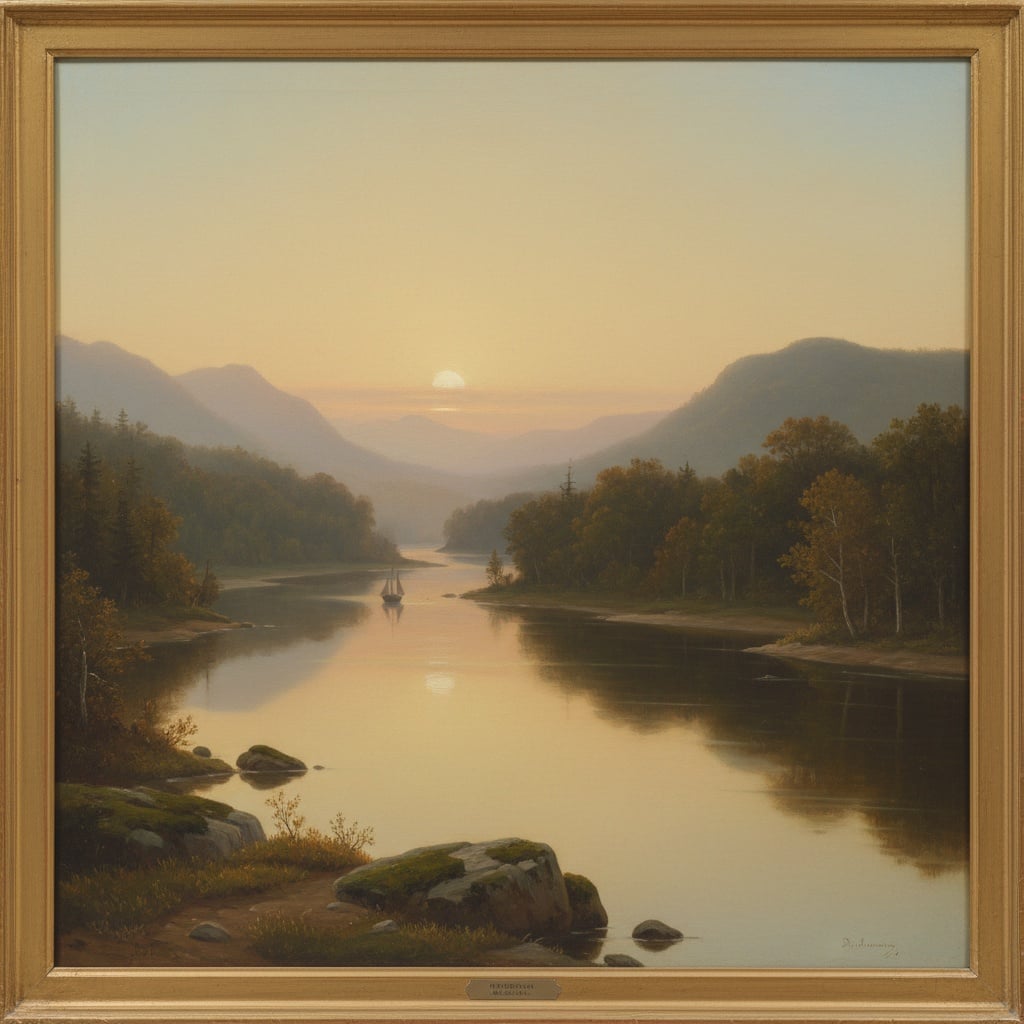
 Ramapo Hills
Explore 'Ramapo Hills' by David Johnson (1876), a serene Hudson River School landscape painting. Oil on canvas, romantic style, capturing nature’s beauty & tranquility.
The mid-19th century art world in New York revolved around the National Academy of Design and the artists associated with the Hudson River School. Johnson quickly found himself immersed in this vibrant community, forging crucial relationships that would shape his artistic trajectory. John Frederick Kensett and John William Casilear, both established luminaries, became particularly influential figures. In 1849, a pivotal moment occurred during a painting excursion to Haines Falls, Kauterskill Clove—an experience Johnson himself documented with the inscription “My first study from nature. Made in company with J.F. Kensett and J.W. Casilear.” This wasn’t merely a shared outing; it was an initiation into a specific way of seeing and interpreting the natural world, one characterized by meticulous observation and a reverence for detail. Johnson's early works reflect this influence—carefully rendered scenes that echo the romantic spirit of his mentors but hint at a growing desire to refine and personalize his approach.
Luminism and the Pursuit of Atmospheric Realism: Defining Characteristics
 Study of a Cedar
Admire "Study of a Cedar" by David Johnson, a Hudson River School masterpiece. Luminism captures Northeastern beauty. Hand-painted reproduction – elevate your art collection today!
As Johnson matured, he became increasingly associated with Luminism, a style characterized by its emphasis on atmospheric effects, subtle gradations of light, and an almost ethereal quality. This wasn’t simply about depicting landscapes; it was about capturing their *essence*, the feeling of being immersed in nature's tranquility. His paintings are notable for their small format—a deliberate choice that encouraged intimacy and focused attention on detail. He meticulously built up layers of paint, creating a sense of depth and luminosity that draws the viewer into the scene. Reflective waters became a recurring motif, acting as mirrors to the sky and amplifying the play of light. Trees, often studied individually with painstaking accuracy, were not merely botanical representations but symbols of strength, resilience, and the enduring power of nature. The influence of Casilear’s precisionism is evident here, combined with Kensett's masterful handling of color and atmosphere.
Beyond Luminism: Adapting to Changing Tastes & Later Works
The art world is rarely static, and Johnson demonstrated a remarkable ability to adapt to evolving aesthetic preferences. While he achieved considerable success during the 1870s with his luminist landscapes—paintings of popular locales like the Catskills, Lake George, and the White Mountains—he wasn’t immune to the shifting currents of artistic taste. In the late 1870s and early 1880s, a subtle but significant change began to emerge in his work, reflecting the influence of the French Barbizon school. This stylistic transition, while initially met with mixed critical reception, reveals Johnson’s willingness to experiment and explore new avenues of expression. He sought to infuse his landscapes with a greater sense of poetic intimacy, moving away from the purely descriptive towards a more emotionally resonant portrayal of nature. This period demonstrates a painter grappling with artistic relevance, attempting to reconcile established techniques with emerging trends.
Johnson’s Legacy: A Lasting Contribution to American Landscape Painting
Despite facing challenges in his later years—including financial difficulties and a waning critical spotlight—David Johnson left an indelible mark on the landscape of American art. His paintings are celebrated for their exquisite detail, atmospheric realism, and subtle emotional depth. He wasn’t a revolutionary figure in the same vein as some of his contemporaries; rather, he was a master craftsman who refined existing traditions and imbued them with his unique sensibility. His dedication to capturing the beauty of Northeastern scenery—from rocky terrain to tranquil lakes—continues to resonate with viewers today. Johnson's work serves as a reminder of the power of observation, the importance of artistic skill, and the enduring appeal of the natural world.
Collecting David Johnson Today: Value, Authenticity & ArtsDot Resources
For collectors seeking to acquire works by David Johnson, understanding market value and ensuring authenticity are paramount. While his paintings were once readily available, they now command considerable prices, reflecting their growing recognition as important examples of American landscape painting. Provenance—the documented history of ownership—is crucial in establishing authenticity. Look for works that have been exhibited at reputable galleries or museums, or those with a clear chain of ownership dating back to the artist’s lifetime. ArtsDot offers high-quality oil painting reproductions of Johnson's masterpieces, allowing art enthusiasts to experience his captivating landscapes firsthand. Whether you are seeking a faithful reproduction for your home or simply wish to study his techniques in detail, ArtsDot provides an accessible and affordable way to connect with the legacy of this remarkable artist. Explore our collection today and discover the enduring beauty of David Johnson’s work—a testament to the power of nature and the skill of a true American painter.
関連記事
Thomas Worthington Whittredge: Capturing the American Pastoral Ideal with Luminist Light
Explore the luminous landscapes of Thomas Worthington Whittredge, a key figure in the Hudson River School and master of Luminism. Discover his captivating paintings & legacy with ArtsDot.


