

Chiaroscuro & Emotional Resonance: Exploring Dramatic Light in Western Painting
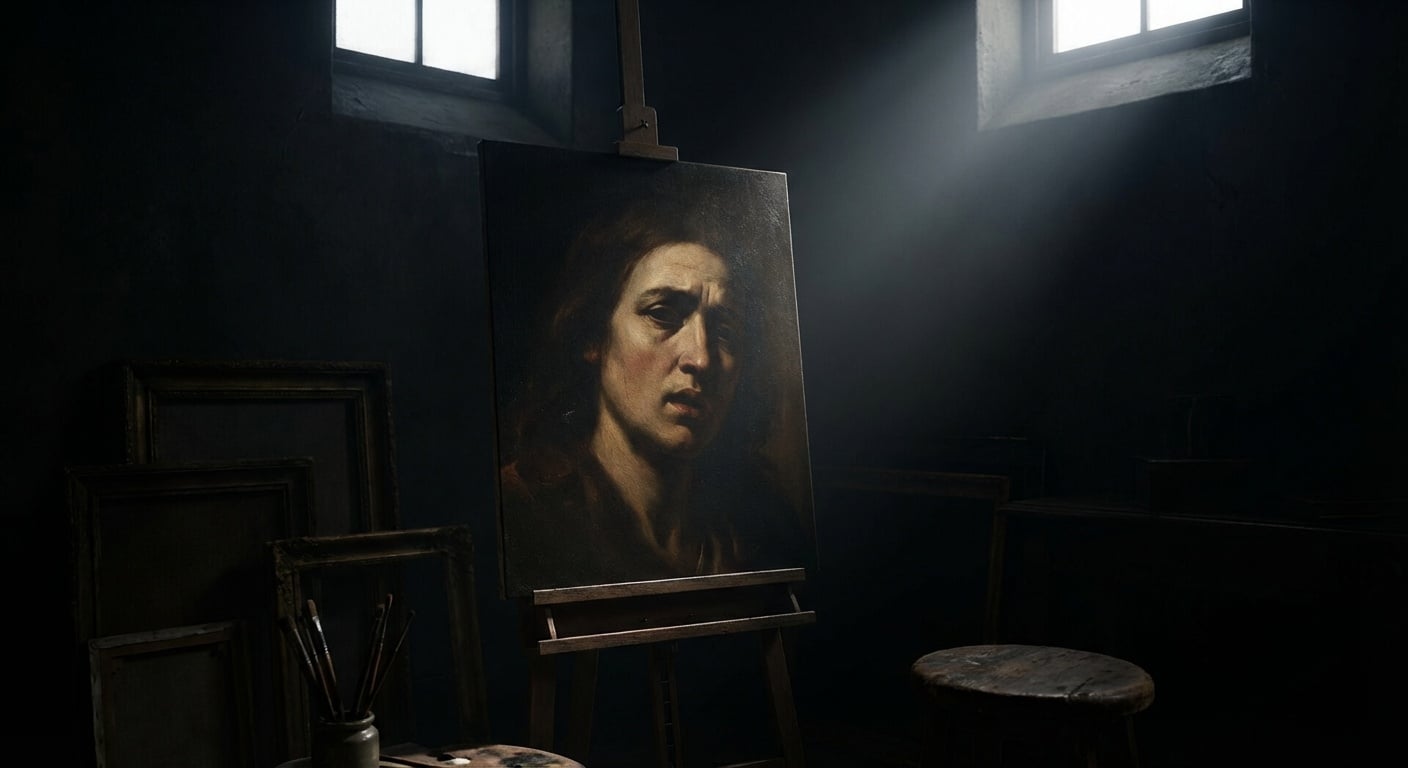
目次
The Renaissance Roots of Chiaroscuro: From Drawing to Painting
In art, chiaroscuro (English: kee-AR-ə-SKOOR-oh, -SKURE-, Italian: [ˌkjaroˈskuːro]; lit. 'light-dark') is the use of strong contrasts between light and dark, usually bold contrasts affecting a whole composition. It is also a technical term used by ...
The story of chiaroscuro, that mesmerizing dance between light and shadow, doesn’t begin with a single artist but rather unfolds as a gradual evolution within the artistic sensibilities of the Italian Renaissance. While the term itself – derived from the Italian words chiaro (light) and scuro (dark) – emerged during this period, the fundamental impulse to model form through contrasting values stretches back even further, glimpsed in ancient Greek mosaics where subtle shading hinted at three-dimensionality. However, it was in Renaissance drawing that the technique truly took root. Artists began experimenting with colored paper, building up highlights with white chalk or gouache and deepening tones with ink washes, creating a captivating illusion of volume and depth. This wasn’t merely about replicating reality; it was about understanding how light behaved*, how it caressed surfaces and revealed form. Leonardo da Vinci stands as a pivotal figure in this early exploration, his drawings demonstrating a masterful control over tonal gradations that would lay the groundwork for future innovations. He didn't simply depict light; he captured its very essence.
The advent of oil painting proved to be a catalyst. Unlike the more opaque and fast-drying tempera paints favored previously, oils allowed artists to blend colors seamlessly, creating subtle transitions between light and dark that were impossible before. This newfound freedom enabled them to push the boundaries of realism, imbuing their subjects with an unprecedented sense of presence and emotional weight. The early Renaissance focus on linear perspective provided a structural framework, while chiaroscuro added the crucial element of atmospheric depth, drawing the viewer into the scene.
Caravaggio's Revolution: The Birth of Tenebrism and Dramatic Realism
Tenebrism, from Italian tenebroso ('dark, gloomy, mysterious'), also occasionally called dramatic illumination, is a style of painting using especially pronounced chiaroscuro, where there are violent contrasts of light and dark, and where darkness be...
If the Renaissance laid the foundation for chiaroscuro, it was Michelangelo Merisi da Caravaggio who brought it to its most dramatic and revolutionary expression. Emerging in late 16th-century Rome, Caravaggio didn’t simply employ contrast; he weaponized it. His style, known as tenebrism (from the Italian tenebroso* meaning “dark, gloomy”), plunged his subjects into deep shadows, illuminated by a single, often unseen, light source. This wasn't merely about aesthetics; it was a deliberate rejection of the idealized forms and harmonious compositions favored by many of his contemporaries. Caravaggio painted life as he saw it – raw, visceral, and unflinchingly honest.
His paintings are characterized by intense realism, often depicting scenes from religious or mythological narratives with everyday people as models. The stark contrast between light and dark wasn’t just a technical device; it was symbolic, representing the struggle between good and evil, faith and doubt. Consider his “Untitled” (as referenced in ArtsDot's collection), where the dramatic lighting focuses our attention on the contemplative young man, highlighting his vulnerability and inner turmoil. The shadows aren’t simply absence* of light; they are active participants in the narrative, shrouding the figure in mystery and inviting contemplation. Caravaggio’s influence was immediate and profound, sparking a wave of imitators across Europe.
Beyond Caravaggio: Masters of Baroque Chiaroscuro in Italy, Spain & the Netherlands
Baroque painting is the painting associated with the Baroque cultural movement. The movement is often identified with Absolutism, the Counter Reformation and Catholic Revival, but the existence of important Baroque art and architecture in non-absolut...
Caravaggio's impact reverberated throughout the Baroque period, inspiring artists to explore the expressive potential of light and shadow in their own unique ways. In Italy, Artemisia Gentileschi, a remarkable painter in her own right, adopted tenebrism with a powerful intensity, often focusing on female subjects and themes of resilience and revenge. Her works are characterized by a similar dramatic lighting but infused with a distinctly feminine perspective.
Spain saw the rise of Jusepe de Ribera, known as “Lo Spagnoletto,” who embraced Caravaggio’s realism and tenebrism, often depicting religious scenes with a gritty, almost brutal honesty. His paintings, like his “Spanish” (available through ArtsDot), showcase rich textures and pyramidal compositions, further emphasizing the emotional weight of the subject matter. Meanwhile, in the Netherlands, artists like Rembrandt van Rijn took a different approach to chiaroscuro. While still employing strong contrasts, Rembrandt’s use of light was more nuanced, creating a warm, golden glow that enveloped his subjects and revealed their inner lives. Georges de La Tour, working in France, masterfully employed candlelight as his primary source of illumination, imbuing his religious scenes with an intimate and spiritual quality.
The Symbolic Power of Light and Shadow: Unveiling Hidden Meanings
Beyond its aesthetic impact, chiaroscuro carries a rich symbolic weight. Light often represents divine grace, knowledge, or truth, while shadow embodies ignorance, sin, or the unknown. The dramatic contrast between the two can be interpreted as a visual representation of moral conflict, spiritual awakening, or the complexities of the human condition. In Caravaggio’s work, for example, the intense shadows surrounding his figures often suggest a sense of isolation and vulnerability, reflecting the precariousness of life and the ever-present threat of darkness.
Artists frequently used light to highlight key elements within a composition, drawing the viewer's eye to areas of particular significance. This technique could be employed to emphasize religious symbols, emotional expressions, or narrative details. The skillful manipulation of light and shadow also allowed artists to create a sense of depth and atmosphere, immersing the viewer in the scene and enhancing its emotional impact.
Chiaroscuro Techniques: A Closer Look at Materials and Methods
Achieving the effects of chiaroscuro requires not only artistic skill but also a deep understanding of materials and methods. Oil paints, with their ability to blend seamlessly and create subtle gradations of tone, were the preferred medium for most Baroque masters. Artists typically began by establishing a dark underpainting, building up layers of color and gradually introducing highlights with lighter tones. The use of glazes – thin, transparent layers of paint – allowed them to modify the underlying colors and create a luminous effect.
The choice of pigments also played a crucial role. Dark earth tones, such as umber and sienna, were used to create shadows, while lead white was employed for highlights. Artists often experimented with different techniques, such as scumbling (applying broken color in a loose, irregular manner) and impasto (applying thick layers of paint), to create texture and depth. The careful control of light during the painting process was essential, allowing artists to accurately assess the tonal values and achieve the desired effect.
The Enduring Legacy of Dramatic Lighting in Art History
The influence of chiaroscuro continues to resonate in art today. From the dramatic lighting of film noir to the atmospheric effects of contemporary photography, the principles pioneered by Renaissance and Baroque masters remain remarkably relevant. The ability to manipulate light and shadow to create mood, evoke emotion, and tell compelling stories is a testament to the enduring power of this timeless technique.
At ArtsDot.com, we celebrate the legacy of these great artists by offering high-quality reproductions of their masterpieces. Explore our collection today and discover the captivating world of chiaroscuro for yourself. Whether you’re a seasoned art enthusiast or just beginning your journey, we invite you to experience the transformative power of dramatic lighting and unlock the hidden meanings within these iconic works. From Caravaggio's intense realism to Rembrandt's golden glow, ArtsDot brings the brilliance of the Baroque era into your home.
関連記事

Illuminating Shadows: A Comprehensive Exploration of Chiaroscuro Technique in Art History
Explore the captivating world of chiaroscuro! Discover its history, masters like Caravaggio & de La Tour, and enduring influence on art. A comprehensive guide for enthusiasts.


