

 プレビュー
プレビュー
 シェアする
シェアする シェアする
シェアする
 詳細を見る
詳細を見る

 ダウンロード
 似ている作品
 X線調査
X線調査 スライドショー
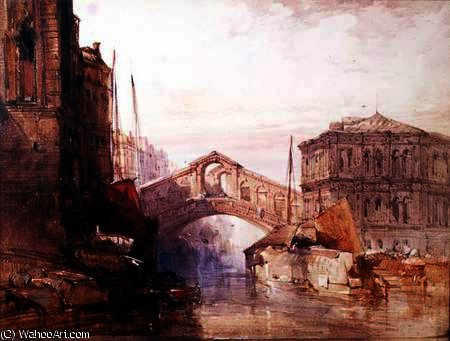
The rialto bridge, venice

 詳細を見る
詳細を見る
手描き油彩複製画
当社のアーティストが、お客様のご希望のサイズと額縁に合わせて、キャンバスに手描きで制作する油彩画です。 ( プリント版に切り替え 画像に切り替え)




































作品のオリジナル比率に合わせた、当店の規定サイズからお選びください。

特定のフレームやスペースに合わせて、ご希望のサイズをご入力いただけます。選択されたサイズが元の画像の比率と異なる場合、アートワークをトリミングするか、手描きで要素を追加して絵画を拡張いたします。デジタルモックアップ を制作し、制作開始前にご確認(承認)をいただきます。
画面上のプレビューは、実際のトリミングや拡張を正確に反映しているものではありません。最終的な構図は、モックアップによってのみ正確にご確認いただけます。
カスタムサイズもご利用いただけますが、元の比率を維持するためには、あらかじめ用意されたリストからサイズを選択することをお勧めいたします。
ご注文後、ArtsDot.com チームより詳細な指示をお送りするとともに、仕上がりイメージ(モックアップ)をご提供いたします。


 ガラスオプションは、110cm未満のサイズでのみご利用いただけます。

The rialto bridge, venice
複製技法
複製画のサイズ
-


合計金額
$ 263
関連作品


アーティストの略歴
The Master of the Muted Palette: The Life and Legacy of William Callow
In the grand tapestry of Victorian art, where many sought to overwhelm the senses with dramatic light and vibrant color, William Callow carved a niche of profound serenity. Born in Greenwich in 1812, Callow was an artist of remarkable constancy, a man whose artistic vision remained anchored in the delicate traditions of the early nineteenth century even as the world around him underwent radical industrial transformation. His life was a testament to the power of meticulous observation, and his work serves as a window into a vanished era of European landscapes, captured with a precision that feels both intimate and eternal.
Callow’s journey into the heart of the visual arts began in childhood, driven by a lineage of creative talent. His early training was far from accidental; he was apprenticed to Copley Fielding, an experience that instilled in him the fundamental discipline of sketching en plein air. This foundational skill—the ability to sit before nature and translate its fleeting essence onto paper—would become the heartbeat of his entire oeuvre. As he matured, his education expanded under the guidance of Theodore and Thales Fielding, where he mastered the intricate complexities of aquatint engraving and the delicate application of watercolor. These formative years in London and later in Paris provided him with a technical toolkit that allowed him to navigate between the worlds of precise topographical documentation and evocative atmospheric painting.
A Journey Through Light and Texture
The development of Callow’s style was deeply influenced by his time in France, where the works of Richard Parkes Bonington offered a new horizon of possibility. While he absorbed the lightness of the French school, Callow did not succumb to flamboyant expressionism. Instead, he refined a method characterized by a restrained, almost monastic devotion to tonal accuracy. He became a master of the monochrome and the subtle wash, utilizing shades of grey, ochre, and soft brown to build depth and texture. To look at a Callow watercolor is to witness a masterful command of medium; he could render the weathered grain of an ancient stone wall or the translucent ripple of water with equal, breathtaking fidelity.
His technical prowess was not limited to the brush alone. As an engraver and illustrator for prestigious publications such as The Illustrated London News and The Cornhill Magazine, Callow possessed a unique ability to communicate narrative through line and shadow. This dual identity as both a fine artist and a skilled illustrator allowed him to capture the pulse of Victorian England, documenting everything from the bustling urbanity of London to the quiet, pastoral corners of the English countryside. His work functioned much like a precursor to the travel photography of later generations, satisfying a public hunger for picturesque views of European cities and coastal retreats.
The Enduring Resonance of a Quiet Observer
Throughout his long and prolific career, which spanned nearly nine decades, Callow remained remarkably true to his artistic principles. He was a direct heir to the topographic watercolor tradition, a style that emphasized clarity and topographical truth over romanticized distortion. This steadfastness earned him a place of respect within the Society of Painters in Water Colours, where he exhibited annually for much of his life. Even at the age of ninety-five, Callow’s dedication was such that he attended a retrospective exhibition of his own work, a poignant moment that celebrated a lifetime of unwavering commitment to his craft.
The historical significance of William Callow lies in his role as a visual chronicler of a changing world. His paintings are more than mere landscapes; they are atmospheric records of memory and place. By eschewing the trend toward heavy body-color and instead embracing the purity of the watercolor wash, he preserved a sense of lightness and air that is often lost in more heavily pigmented works. Today, his legacy survives in the quiet beauty of his compositions, which continue to evoke the nostalgic charm of the nineteenth century, reminding us of the profound emotional depth that can be found in the most subtle of observations.

william callow
1812 - 1908 , United Kingdom
基本情報
- Artistic Movement Or Style: Romanticism
- Artists Or Movements Influenced By This Artist: ['Hudson Lowe']
- Artists Who Influenced This Artist:
- John Constable
- George Frederic Handel
- Date Of Birth: 1812 Greenwich UK
- Date Of Death: 1908
- Full Name: William Callow
- Nationality: British
- Notable Artworks:
- Coastal Landscape with seamen loading ships
- Tintern Abbey
- Religious procession
- Place Of Birth: Greenwich UK
関連記事

Bridging Centuries: Digital Visualization & Classical Oil Painting Techniques in Contemporary Art Commissioning
Discover the art of commissioning bespoke oil paintings blending classical techniques with modern digital precision. Expert artists, personalized service & museum-quality results. Invest in a timeless masterpiece today.

Thomas Stothard: Bridging Neoclassical Ideals with Romantic Sensibility – A Reassessment
Explore the life & art of Thomas Stothard (1755-1834), a pivotal figure bridging Neoclassicism and Romanticism. Discover his exquisite book illustrations, iconic paintings like 'The Canterbury Pilgrims,' and lasting influence on British art.

Evoking Emotion & Transcendence: Romantic Landscape Painting (18th-19th Century)
Explore the emotional depth of Romantic landscape painting (18th-19th century). Discover key artists like Friedrich & Cole, and the concepts of the sublime. Expert insights for art lovers & collectors.

William Bradford: Navigating Faith, Landscape & Artistic Innovation in Early American Painting
Explore the captivating world of William Bradford, American Romanticist painter renowned for his dramatic Arctic seascapes & ship portraits. Discover his artistic evolution, influences, and lasting legacy with ArtsDot.

James Ward: A Study in British Romantic Landscape and Animal Painting
Explore the captivating world of James Ward (1769-1859), a master of British Romantic landscape & animal painting. Discover his iconic 'Gordale Scar' and exquisite portraits – a timeless art investment. Learn about his influences, style, and enduring legacy.

