

- 159.0 x 250.0 cm


The picture follows your choices: , .
作品解説
Wassily Kandinsky’s monumental Composition IV explodes with vibrant blues, yellows, reds, and whites—a cornerstone of abstract expressionism—capturing a turbulent yet harmonious spirit amidst geometric shapes and an evocative umbrella symbol. Explore this iconic masterpiece and bring Kandinsky's visionary art into your home.
 詳細を表示
詳細を表示
アーティストの略歴
カンディンスキー(1866-1944)は、抽象芸術の先駆者! 鮮やかな表現主義、精神的なテーマ、バウハウスの遺産を、息を呑むような複製を通して探求。色彩と形態のシンフォニーが織りなす革新的な作品群に出会えます。
手描き油彩複製画
当社のアーティストが、ご希望のサイズと額縁に合わせてキャンバスに手描きで制作する、オーダーメイドの油彩画です。 ( プリント版に切り替え デジタル画像販売へ切り替え)
More about this painting
 設置イメージを表示
 シェアする
シェアする シェアする
シェアする
 詳細を見る
詳細を見る ガイドを表示

 ダウンロード
 似ている作品
 X線調査
X線調査 スライドショーを表示
 Q&A
Q&A 統計情報
統計情報Order your painting in four simple steps
Take your time. You can change any answer; the price in your order card follows each choice.
1 Step one of four
Which size would you like?
These sizes keep the proportions of the original painting. The drawing shows your choice on a wall, above a two-metre sofa.
Or give your own measurements
作品のオリジナル比率に合わせた、当店の規定サイズからお選びください。

フレームや壁のスペースに合わせて、ご希望の幅と高さを入力してください。本作品は手描きのため、異なる比率のサイズをご希望の場合、絵画の周囲を少し広げて描くか、あるいは端を少しカットして調整することが可能です。お客様のご要望に合わせます。制作を開始する前に、仕上がりを確認するためのデジタルモックアップをお送りいたします。このページに表示されている画像は完成品の実物ではなく、あくまでモックアップによるイメージです。
2 Step two of four
How should it be prepared: rolled, stretched or framed?
The prices below are for the size you chose in step one.
Choose the edges of the stretched canvas
Choose your frame

White ¥1

Blurside ¥1

Extended ¥1

P118B ¥10

P118H ¥10

P118W ¥10

P438Z ¥10

P508JH ¥12

P508YH ¥12

P805H ¥10

P805Z ¥10

P919BZ ¥10

P919G ¥10

P919XJ ¥10

P959ZH ¥10

P968JZ ¥12

W106C ¥8

W218G ¥10

W218JH ¥8

W218Y ¥10

W307PJ ¥10

W316G ¥10

W316PJ ¥8

W316Y ¥10

W398PJ ¥8

W4111J ¥10

W500HY ¥15

W500JH ¥15

W692G ¥12

W849H ¥8

W940BG ¥15

W953PJ ¥8

H24-GOLD ¥30

H24-SILVER ¥30

H36-GOLD ¥45

H36-SILVER ¥45
額装済み
Moulding: . Overall size with the frame: .
3 Step three of four
Would you like anything changed in the painting?
Most people answer no. Because each painting is made by hand, our artist can also adapt it for you.
After order, ArtsDot.com team will email client for instructions and provide a mockup preview
4 Step four of four
A few finishing options
All of them are optional. The answers already selected cost nothing extra.
Who paints it?
A nameplate, as in a museum?
刻印入りブロンズプレートの詳細
This elegant plaque features the artist's name and the title of the artwork, finely engraved for a timeless presentation.
It is made from bronze with a refined, elegant finish. The text is precisely laser-engraved for a sharp and permanent result. Measuring 9x2 cm, the plaque is compact yet easy to read. It's built to be durable and scratch-resistant, offering a professional, museum-quality look. Mounting is simple thanks to the included adhesive backing.
透明アクリル銘板の詳細
The plaque includes essential engraved details such as the artist's name, the title of the artwork, the date it was created, the type of media used-like oil on canvas or watercolor-a brief description of the piece, and a QR code that links to the complete artwork information.
It is crafted from clear acrylic, offering a sleek, modern appearance. The text is UV-engraved in black to ensure strong visual contrast. With a size of 10x15 cm, it ensures optimal readability. It comes equipped with two metal hooks for secure wall mounting. The plaque is designed to be weather-resistant, making it suitable for various environments, and it includes interactive features that work seamlessly with smartphone scanning.
黒アクリル製銘板の詳細
This elegant plaque includes engraved information such as the artist's name, the title of the artwork, the date it was created, the type of media used (like oil on canvas or watercolor), a short description of the artwork, and a QR code for quick access to more information.
The plaque itself is made from refined black acrylic with a premium finish. The text is laser-engraved in white for high contrast and readability. Its size is 10x15 cm, designed to be easy to read. It comes with two metal hooks for professional mounting. The design is sleek and fits any interior style. It is also weather-resistant and durable, with built-in digital integration for mobile compatibility.
A protective varnish?
When do you need it?
✓ Check and order
Your painting, as you ordered it

Composition IV
再現技法
複製画サイズ一覧
-

至高の熟練アーティスト
より細部までこだわった表現、洗練された技術、そして十分な制作時間
-

複製画用フレーム
-
-
いずれかの辺が105 cm(約41インチ)を超えるアートワークまたは複製画の場合、フレームは分解されたキットの状態でお届けいたします。この方法は、輸送中の破損を防ぎ、安全に配送するために採用しております。
組み立てには専門知識が必要です(DIY用製品ではありません)。
本キットは、経験豊富なプロの額装師が、木工用ボンド(別売)、キャンバス用プライヤー、およびボンドの乾燥時に桟を直角に保持するためのクランプを使用して、組み立ておよびキャンバスの張り作業を行う必要があります。不適切な組み立てやキャンバスの張りの不均一は、作品に永久的な損傷を与える恐れがあり、弊社の保証対象外となります。
 いずれかの辺が105 cm(約41インチ)を超えるアートワークまたは複製画の場合、フレームは分解されたキットの状態でお届けいたします。この方法は、輸送中の破損を防ぎ、安全に配送するために採用しております。
すべての無垢材のパーツが含まれており、組み立てに最適なサイズに正確にカットされています。
付属のネジを使用し、角の接合部には別途木工用ボンドをご用意ください(ボンドは付属しておりません)。ボンドは額装業者様にてご手配をお願いいたします。
プロ仕様の道具が必要ですが、キットには含まれていません:キャンバス用ストレッチングプライヤー(テンショナー)、および接着剤が乾燥するまで木枠を直角に固定するためのクランプ。
重要:
コーナーの接合部には木工用ボンドが必要です。また、ボンドが完全に乾くまでクランプでバーを固定しておく必要があり、組み立てたフレームにキャンバスを張るにはキャンバス用ストレッチングプライヤーが必要となります。これらの道具はキットに含まれておりません。このサイズをご注文される前に、経験豊富なプロの額装師(フライマー)の手配をお願いいたします。

キャプション
-
-

保護用ワニス
光沢ワニス(色彩を鮮やかに引き立て、光や湿気から保護します)
-

作品をカスタマイズ
カスタマイズの例:顔をお客様の写真に差し替える、ペットを追加する(例:猫を犬に変更)、背景に隠しメッセージを入れる、背景の風景や要素を変更する。
-

お急ぎ便
世界中への配送()は、通常の5週間ではなく、3〜4週間でお届けいたします。(3 11月)。品質には一切の妥協を許しません。
-
お急ぎ便
世界中への配送()は、5週間ほどでお届けします。(10 11月)。
込み
合計金額
¥ 41477
ガラスオプションは、110cm未満のサイズでのみご利用いただけます。
Included with every order
- 世界中へ無料エクスプレス配送
- 高品質なリネンキャンバス
- 配送時完全保険付
- 関税・輸入税の払い戻し保証
- 真の色彩再現に関する保証
- 100日間返品保証(製造上の欠陥がある場合のみ)
- 100% 全額返金保証
- まとめ買い割引のご案内


A Symphony of Color and Emotion: Exploring Wassily Kandinsky’s Composition IV
- Subject Matter & Context Composition IV isn't concerned with depicting recognizable objects or landscapes; instead, it presents a purely abstract visual experience. Painted in 1911 during the burgeoning Expressionist movement, this monumental canvas embodies the spirit of its time—a rejection of representational art in favor of conveying inner feelings and spiritual ideas. Kandinsky’s aim was to liberate painting from the constraints of illusionism, striving for a connection between color and sound, mirroring the musical compositions he himself admired.
- Style & Technique Kandinsky's signature style is undeniably abstract expressionism. He employed a technique known as “automatism,” allowing subconscious impulses to guide his brushstrokes. This method involved preparing a canvas with gesso, applying layers of colored pigment—primarily blues, yellows, reds, and whites—and then letting the paint flow freely across the surface without premeditated planning. The resulting textures are palpable, conveying a sense of spontaneity and dynamism.
- Symbolism & Composition The painting’s visual elements resonate with profound symbolism. Dominating the composition is an umbrella, positioned centrally, which serves as a powerful emblem of protection and stability amidst swirling shapes and colors. These shapes—circles, triangles, squares—are arranged in concentric bands, creating a harmonious yet restless interplay between order and chaos. Kandinsky believed that color itself possessed inherent expressive qualities, capable of evoking emotions and conveying spiritual truths.
- Historical Significance Composition IV stands as a cornerstone of modern art history. It represents a decisive break from academic tradition and foreshadows the radical innovations of subsequent artists. Its influence extends far beyond painting, inspiring movements like Surrealism and impacting artistic sensibilities globally. Kandinsky’s unwavering conviction in the transformative power of abstraction cemented his legacy as one of the most visionary figures of the 20th century.
- Emotional Impact Viewing Composition IV is akin to embarking on a sensory journey—a contemplation of color, form, and texture that transcends literal representation. The painting’s vibrant hues evoke feelings of optimism and serenity alongside hints of anxiety and uncertainty. It invites viewers to engage in an introspective dialogue with their own emotions, prompting reflection on the relationship between inner experience and artistic expression.
Q&A
「Composition IV」の作者とスタイルは何ですか?
「Composition IV」は、ワシリー・ワシーリエヴィチ・カンディンスキーの手によるExpressionist Abstraction様式の作品です。作者と様式は、その作品が受け継ぐ伝統を定義するものです。
ワシリー・ワシーリエヴィチ・カンディンスキー作「Composition IV」の制作年代と様式について教えてください。
「Composition IV」は、Expressionist Abstractionの作品として1911年に制作されました。制作年と様式は、美術史におけるこの作品の位置付けを明確にするものです。
ワシリー・ワシーリエヴィチ・カンディンスキー作「Composition IV」は、明るい印象の作品ですか、それとも暗い印象の作品ですか?
視覚的な明るさの観点から見ると、ワシリー・ワシーリエヴィチ・カンディンスキー作「Composition IV」 は brilliant です。
関連作品


ワシリー・ワシーリエヴィチ・カンディンスキー
1866 - 1944, ロシア
作家プロフィール
色彩と精神に浸された生涯
1866年にモスクワで生まれたワシリー・ワシーリエヴィチ・カンディンスキーは、近代美術の歩みを決定的に変えた革命的な人物です。彼の道のりは、最初から芸術への天啓に満ちたものではありませんでした。当初はモスクワ大学で法学と経済学のキャリアを歩む運命にありましたが、印象派の絵画、特にクロード・モネの「積みわら」との深い出会い、そしてワーグナーのオペラ「ローエングリン」を目の当たりにした感動的な体験が、彼の中に芸術を追求したいという抑えきれない情熱を燃え上がらせたのです。30歳前後で訪れたこの決定的な瞬間は、単なる職業の変更にとどまらず、世界観そのものの劇的な変容を意味しており、彼を先駆的な抽象表現へと突き動かすこととなりました。その後、彼はミュンヘンへと移り、名高い美術アカデミーに入学してフランツ・フォン・シュトゥックに師事しましたが、正規の教育課程の中にあっても、カンディンスキーの精神は既成の境界を超えた探求を渇望していました。
初期の彼に影響を与えたのは、1889年のヴォログダ地方への民族学調査を通じて得たロシアの民俗芸術でした。そこから得た鮮やかな色彩のパレットと象徴的なイメージは、彼の心に深い魅惑を植え付けました。この基盤は、彼が独自の芸術言語を構築していく上で極めて重要な役割を果たすことになります。こうした初期の探求は、単なる審美的な好みによるものではなく、深い文化的繋がりと、芸術がいかにして具象を超えて伝達し得るかという、芽生えつつあった理解に根ざしていたのです。
抽象の黎明:表現主義から「内なる必然性」へ
カンディンスキーの初期作品には、力強い色彩と感情的な激しさを特徴とする、強烈な表現主義的傾向が見て取れます。1902年の「ポプラ」などの作品が、この時期を象徴しています。しかし、彼は単に外的な世界を再現することに満足はしませんでした。彼は、視覚的な描写を超越した内面的な現実、すなわち精神的な真実を表現しようと試みたのです。この探求が、彼を具象芸術から徐々に遠ざけ、色彩、形態、そしてそれらがもたらす感情的な共鳴への革命的な探求へと導いていきました。
彼は、色彩には固有の心理的効果があり、鑑賞者の心に特定の感情や感覚を呼び起こす力があると信じるようになりました。この信念は、秘教的な知識と普遍的な友愛を強調する精神運動である「神智学」への関心の高まりと深く結びついていました。これらの思想を深めるにつれ、カンディンスキーの絵画はますます非対象的(ノン・オブジェクティブ)になり、認識可能な形態を脱ぎ捨て、「内なる必然性」によって駆動される抽象的な構成へと向かっていきました。これは単に具象を放棄したということではなく、感情や精神性という形のない領域を表現し得る、新しい視覚言語を発見するプロセスだったのです。彼は、色彩と形態が調和して深い感情的反応を引き起こす、音楽の視覚的な等価物を作り出そうとしたのでした。
幾何学的な調和と精神的な共鳴
1911年にミュンヘンで共同設立した影響力のある芸術家集団青騎士(デア・ブラウエ・ライター)への参画後の時期には、カンディンスキーのスタイルはさらなる進化を遂げました。初期の作品に見られた流動的で有機的な形状に代わり、彼は円、三角形、正方形の相互作用に焦点を当てた幾何学的抽象の探求を開始しました。「いくつかの円」(140 x 140 cm)はこの時期の代表的な例であり、色彩と形態が調和しながらもエネルギッシュなダンスを繰り広げるダイナミックな構成を見せています。
これは決して冷徹で無機質な幾何学ではありませんでした。むしろ、そこには精神的な意義が吹き込まれていたのです。カンディンスキーは、幾何学的な図形には固有の象徴的意味があり、キャンバス内での配置が特定の感情的反応を呼び起こすと信じていました。彼の理論書、とりわけ最も有名な『芸術における精神的なものについて』(1911年)では、これらの信念が明文化されており、深い精神的真実を伝える媒体としての抽象芸術という、新しい理解の基礎を築きました。彼は、芸術は自然を模倣することを目指すべきではなく、むしろ芸術家の内面世界を明らかにし、より深く直感的なレベルで鑑賞者と繋がるものであるべきだと主張したのです。
バウハウスの影響と不朽の遺産
第一次世界大戦の勃発により、1914年にカンディンスキーはロシアへの帰還を余儀なくされましたが、ロシア革命後、彼は当時の支配的な芸術的風潮との間に次第に隔たりを感じるようになります。1920年、彼はドイツのバウハウス校での教授職を引き受け、そこで色彩、形態、抽象に関する自身の理論を用いて、後世の芸術家たちに多大な影響を与えました。バウハウスは、カンディンスキーが自身の思想をさらに発展させ、新たな創造的道を切り拓くための理想的な環境となりました。
彼は幾何学的な形態と鮮やかな色彩を用いた実験を続け、しばしば厚塗りのインパスト技法を取り入れることで、構成に深みと複雑さを加える質感豊かな表面を作り出しました。これは「親密なパーティー」(1942年)のような後期の作品に見られる特徴です。1933年にナチス政権によってバウハウスが閉鎖された後、カンディンスキーはフランスへと移住し、その生涯の最期までそこで過ごしました。近代美術における彼の功績は計り知れません。彼は抽象表現主義の先駆者として、また非具象絵画の発展における重要人物として広く認められています。彼の作品は、モスクワのトレチャコフ美術館をはじめとする世界中の主要な美術館に収蔵されており、そこにある記念碑的な「コンポジション VII」は、彼の芸術的ビジョンと不朽の遺産の証となっています。
色彩、形態、そして精神性に対するカンディンスキーの探求は、今日においても芸術家たちにインスピレーションを与え続け、20世紀美術史における最も重要な人物の一人としての地位を確固たるものにしています。彼は単に絵を描いたのではありません。彼は感情を、思想を、そして人間精神の真髄そのものを描いたのです。


関連記事
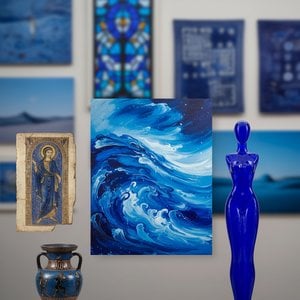
The Allure of Azure: Exploring the Symbolic & Aesthetic Depths of Blue in Art History
Explore the rich history of blue in art! Discover its symbolism, from ancient pigments to modern masterpieces by Kandinsky & Seurat. Uncover the psychological impact and cultural meanings behind this captivating hue.

幾何学的抽象絵画を定義した傑作10選|アート、アーティスト、インテリア装飾
モンドリアン、マレーヴィチ…幾何学的抽象絵画を代表する傑作10選。各作品の背景や色彩構成、アーティストの情熱に迫ります。美術館品質の複製画はArtsDot.comで。オンラインでアートコレクションをご覧ください。

抽象表現主義を定義する十大傑作:芸術と装飾の深遠な旅
抽象表現主義を定義する10の傑作。ポロック、ロスコら巨匠たちの情熱と色彩の世界へ。各作品に込められた物語と技法を紐解き、至高のアート体験を。ArtsDot.comで、ミュージアムクオリティの複製画や洗練されたインテリアアイデアを発見してください。