

- 66.0 x 53.0 cm


選択した条件に基づいた画像: , .
作品解説
Discover 'Untitled (D2X37D)' by Thomas Le Clear (1818-1882), a captivating Victorian painting of three boys fishing. Explore the details of this 1846 oil on canvas masterpiece, featuring birds and a serene river scene.
 詳細を表示
詳細を表示
アーティストの略歴
Thomas Le Clear (1818-1882) was an American portrait & genre painter known for his captivating scenes of childhood and prominent figures like Millard Fillmore. A founding member of the Buffalo Fine Arts Academy, explore his 19th-century masterpieces.
手描き油彩複製画
当社のアーティストが、ご希望のサイズと額縁に合わせてキャンバスに手描きで制作する、オーダーメイドの油彩画です。 ( プリント版に切り替え デジタル画像販売へ切り替え)
この絵画の詳細を見る
 設置イメージを表示
 シェアする
シェアする シェアする
シェアする
 詳細を見る
詳細を見る ガイドを表示

 ダウンロード
 似ている作品
 X線調査
X線調査 スライドショーを表示
 Q&A
Q&A 統計情報
統計情報絵画のご注文は、わずか4つの簡単なステップで完了します
ゆっくりとお選びください。回答はいつでも変更可能です。選択内容に応じて、注文カート内の価格が随時更新されます。
1 全4ステップ中のステップ1
サイズをご選択ください。
これらのサイズは、原画の比率を維持しています。図は、高さ2メートルのソファの上の壁に、選択したサイズを配置した際のイメージです。
または、ご希望のサイズを指定する
作品のオリジナル比率に合わせた、当店の規定サイズからお選びください。

フレームや壁のスペースに合わせて、ご希望の幅と高さを入力してください。本作品は手描きのため、異なる比率のサイズをご希望の場合、絵画の周囲を少し広げて描くか、あるいは端を少しカットして調整することが可能です。お客様のご要望に合わせます。制作を開始する前に、仕上がりを確認するためのデジタルモックアップをお送りいたします。このページに表示されている画像は完成品の実物ではなく、あくまでモックアップによるイメージです。
2 4ステップ中の2番目
どのような状態での配送をご希望ですか:ロール状、キャンバス張り、または額装済み?
以下の価格は、ステップ1で選択されたサイズに基づいています。
キャンバスの側面仕上げを選択
フレームを選択

白の側面仕上げ ¥1

エッジぼかし仕上げ ¥1

回り込み仕上げ ¥1

P118B ¥10

P118H ¥10

P118W ¥10

P438Z ¥10

P508JH ¥12

P508YH ¥12

P805H ¥10

P805Z ¥10

P919BZ ¥10

P919G ¥10

P919XJ ¥10

P959ZH ¥10

P968JZ ¥12

W106C ¥8

W218G ¥10

W218JH ¥8

W218Y ¥10

W307PJ ¥10

W316G ¥10

W316PJ ¥8

W316Y ¥10

W398PJ ¥8

W4111J ¥10

W500HY ¥15

W500JH ¥15

W692G ¥12

W849H ¥8

W940BG ¥15

W953PJ ¥8

H24-GOLD ¥30

H24-SILVER ¥30

H36-GOLD ¥45

H36-SILVER ¥45
額装済み
額縁の形状: . 額縁を含む全体サイズ: .
3 4ステップ中の3ステップ目
絵画の内容に変更をご希望されますか?
ほとんどの方は「いいえ」と答えます。一枚一枚が手描きであるため、アーティストがお客様のご要望に合わせて調整することも可能です。
ご注文後、ArtsDot.com のチームより詳細な手順についてメールをお送りし、仕上がりイメージ(モックアップ)をご提示いたします。
4 4ステップ中、第4ステップ
仕上げのオプション(数種類)
すべて任意です。すでに選択されている回答に追加料金はかかりません。
作者は誰?
美術館にあるような、銘板(ネームプレート)を。
刻印入りブロンズプレートの詳細
This elegant plaque features the artist's name and the title of the artwork, finely engraved for a timeless presentation.
It is made from bronze with a refined, elegant finish. The text is precisely laser-engraved for a sharp and permanent result. Measuring 9x2 cm, the plaque is compact yet easy to read. It's built to be durable and scratch-resistant, offering a professional, museum-quality look. Mounting is simple thanks to the included adhesive backing.
透明アクリル銘板の詳細
The plaque includes essential engraved details such as the artist's name, the title of the artwork, the date it was created, the type of media used-like oil on canvas or watercolor-a brief description of the piece, and a QR code that links to the complete artwork information.
It is crafted from clear acrylic, offering a sleek, modern appearance. The text is UV-engraved in black to ensure strong visual contrast. With a size of 10x15 cm, it ensures optimal readability. It comes equipped with two metal hooks for secure wall mounting. The plaque is designed to be weather-resistant, making it suitable for various environments, and it includes interactive features that work seamlessly with smartphone scanning.
黒アクリル製銘板の詳細
This elegant plaque includes engraved information such as the artist's name, the title of the artwork, the date it was created, the type of media used (like oil on canvas or watercolor), a short description of the artwork, and a QR code for quick access to more information.
The plaque itself is made from refined black acrylic with a premium finish. The text is laser-engraved in white for high contrast and readability. Its size is 10x15 cm, designed to be easy to read. It comes with two metal hooks for professional mounting. The design is sleek and fits any interior style. It is also weather-resistant and durable, with built-in digital integration for mobile compatibility.
保護用ニスをご希望ですか?
お届け希望日をお選びください
✓ 内容を確認して注文する
ご注文通りの絵画内容

Untitled (D2X37D)
再現技法
複製画サイズ一覧
-

至高の熟練アーティスト
より細部までこだわった表現、洗練された技術、そして十分な制作時間
-

複製画用フレーム
-
-
いずれかの辺が105 cm(約41インチ)を超えるアートワークまたは複製画の場合、フレームは分解されたキットの状態でお届けいたします。この方法は、輸送中の破損を防ぎ、安全に配送するために採用しております。
組み立てには専門知識が必要です(DIY用製品ではありません)。
本キットは、経験豊富なプロの額装師が、木工用ボンド(別売)、キャンバス用プライヤー、およびボンドの乾燥時に桟を直角に保持するためのクランプを使用して、組み立ておよびキャンバスの張り作業を行う必要があります。不適切な組み立てやキャンバスの張りの不均一は、作品に永久的な損傷を与える恐れがあり、弊社の保証対象外となります。
 いずれかの辺が105 cm(約41インチ)を超えるアートワークまたは複製画の場合、フレームは分解されたキットの状態でお届けいたします。この方法は、輸送中の破損を防ぎ、安全に配送するために採用しております。
すべての無垢材のパーツが含まれており、組み立てに最適なサイズに正確にカットされています。
付属のネジを使用し、角の接合部には別途木工用ボンドをご用意ください(ボンドは付属しておりません)。ボンドは額装業者様にてご手配をお願いいたします。
プロ仕様の道具が必要ですが、キットには含まれていません:キャンバス用ストレッチングプライヤー(テンショナー)、および接着剤が乾燥するまで木枠を直角に固定するためのクランプ。
重要:
コーナーの接合部には木工用ボンドが必要です。また、ボンドが完全に乾くまでクランプでバーを固定しておく必要があり、組み立てたフレームにキャンバスを張るにはキャンバス用ストレッチングプライヤーが必要となります。これらの道具はキットに含まれておりません。このサイズをご注文される前に、経験豊富なプロの額装師(フライマー)の手配をお願いいたします。

キャプション
-
-

保護用ワニス
光沢ワニス(色彩を鮮やかに引き立て、光や湿気から保護します)
-

作品をカスタマイズ
カスタマイズの例:顔をお客様の写真に差し替える、ペットを追加する(例:猫を犬に変更)、背景に隠しメッセージを入れる、背景の風景や要素を変更する。
-

お急ぎ便
世界中への配送()は、通常の5週間ではなく、3〜4週間でお届けいたします。(6 11月)。品質には一切の妥協を許しません。
-
お急ぎ便
世界中への配送()は、5週間ほどでお届けします。(13 11月)。
込み
合計金額
¥ 41585
ガラスオプションは、110cm未満のサイズでのみご利用いただけます。
すべての注文に同梱
- 世界中へ無料エクスプレス配送
- 高品質なリネンキャンバス
- 配送時完全保険付
- 関税・輸入税の払い戻し保証
- 真の色彩再現に関する保証
- 100日間返品保証(製造上の欠陥がある場合のみ)
- 100% 全額返金保証
- まとめ買い割引のご案内


A Window into Victorian Childhood: Thomas Le Clear’s “Untitled (D2X37D)”
Thomas Le Clear's "Untitled (D2X37D)," painted in 1846, isn’t merely a depiction of three young boys fishing; it’s a poignant snapshot of Victorian America, imbued with a quiet dignity and an intimate understanding of childhood. The scene unfolds along the banks of a gently flowing river, bathed in the soft light that suggests either early morning or late afternoon – a time often associated with reflection and innocence. The composition is remarkably balanced, drawing the eye to the central group while subtly incorporating elements of the surrounding landscape: a mature tree offering dappled shade, hinting at the passage of time and the wisdom it carries, and the distant suggestion of rolling hills, grounding the scene in a sense of place.
Le Clear’s technique is characterized by a meticulous attention to detail and a masterful use of light and shadow. He employs a slightly muted palette – predominantly browns, greens, and blues – creating an atmosphere of subdued realism. The brushstrokes are delicate yet confident, particularly evident in the rendering of the boys' clothing and the texture of their fishing rods. Notably, Le Clear avoids overly dramatic lighting or exaggerated expressions; instead, he captures a genuine moment of shared activity, fostering a sense of quiet observation rather than theatrical display. This restraint is key to the painting’s enduring appeal – it invites us into the scene without imposing our own interpretations.
The Context of Victorian Portraiture and Genre Painting
To fully appreciate “Untitled (D2X37D),” one must consider the broader artistic landscape of 19th-century America. Following the rise of Romanticism, a shift occurred towards more realistic and narrative approaches to painting. Portraiture remained immensely popular, but artists began to explore scenes of everyday life – what became known as genre painting. Le Clear skillfully blends these influences, creating an image that is both formally polished (in its portrait-like composition) and deeply rooted in the realities of rural American life. The inclusion of the boys fishing speaks to a burgeoning interest in depicting the lives of ordinary people, particularly children, which was becoming increasingly valued during this period.
Furthermore, Le Clear’s background as a self-taught artist, beginning his career at just twelve years old by copying religious paintings, is remarkable. This independent path highlights the spirit of innovation within American art at the time – a willingness to learn and adapt from various sources, rather than adhering strictly to established academic traditions. His early success fueled a lifelong dedication to honing his craft, resulting in a body of work that reflects both meticulous study and a unique artistic vision.
Symbolism and Emotional Resonance
The seemingly simple subject matter of three boys fishing is rich with symbolic potential. Fishing itself has long been associated with patience, perseverance, and the rewards of quiet contemplation – qualities highly valued in Victorian society. The boys’ posture—sitting cross-legged on the ground, focused intently on their task—suggests a connection to nature and an appreciation for the simple pleasures of life. The birds circling overhead could represent freedom, innocence, or perhaps even a touch of mischief, adding a layer of visual interest to the scene.
More profoundly, the painting evokes a sense of nostalgia – a longing for a time when childhood was perceived as a period of unburdened joy and connection with the natural world. Le Clear’s ability to capture this feeling is what elevates “Untitled (D2X37D)” beyond a mere depiction of a fishing scene; it becomes a timeless meditation on the beauty and fragility of youth, offering viewers a moment of quiet reflection and emotional resonance.
A Legacy in Reproduction
Today, Thomas Le Clear’s work continues to captivate audiences through high-quality reproductions. The meticulous detail and evocative atmosphere of “Untitled (D2X37D)” are faithfully reproduced in hand-painted versions, allowing art lovers to bring this poignant glimpse into Victorian America into their homes. When selecting a reproduction, consider the artist's commitment to authenticity – ensuring that the colors, textures, and brushstrokes accurately reflect Le Clear’s original vision. A carefully crafted reproduction is not merely a copy; it’s a testament to the enduring power of art to transport us to another time and place.
Q&A
Thomas Le Clear作「Untitled (D2X37D)」は、どのような主題と情緒を融合させているのでしょうか?
「Untitled (D2X37D)」にはfishing, boys, river, outdoors, trees, birds, victorianが描かれており、その情緒はElegantと表現されています。
Thomas Le Clear作「Untitled (D2X37D)」 の色彩の鮮やかさはどの程度ですか?
Thomas Le Clear作「Untitled (D2X37D)」は、Monochromaticな色彩の強さを備えています。
「Untitled (D2X37D)」は、作者の母国に保管されていますか?
はい、作品は作家の母国に保管されています。。「Untitled (D2X37D)」はUnited States of Americaに所蔵されていますが、Thomas Le Clearの出生地はUnited States of Americaです。
関連作品


Thomas Le Clear
1818 - 1882, United States of America
作家プロフィール
Thomas Le Clear: A Captivating Vision of Victorian America
Born in Oswego, New York, in 1818, Thomas Le Clear’s artistic journey was one forged through self-directed study and a keen observation of the world around him. Unlike many artists of his era who benefited from formal training, Le Clear began his career at just twelve years old, selling copies of religious paintings – notably Saint Matthew – demonstrating an early aptitude for capturing likeness and detail. This initial success fueled a passion that he pursued relentlessly, absorbing techniques and styles through diligent study of the works of established masters. His early life, marked by this independent approach to learning, would profoundly shape his distinctive artistic voice.
Le Clear’s formative years were spent in Canada, specifically London, Ontario, where he honed his portraiture skills during a period of significant growth for the settlement. This experience exposed him to diverse subjects and likely influenced his ability to portray individuals with nuanced characterization. Returning to America, he established himself as a respected artist in Elmira and Rochester, New York, steadily building a reputation for capturing both the outward appearance and inner essence of his sitters. These early commissions provided invaluable practical experience, allowing him to refine his technique and develop a confident style.
A pivotal moment in Le Clear’s career arrived with his relocation to New York City in 1839. Seeking further artistic development, he enrolled under the tutelage of Henry Inman, a prominent portraitist known for his refined academic approach. This period proved instrumental in solidifying his understanding of composition, lighting, and classical techniques. However, Le Clear’s true strength lay not merely in imitation but in imbuing his portraits with a palpable sense of life and emotion – a quality that distinguished him from many of his contemporaries.
The Buffalo Years: Academy and Artistic Flourishing
From 1844 to 1860, Le Clear found a fertile ground for artistic growth in Buffalo, New York. He played a crucial role in the establishment of the Buffalo Fine Arts Academy, becoming one of its founding members and contributing significantly to the development of art education in the region. This involvement reflects his commitment to fostering artistic talent and sharing his knowledge with future generations. During this period, Le Clear’s work flourished, characterized by a growing confidence and an increasingly sophisticated approach to portraiture and genre scenes.
His Buffalo years produced some of his most celebrated works, including evocative depictions of everyday life – scenes of itinerants, interiors filled with portraits, and glimpses into the domestic sphere. These paintings offer valuable insights into the social fabric of 19th-century America, capturing not just physical appearances but also the subtle nuances of human interaction and emotion. The influence of his time in Buffalo is evident in the richness of color and detail that permeates many of his later works.
A National Recognition: Portraits of Prominence
Le Clear’s artistic reputation reached a new level with his election to the National Academy of Design in 1863. This prestigious honor acknowledged his contributions to American art and solidified his standing within the established artistic community. Following this recognition, he continued to produce portraits of notable figures – including Millard Fillmore, William Cullen Bryant, Edwin Booth as Hamlet, and Bayard Taylor – each rendered with a remarkable degree of psychological insight and technical skill.
His ability to capture not just physical likeness but also the character and personality of his subjects was particularly admired. Le Clear’s portraits were often described as “alive,” imbued with a sense of immediacy and emotional resonance that set them apart from more formal or idealized representations. These works remain valuable historical documents, offering intimate glimpses into the lives and personalities of prominent figures of the era.
Legacy and Artistic Style
Thomas Le Clear’s career spanned several decades, during which he developed a distinctive artistic style characterized by meticulous detail, subtle tonal variations, and a remarkable ability to convey emotion. His portraits are not merely representations of individuals; they are carefully constructed narratives that reveal the subject's inner world. While influenced by academic traditions, Le Clear’s work possesses a unique warmth and humanity – a testament to his keen observation skills and his dedication to capturing the essence of his subjects.
He died in Rutherford Park, New Jersey, in 1882, at the age of 64. Despite his relatively short career, Le Clear left behind a significant body of work that continues to be appreciated for its technical skill, emotional depth, and historical significance. His contributions to the Buffalo Fine Arts Academy and his portraits of prominent figures ensure his place as a key figure in American art history.
関連記事

Thomas Edwin Mostyn: A Victorian Genre Painter's Journey from Realism to Romantic Enchantment
Discover the captivating world of Thomas Edwin Mostyn (1864-1930), a Victorian artist renowned for his romantic garden scenes and evocative portraits. Explore his artistic journey, legacy & find high-quality reproductions at ArtsDot.
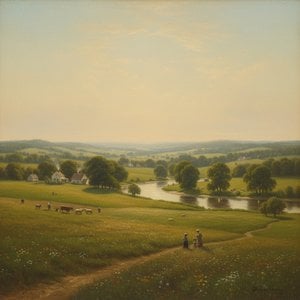
Thomas Worthington Whittredge: Capturing the American Pastoral Ideal with Luminist Light
Explore the luminous landscapes of Thomas Worthington Whittredge, a key figure in the Hudson River School and master of Luminism. Discover his captivating paintings & legacy with ArtsDot.

Henry Thomas Dawson: Navigating Light, Sea & Sentiment in Victorian Marine Painting
Explore the captivating world of Henry Thomas Dawson (1811-1878), a master of Victorian marine painting. Discover his evocative coastal scenes, landscapes & lasting artistic legacy. Learn about collecting Dawson's work and find reproductions at ArtsDot.