


 設置イメージを確認
 送る
送る シェア
シェア
 詳細情報
詳細情報 ガイドを表示

 画像をダウンロード
 似ている作品
 X線調査
X線調査 スライドショー
 統計情報
統計情報The Hunter s Return


 続きを読む
続きを読む
ジークレー/アートプリント
スピーディーな制作と多彩な仕上げオプションが魅力の、ミュージアムクオリティなジークレー・キャンバスプリント。 ( 手描きの複製画を注文する デジタル画像販売へ切り替え)




P118B ¥10

P118H ¥10

P118W ¥10

P438Z ¥10

P508JH ¥12

P508YH ¥12

P805H ¥10

P805Z ¥10

P919BZ ¥10

P919G ¥10

P919XJ ¥10

P959ZH ¥10

P968JZ ¥12

W106C ¥8

W218G ¥10

W218JH ¥8

W218Y ¥10

W307PJ ¥10

W316G ¥10

W316PJ ¥8

W316Y ¥10

W398PJ ¥8

W4111J ¥10

W500HY ¥15

W500JH ¥15

W692G ¥12

W849H ¥8

W940BG ¥15

W953PJ ¥8




作品のオリジナル比率に合わせた、当店の規定サイズからお選びください。

額縁や壁のスペースに合わせて、ご希望の幅と高さを入力してください。プリントはカットすることは可能ですが、元の画像より大きくすることはできないため、異なる比率のサイズを選択された場合は、画像の一部が欠けることになります。印刷を開始する前に、内容を確認していただくためのデジタルモックアップをお送りいたします。このページに表示されている画像は、実際のカット後の状態を示すものではありません。実際の仕上がりはモックアップにてご確認ください。


 ガラスオプションは、110cm未満のサイズでのみご利用いただけます。

The Hunter s Return
ジークレー/アートプリント
複製画サイズ一覧
-


合計金額
¥ 9839
The Hunter’s Return: A Vision of American Identity
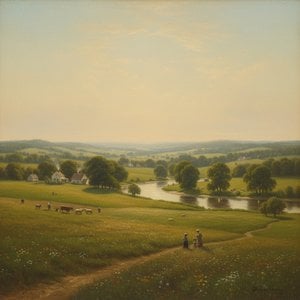
Thomas Cole's "The Hunter’s Return," painted in 1845, isn’t merely a landscape; it’s a carefully constructed allegory—a visual poem reflecting the burgeoning identity of America at the cusp of rapid transformation. More than just depicting a serene mountain scene, this Hudson River School masterpiece embodies the Romantic ideals of connection with nature and the nascent spirit of a nation grappling with its place in the world. Cole, a pivotal figure in establishing American art’s distinct voice, moved beyond the European tradition of historical or mythological narratives, instead focusing on capturing the raw beauty and spiritual resonance of the American wilderness.
The painting immediately draws the eye to the foreground: a humble log cabin nestled within a vibrant valley. A family—father, son, and daughter—are depicted going about their daily lives, seemingly at peace with their surroundings. This domestic scene is juxtaposed against the imposing grandeur of the mountains in the background, painted in rich, earthy tones that evoke both strength and vulnerability. The composition isn’t haphazard; Cole meticulously arranged elements to guide the viewer's eye, creating a sense of depth and inviting exploration. Notice how the path leading towards the cabin subtly curves into the distance, drawing us into the heart of the scene.
A Symphony of Color and Light
Cole’s masterful use of color is central to the painting’s impact. He employs a warm palette—russets, ochres, and deep greens—to create a sense of comfort and tranquility. The sunlight, breaking through the clouds, casts a golden glow over the landscape, imbuing it with an almost ethereal quality. This isn't a realistic depiction of light; rather, Cole uses color to evoke emotion – a feeling of warmth, hope, and connection to the natural world. The subtle gradations of color, particularly in the mountains, demonstrate his meticulous attention to detail and his ability to capture the fleeting effects of light and shadow.
Technically, "The Hunter’s Return" showcases Cole's signature style: a blend of realism and Romanticism. He meticulously rendered the textures of the foliage, the rough-hewn logs of the cabin, and the weathered faces of the family members. Yet, he also imbued the scene with an idealized quality—a sense of timelessness and serenity that transcends the everyday realities of frontier life. Cole’s brushwork is loose and expressive, particularly in the depiction of the clouds and mountains, suggesting a dynamic energy beneath the surface of the landscape.
Symbolism and Historical Context
Beyond its aesthetic beauty, "The Hunter's Return" carries significant symbolic weight. The hunter, returning with his prize—a deer—represents the promise of prosperity and sustenance – a key element in the American narrative of westward expansion. However, it’s not simply a celebration of conquest; the scene subtly hints at the potential consequences of such endeavors. The presence of the family, secure within their cabin, suggests a harmonious relationship with nature, while the rugged mountains serve as a reminder of the untamed wilderness that remains.
Painted in 1845, during a period of intense debate over Manifest Destiny—the belief that America was destined to expand across the continent—the painting reflects the anxieties and aspirations of a nation grappling with its identity. Cole’s work resonated with a growing sentiment among Americans who sought to define themselves not simply as European colonists but as a distinct people connected to the land. The painting can be interpreted as a plea for preserving this connection, a warning against the destructive forces of industrialization and unchecked expansion.
A Timeless Masterpiece – Reproductions Available
“The Hunter’s Return” remains one of Thomas Cole's most celebrated works, admired for its beauty, symbolism, and historical significance. High-quality reproductions are now available through ArtsDot.com, allowing art lovers to bring this iconic scene into their homes or offices. These meticulously crafted prints capture the essence of Cole’s original painting, ensuring that its timeless message continues to inspire and captivate audiences for generations to come. For further information on Thomas Cole and his artistic legacy, visit /art/list/?Filter=Thomas-Cole.
よくあるご質問
「The Hunter s Return」のLandscape形式は、どのような場所に飾るのがおすすめですか?
トーマス・コール作「The Hunter s Return」の展示に関する情報は、フォーマット(Landscape)と推奨される設置場所(Living Room)の2点です。
「The Hunter s Return」の閲覧数はどのくらいですか?
トーマス・コール作「The Hunter s Return」に関する統計情報は、作品の統計情報ページでご確認いただけます。こちらでは、作品の月間訪問数、アーティストの作品への訪問数、および最近の訪問者の国別・言語別の内訳をご覧いただけます。
トーマス・コール作「The Hunter s Return」は、お部屋にどのような雰囲気をもたらしてくれるでしょうか?
トーマス・コール作「The Hunter s Return」はRomanticな雰囲気を纏っており、Living Roomに飾るのがおすすめです。作品が周囲の空間にもたらすムード(情緒)をお楽しみください。
関連作品


アーティストについて
アメリカ風景画の先駆者
トーマス・コールという名は、独自の発展を遂げたアメリカ美術の誕生と分かちがたく結びついており、19世紀の絵画史における極めて重要な人物として君臨しています。1801年、イングランドのランカシャー州ボルトン・ル・ムーアズに生まれた彼の幼少期には、後に彼が芸術界にもたらすであろう深遠な影響を予感させる要素はほとんどありませんでした。1818年に家族と共にアメリカへ渡り、オハイオ州に定住したコールの旅は、自己発見と芸術的な覚醒のプロセスでもありました。当初は、当時の一般的な職業であった放浪の肖像画家として活動していましたが、やがتے彼はアメリカの荒野が持つ、手つかずの美しさに強く惹きつけられていきます。この変化は単なる画題の変更に留まりませんでした。それは、歴史や神話的な物語に重きを置いていたヨーロッパの芸術的伝統からの、根本的な決別を意味していたのです。コールの風景画は、単なる景色の描写ではありませんでした。それらは、自らのアイデンティティを確立しようとしていた当時の国家の精神と深く共鳴するような、霊的かつ寓意的な深みを湛えていました。1825年にニューヨーク州キャッツキルへ移住したことは、彼の人生における転換点となりました。そこは彼にインスピレーションを与えただけでなく、自身の芸術的遺産と不可分な関係となるハドソンリバー渓谷を探索するための、永続的な拠点となったのです。ハドソンリバー派とロマン主義の理想
コールは、アメリカの風景をロマン主義的に描くことで知られる芸術運動、「ハドソンリバー派」の創始者として正当に評価されています。しかし、彼を単なる「風景画家」と呼ぶだけでは、その真価を語るには不十分でしょう。彼の作品は単なる写実的な表現を超越し、人間と自然との関係、時の経過、そして文明の興亡といったテーマを探求する、深い哲学性を備えていました。クロード・ロランやJ.M.W.ターナーといったヨーロッパ・ロマン主義の影響を受けつつも、コールはそれらの感性をアメリカという文脈へと適応させました。ヨーロッパのロマン主義者たちが内面の葛藤を反映させるために劇的で崇高な風景を描いたのに対し、コールの絵画は、自然界の中に宿る楽観主義や神聖な存在感をしばしば伝えてきました。彼はアメリカの広大な荒野の中に、国家の潜在能力と精神的な再生の象徴を見出したのです。彼の最も象徴的な作品の一つであるオックスボウ(Oxbow)(1836年)は、まさにその精神を体現しています。手つかずの荒々しい川の谷と、開拓された農地を対比させた壮大なパノラマは、西進する開拓の約束と、それに伴う困難の両方を象徴しています。寓意と「帝国の過程」
自然の写実的な描写で称賛される一方で、コールの芸術的野心は純粋な風景画の枠組みを遥かに超えていました。彼は複雑な道徳的・哲学的思想を伝えるために、しばしば寓意(アレゴリー)を用いました。その力が最も力強く示されているのが、1833年から1836年にかけて制作された記念碑的な連作帝国の過程です。「未開の状態」「牧歌的な状態」「アルカディアの状態」「絶頂」「破滅」という5枚のキャンバスからなるこのシリーズは、文明が手つかずの起源から避けられない衰退へと向かう循環的な歴史を辿っています。これらの絵画は単なる歴史的な物語ではありません。それは、抑制の効かない野心の危うさと、人類の成し遂げた業績の脆さに対する警鐘として機能しています。帝国の過程は、アメリカの風景を変貌させていた急速な工業化や西進運動への不安を反映し、当時の観衆の心に深く響きました。これにより、コールは芸術を通じて深刻な社会問題に対峙できる先見的な芸術家としての地位を確立したのです。遺産と永続する影響力
1848年、47歳という若さで迎えたトーマス・コールの突然の死は、アメリカ美術界にとって大きな損失となりました。しかし、彼の影響は世代を超えて響き続けています。彼は、ハドソンリバー派の第二世代を代表する画家の一人となるフレデリック・エドウィン・チャーチを直接指導しました。自然を観察することへの彼のこだわりと、風景画に対する深く個人的かつ象徴的なアプローチは、明確に「アメリカ的」な芸術伝統の礎を築いたのです。- ・コールの作品は、ニューヨーク歴史協会、ワシントンD.C.のナショナル・ギャラリー、スミソニアン・アメリカン・アート・ミュージアムなど、全米の主要な美術館で展示され続けています。
- ・彼の絵画は単なる歴史的遺物ではありません。それらは今日においても力強く感情を呼び起こし、鑑賞者に自然との関わりや、人類が世界においてどのような存在であるかという永遠の問いを投げかけています。
- ・ニューヨーク州キャッツキルにあるトーマス・コール国立史跡には、彼の邸宅とアトリエが保存されており、訪れる人々はこの類まれな芸術家の生涯と仕事の一端に触れることができます。

トーマス・コール
1801 - 1848 , イギリス
アーティスト情報
- Artistic Movement Or Style: ヒュドソン川美術協会
- Artists Who Influenced This Artist: ['ジョン・コンスタブル']
- Date Of Birth: February 1, 1801
- Full Name: Thomas Cole
- Nationality: アメリカ合衆国
- Notable Artworks:
- ザ・オックスボウ
- ザ・コース・オブ・エミペル
- Place Of Birth: Bolton, UK
関連記事

ハドソン・リバー派を彩る至宝:10選が示すアメリカ絵画の黄金時代
ハドソン・リバー派の至宝10選を紐解き、アメリカ絵画の黄金時代へ。壮大な自然描写と巨匠たちの技が織りなす感動の世界を体験してください。トーマス・コールからチャーチまで、ArtsDot.comで高品質なアートプリントとインテリアアイデアを見つけましょう。

Thomas Hudson: A Study in 18th-Century Portraiture & British Artistic Identity
Explore the life & work of Thomas Hudson, a leading 18th-century British portraitist. Discover his mastery of the 'Grand Manner,' influential style, and lasting impact on British art. Learn about his notable portraits like Judge William Noel & Alexander Van Aken.

Robert Spencer: Luminism, Narrative & the American Landscape Tradition
Explore the captivating world of Luminism & the Hudson River School with our expert analysis. Discover the history, artists, and enduring beauty of 19th-century American landscape painting. Find museum-quality reproductions at ArtsDot.

The Sublime Landscape: Exploring the Hudson River School Movement
Explore the captivating world of the Hudson River School! Discover the history, artists, and defining characteristics of this iconic American art movement. Learn about Romanticism's influence & find inspiration for your collection.
Thomas Worthington Whittredge: Capturing the American Pastoral Ideal with Luminist Light
Explore the luminous landscapes of Thomas Worthington Whittredge, a key figure in the Hudson River School and master of Luminism. Discover his captivating paintings & legacy with ArtsDot.


