

 設置イメージを表示
 シェアする
シェアする シェアする
シェアする
 詳細を見る
詳細を見る ガイドを表示

 ダウンロード
 似ている作品
 X線調査
X線調査 スライドショーを表示
 Q&A
Q&A 統計情報
統計情報Living Fire


 詳細を表示
詳細を表示
このページに掲載されている作品は著作権法によって保護されており、当社の許可なく同一の複製物を制作または販売することは法律で禁じられています。この保護は、以下のような国際条約に基づき執行されます。 ベルヌ条約 および、以下の条項に定められたものを含む各国の法律により、 米国著作権法 第17編。
この手法は、著作権で保護された作品の複製や複写を伴わないため、著作権法に完全に準拠しています。これは単なる模倣ではなく、創造的な再解釈です。元の作品からインスピレーションを受けつつも、それとは異なる、全く新しい絵画を生み出すものです。
ジークレー/アートプリント
スピーディーな制作と多彩な仕上げオプションが魅力の、ミュージアムクオリティなジークレー・キャンバスプリント。 ( 手描き複製画を注文する デジタル画像販売へ切り替え)




P118B ¥10

P118H ¥10

P118W ¥10

P438Z ¥10

P508JH ¥12

P508YH ¥12

P805H ¥10

P805Z ¥10

P919BZ ¥10

P919G ¥10

P919XJ ¥10

P959ZH ¥10

P968JZ ¥12

W106C ¥8

W218G ¥10

W218JH ¥8

W218Y ¥10

W307PJ ¥10

W316G ¥10

W316PJ ¥8

W316Y ¥10

W398PJ ¥8

W4111J ¥10

W500HY ¥15

W500JH ¥15

W692G ¥12

W849H ¥8

W940BG ¥15

W953PJ ¥8




作品のオリジナル比率に合わせた、当店の規定サイズからお選びください。

額縁や壁のスペースに合わせて、ご希望の幅と高さを入力してください。プリントはカットすることは可能ですが、元の画像より大きくすることはできないため、異なる比率のサイズを選択された場合は、画像の一部が欠けることになります。印刷を開始する前に、内容を確認していただくためのデジタルモックアップをお送りいたします。このページに表示されている画像は、実際のカット後の状態を示すものではありません。実際の仕上がりはモックアップにてご確認ください。


 ガラスオプションは、110cm未満のサイズでのみご利用いただけます。

Living Fire
ジークレー/アートプリント
複製画サイズ一覧
-


合計金額
¥ 9972
A Visionary Descent into the Mystical
In the hauntingly beautiful Living Fire, created in 1963, we encounter the profound and enigmatic world of Teofil Ociepka, a master of Polish Primitivism. This large-scale oil on canvas serves as a window into a realm where the boundaries between the physical and the spiritual dissolve. At the heart of this composition sits a formidable red creature, a being of mythic proportions that commands the viewer's immediate attention. With its long, flowing hair and imposing horns, the figure evokes the primal energy of a dragon or a demonic entity, yet there is an unexpected, humanizing touch in the pipe held within its mouth. This singular detail introduces a surreal, almost whimsical tension to an otherwise fearsome subject, inviting us to contemplate the duality of nature—the coexistence of the wild and the domestic, the terrifying and the mundane.
The painting’s atmosphere is thick with the esoteric energy that defined Ociepka’s life and work. As a self-taught artist, occultist, and theosophist, Ociepka did not merely paint scenes; he channeled visions. The composition is far from static; it is a dynamic tapestry where smaller, indistinct figures drift through the background like echoes of a forgotten dream. These secondary figures, disconnected from the central beast, create a sense of vast, populated mythos, suggesting that the main creature is but one inhabitant of a much larger, unseen spiritual landscape. For the collector or interior designer, this piece offers more than just visual interest; it provides a profound narrative depth that can serve as a powerful focal point in any curated space.
Technique and the Language of Symbolism
Ociepka’s technique is a masterful study in the power of Primitivism. Eschewing the complex anatomical precision of academic realism, he utilizes bold colors and strikingly flat forms to achieve a heightened emotional resonance. The use of vibrant reds and deep, saturated tones in Living Fire creates a sense of heat and movement, making the canvas feel as though it is pulsing with life. His brushwork, while seemingly simple, possesses a rhythmic quality that guides the eye through the swirling textures of the creature's mane and the mysterious depths of the background. This stylistic choice allows the symbolic weight of the imagery to take precedence over literal representation, forcing the viewer to engage with the painting on an intuitive, rather than purely intellectual, level.
The symbolism within the work is deeply rooted in Ociepka’s fascination with the occult and theosophical doctrines. Every element—from the fiery hue of the central figure to the enigmatic presence of the smaller spirits—functions as a sigil or a symbol within a larger cosmic drama. The painting acts as a bridge between folk art traditions and high mysticism, making it an extraordinary piece for those who appreciate art that explores the hidden layers of reality. To possess a reproduction of Living Fire is to bring a fragment of this spiritual exploration into one's own environment, offering a constant source of introspection and a striking aesthetic statement that transcends the fleeting trends of modern decor.
Q&A
ご購入前に、Teofil Ociepka作「Living Fire」 をご自身の壁に飾った様子を確認することはできますか?
「Living Fire」は、拡張現実(AR)でのプレビューが可能です。対応デバイスで作品のARで見るページを表示すると、ご自身の空間に作品を配置してご確認いただけます。
その色彩から、Teofil Ociepka作「Living Fire」 はどの部屋に飾るのがおすすめですか?
Teofil Ociepka作「Living Fire」のDarkな色彩は、おすすめの空間であるRestaurantに調和します。
「Living Fire」に似た作品はありますか?
「Living Fire」に似た作品は、こちらの関連作品ページでご覧いただけます。
関連作品


作家プロフィール
The Mystical Vision of Teofil Ociepka
In the quiet corners of Polish art history, few figures possess the enigmatic allure of Teofil Ociepka. Born on April 22, 1891, in Janów Śląski, Poland, Ociepka was far more than a mere painter; he was a seeker, an occultist, and a dedicated theosophist whose brush served as a conduit for the unseen realms. As a self-taught primitivist, his work emerged not from formal academic training, but from a profound, internal necessity to translate spiritual truths onto canvas. His life, which spanned until 1978 in Bydgoszcz, was a continuous journey through the layers of the subconscious and the esoteric, leaving behind a body of work that vibrates with a dreamlike, otherworldly energy.
Ociepka’s artistic development was deeply intertwined with his spiritual pursuits. His fascination with the occult and theosophy provided him with a unique visual vocabulary, one where the boundaries between the physical landscape and the metaphysical plane are perpetually blurred. Unlike many of his contemporaries who sought to capture the external reality of the Polish countryside, Ociepka looked inward. His early life in Poland, marked by a deep immersion in folk traditions and mystical philosophies, allowed him to cultivate a style that felt both ancient and deeply personal. This fusion of folk art simplicity and complex esoteric symbolism created a tension in his work that continues to captivate modern viewers.
A Language of Symbols and Color
The aesthetic power of Ociepka’s paintings lies in their striking, unadorned clarity. His technique was characterized by the use of bold, saturated colors and remarkably flat, simplified forms—a hallmark of the Primitivist movement. However, beneath this deceptive simplicity lies a dense web of meaning. Every stroke and every shape often carries a weight of symbolic significance, reflecting his preoccupation with the hidden forces of the universe. His landscapes and still-life compositions are rarely just depictions of nature; they are sacred spaces populated by motifs that whisper of cosmic order and spiritual mystery.
When observing his most celebrated works, such as "The Garden" or "The Mountain," one is struck by the following elements:
- Bold Color Palettes: The use of vibrant, often non-naturalistic hues to evoke emotional and spiritual states.
- Symbolic Motifs: The integration of esoteric symbols that bridge the gap between the earthly and the divine.
- Flatness of Form: A rejection of traditional perspective in favor of a more direct, iconographic presentation.
- Dreamlike Atmosphere: A sense of stillness and transcendence that invites the viewer into a meditative state.
Legacy and Historical Significance
Teofil Ociepka stands alongside legendary figures like Nikifor and Henri Rousseau as a master of the Primitivist tradition. While his work shares the raw, intuitive quality found in Rousseau’s jungles, Ociepka’s focus on theosophy gives his oeuvre a distinctively spiritual gravity. He did not merely paint what he saw; he painted what he felt to be true in the higher vibrations of existence. His ability to weave the humble aesthetics of Polish folk art into a grander narrative of universal mysticism has secured his place as one of Poland's most fascinating and enduring artistic voices.
Today, the legacy of Ociepka is preserved through collections in prestigious institutions, including the National Museum in Wrocław and the Museum of Folk Architecture in Sanok. His work remains a vital touchstone for anyone interested in the intersection of art, spirituality, and the human psyche. To encounter an Ociepka painting is to step into a realm where the veil between worlds is thin, offering a glimpse into the profound mysteries that the artist spent his entire life attempting to illuminate.

Teofil Ociepka
1891 - 1978 , Poland
プロフィール概要
- Artistic Movement Or Style: Primitivism
- Full Name: Teofil Ociepka
- Nationality: Polish
- Notable Artworks:
- Living Fire
- Mammoth. Saturn
- Self-Portrait
- Basilisk
- Place Of Birth: Janów Śląski, Poland
- Date Of Birth: 1891
- Date Of Death: 1978
関連記事

Stanisław Wyspiański: Symbolism, National Identity & the Polish Secession
Explore the life & work of Stanisław Wyspiański, a pivotal figure in Polish Symbolism and the Young Poland movement. Discover his iconic paintings, dramas, and stained glass designs reflecting national identity & artistic innovation.

Jan Matejko: Historical Narrative & National Identity in 19th-Century Polish Painting
Explore the powerful historical paintings of Jan Matejko, Poland's national artist. Discover his iconic works & learn how he shaped Polish identity in the 19th century. High-quality reproductions available.

マーク・ロスコ傑作25選:色彩が織りなす深遠な世界|ArtsDot
マーク・ロスコの傑作25選。抽象表現主義を代表する巨匠、色彩が織りなす深遠な世界を探求します。絵画の背景や技法、感動的なストーリーを紐解き、ArtsDotで高品質なアートプリントをお楽しみください。リビングやオフィスにモダンアートを飾るなら!
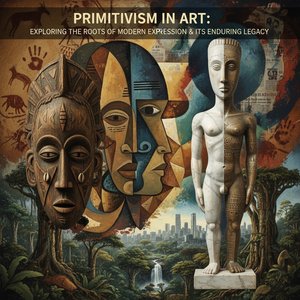
Primitivism in Art: Exploring the Roots of Modern Expression & its Enduring Legacy
Explore the fascinating history of Primitivism in art – its origins, key artists like Gauguin & Picasso, and lasting impact on modern expression. Uncover the complexities of this influential movement with ArtsDot.

Crimson Threads of Narrative: Exploring Symbolism & Representation in Artworks Featuring the Red Dress
Explore the rich symbolism of the red dress in art history! From ancient power displays to iconic portraits like Cézanne’s 'Madame Cezanne', discover the cultural and artistic significance behind this captivating color. Expert analysis & insights.