


 プレビュー
プレビュー
 シェアする
シェアする シェアする
シェアする
 詳細を見る
詳細を見る

 ダウンロード
 似ている作品
 X線調査
X線調査 スライドショー
Self-Portrait
 Acrylic On Canvas
- WallArt
- Baroque Portraiture
 1622
1622 117.0 x 94.0 cm
 エルミタージュ美術館
 詳細を見る
詳細を見る
ジークレー/アートプリント
迅速な制作と多彩な仕上げオプションを備えた、ミュージアムクオリティのジークレーまたはキャンバスプリント。 ( 手描きの絵画を購入 画像を購入)




P118B $10

P118H $10

P118W $10

P438Z $10

P508JH $12

P508YH $12

P805H $10

P805Z $10

P919BZ $10

P919G $10

P919XJ $10

P959ZH $10

P968JZ $12

W106C $8

W218G $10

W218JH $8

W218Y $10

W307PJ $10

W316G $10

W316PJ $8

W316Y $10

W398PJ $8

W4111J $10

W500HY $15

W500JH $15

W692G $12

W849H $8

W940BG $15

W953PJ $8




作品のオリジナル比率に合わせた、当店の規定サイズからお選びください。

特定のフレームやスペースに合わせて、ご自身でサイズを指定することも可能です。選択されたサイズが元の画像の比率と一致しない場合、作品をトリミングするか、鏡面反射または単色での塗りつぶしによって画像を拡張いたします。制作を開始する前に、ご確認用のデジタルモックアップをお送りいたします。
画面上のプレビューには、実際のトリミングや拡張は反映されませんのでご注意ください。最終的な構図を正確に確認できるのは、モックアップのみとなります。
カスタムサイズも承っておりますが、元の比率を維持するためには、あらかじめ用意されたリストからサイズを選択することをお勧めいたします。


 ガラスオプションは、110cm未満のサイズでのみご利用いただけます。

Self-Portrait
ジークレー/アートプリント
複製画のサイズ
-


合計金額
$ 62
作品詳細説明
A Portrait of Majesty: Sir Anthony van Dyck’s Self-Portrait
Sir Anthony van Dyck's 1622 self-portrait offers more than just a likeness; it’s a carefully constructed statement about the artist’s burgeoning reputation and his ambition to establish himself as a leading figure in the European art world. Housed within the Hermitage Museum’s collection, this oil on canvas presents a man of considerable presence – a Flemish Master at the courts of Europe, poised with an air of quiet confidence. The painting immediately draws the eye to Van Dyck's direct gaze; he isn’t merely posing for a portrait but engaging the viewer in a subtle exchange, inviting us into his world and subtly asserting his artistic authority.
The composition is remarkably balanced, utilizing classical principles of proportion and perspective. The dark, richly textured suit – a hallmark of Van Dyck's style – immediately establishes a sense of formality and status. The carefully arranged tie, the subtle sheen of his clothing, and the precise rendering of his hands on his hips all speak to an attention to detail that was characteristic of his work. The background, featuring a simple wall and column, serves not as a distraction but rather as a grounding element, directing our focus squarely onto the artist himself. The muted palette – dominated by deep browns, blacks, and subtle hints of red – contributes to the overall atmosphere of dignified restraint.
The Influence of Rubens and the Baroque Aesthetic
Van Dyck’s artistic journey was profoundly shaped by his early apprenticeship with Peter Paul Rubens at the court of Antwerp. Rubens' dynamic compositions, vibrant color palettes, and masterful use of light and shadow – particularly his dramatic chiaroscuro – left an indelible mark on Van Dyck’s technique. However, while he absorbed these influences, Van Dyck quickly developed a distinct style characterized by an unparalleled elegance and refinement. Unlike Rubens’ often exuberant energy, Van Dyck favored a more controlled and polished approach, emphasizing grace, composure, and a subtle sensuality.
This self-portrait exemplifies this shift. Note the meticulous attention to detail in rendering the textures of his clothing – the velvet, the fabric folds – and the delicate modeling of his face. The lighting is carefully considered, highlighting key features while maintaining an overall sense of atmospheric depth. This reflects a Baroque sensibility—a desire to capture not just the appearance but also the essence of the subject, imbuing it with psychological complexity.
A Window into a Courtier’s World
Painted in 1622, during a pivotal period in Van Dyck's career, this portrait offers a glimpse into the world of a courtier and artist. Van Dyck was rapidly gaining recognition for his portraits of European nobility, securing commissions that propelled him to prominence across England, Spain, and Italy. His work served as a powerful tool for projecting status and influence – a visual shorthand for wealth, power, and refinement.
The inclusion of the column in the background subtly references classical architecture, associating Van Dyck with the traditions of Roman art and philosophy. This was a deliberate strategy employed by many artists of the time to elevate their work and imbue it with a sense of timeless beauty and intellectual depth. Furthermore, considering that he later became the principal court painter for King Charles I of England, this self-portrait can be seen as a strategic assertion of his artistic capabilities and a demonstration of his ambition to secure a prestigious position within the English court.
Capturing the Essence: A Reproduction Opportunity
ArtsDot.com offers meticulously crafted hand-painted reproductions of Sir Anthony van Dyck’s “Self-Portrait.” Our skilled artisans replicate every nuance of Van Dyck's technique, from the subtle variations in color to the delicate modeling of his features. We use only archival-quality materials and employ time-honored painting methods to ensure that our reproductions faithfully capture the original’s beauty and atmosphere. This is more than just a print; it’s an authentic artistic experience—a chance to own a piece of art history and bring Van Dyck's masterful portrait into your home or office.
Explore the full details and dimensions of this exceptional artwork on our website, and discover how you can acquire a stunning reproduction that will grace your space for generations to come. View the Full Artwork
関連作品


アーティストの略歴
アントニ・ヴァン・ダイク:ヨーロッパ宮廷を彩るフランドルの巨匠
アントニ・ヴァン・ダイクは、1599年にアントワープで生まれ、夭折の天才としてバロック美術史にその名を刻んだフランドル出身の画家です。彼の短い生涯は、故郷であるフラマン地方からイタリア、そしてイングランド宮廷へと続く芸術探求と華麗な依頼の連続でした。幼い頃から並外れた才能を発揮し、ヘンドリック・ヴァン・バーレンの工房に入門して主流の様式を吸収すると同時に、すぐにピーター・パウル・ルーベンスとの共同作業を通して、その芸術的基盤を築き上げました。ルーベンスからダイナミックな構図、豊かな色彩、光と影の巧みな扱い方を学びましたが、ヴァン・ダイクは独自の道を切り開き、優雅さと洗練さを特徴とする独自のスタイルを確立しました。イタリアでの研鑽と様式の誕生
1621年頃から始まるイタリアへの滞在は、ヴァン・ダイクの芸術的成長にとって決定的な時期となりました。特にジェノヴァに長く滞在し、その地の貴族たちの庇護を受けながら、彼を特徴づける洗練されたスタイルを磨き上げました。優美なポーズ、豪華な衣装、そして高貴な気品が漂う彼のイタリア絵画は、単なる肖像画を超え、被写体の内面的な性格や社会的地位までも捉えています。ルーベンスの作品に見られるような力強いエネルギーとは対照的に、ヴァン・ダイクの肖像画からは抑制された落ち着きと優雅さがにじみ出ています。この時期には、著名な芸術家、学者、君主たちをモデルにした精緻な肖像版画群『Iconography』にも取り組み、その卓越した技術力を世界に示すとともに、版画家としての地位も確立しました。これらの版画は単なる記録ではなく、被写体の名声と知性を伝えるために細心の注意を払って制作された芸術作品でした。イングランド宮廷の画家:チャールズ1世の肖像
1632年、ヴァン・ダイクはチャールズ1世からの招聘を受け、イングランド宮廷の画家となります。この任命は、彼自身のキャリアだけでなく、イギリスの肖像画にも大きな変革をもたらしました。すでに名声が高まっていた彼は、王室に不可欠な存在となり、権力、威厳、そして神授による正統性を投影するイメージを制作するという重要な任務を担いました。特にチャールズ1世の肖像は特筆すべきものであり、それまでの硬直した形式的な表現から脱却し、ダイナミックでカリスマ的な指導者としての王の姿を描き出しました。ドラマチックな光の使い方、流れるようなジェスチャー、そして慎重に選び抜かれた背景を用いることで、視覚的に魅力的であると同時に政治的にも力強いイメージを作り上げました。彼の影響は王室にとどまらず、イギリス貴族の美的感覚を何世代にもわたって形作りました。ヴァン・ダイクは肖像画を描くだけでなく、王位のイメージを構築し、その後の1世紀以上にわたり王室に対する人々の認識に影響を与えました。遺産と不朽の影響
1641年の若き日の死によって、芸術界は才能あふれる巨匠を失いましたが、彼の遺産は今日に至るまで生き続けています。イギリスの肖像画への影響は計り知れず、後進の画家たちが模倣しようとした優雅さと洗練さの基準を確立しました。- 技術革新: 油絵と版画の両方に精通し、常に新しい技法を実験していました。
- 様式の洗練: 彼の肖像画は、優美なポーズ、豪華な衣装、そして微妙な心理描写によって特徴づけられています。
- 宮廷への影響: イギリスの王室のイメージを変革し、権力と威厳の視覚的言語を創造しました。

アントニ・ヴァン・ダイク
1599 - 1641 , ベルギー
基本情報
- フルネーム: アンソニー・ヴァン・ダイク
- 主な作品:
- バルビ家の子供たち
- チャールズ1世の肖像
- ジョン・ウォートン卿
- 慈善
- 三位一体
- リナルドとアルミダ
- 出生地: アントワープ(ベルギー)
- 国籍: フランドル人
- 影響を与えたアーティストまたは運動: ['イギリスの肖像画']
- 影響を受けたアーティスト: ['ピーター・パウル・ルーベンス']
- 死亡年月日: 1641年12月9日
- 生年月日: 1599年3月22日
- 芸術運動またはスタイル: バロック美術
関連記事
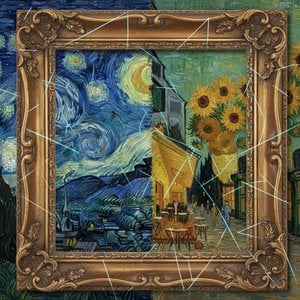
ゴッホ傑作25選:魂を揺さぶる名画の世界 | ArtsDot
ゴッホの傑作25選🎨 印象派から表現主義へ。ひまわり🌻や星月夜🌌など、魂を揺さぶる名画の世界をArtsDotで。高精細な複製画で、ゴッホの色彩と感情が宿るアートをあなたの空間に。コレクションはこちら👉

レンブラント傑作25選:光と影の巨匠、魂を揺さぶる名画の世界 | ArtsDot
レンブラントの傑作25選。光と影の魔術師が描いた魂を揺さぶる名画の世界へ。美術史に残る自画像、夜警、宗教画…ArtsDotで高品質なアートプリントやインテリアアートをお楽しみください。コレクションはこちら→

Sir Anthony van Dyck: Courtly Portraiture & the Shaping of Baroque Identity
Explore the life & legacy of Sir Anthony van Dyck, the leading court painter of his era. Discover his innovative portraiture, Baroque masterpieces, and investment potential for discerning collectors. Learn more at ArtsDot.

Early Netherlandish Masters: 10 Paintings That Revolutionized Art & Decor
Journey into the world of Early Netherlandish painting! Explore 10 masterpieces by Jan van Eyck, Rogier van der Weyden & more. Discover stunning detail, symbolism & Renaissance art for your home decor. Find museum-quality reproductions on ArtsDot.com

The Grandeur of Baroque Portraiture: Power, Emotion & Artistic Innovation
Explore the grandeur of Baroque portraiture! Discover Rubens, Van Dyck & the masters of 17th-century art. Uncover symbolism, techniques & lasting influence. Expert insights for collectors and enthusiasts.



