

 設置イメージを表示
 シェアする
シェアする シェアする
シェアする
 詳細を見る
詳細を見る ガイドを表示

 ダウンロード
 似ている作品
 X線調査
X線調査 スライドショーを表示
 Q&A
Q&A 統計情報
統計情報Entrée de forêt


 詳細を表示
詳細を表示
ジークレー/アートプリント
スピーディーな制作と多彩な仕上げオプションが魅力の、ミュージアムクオリティなジークレー・キャンバスプリント。 ( 手描き複製画を注文する デジタル画像販売へ切り替え)




P118B ¥10

P118H ¥10

P118W ¥10

P438Z ¥10

P508JH ¥12

P508YH ¥12

P805H ¥10

P805Z ¥10

P919BZ ¥10

P919G ¥10

P919XJ ¥10

P959ZH ¥10

P968JZ ¥12

W106C ¥8

W218G ¥10

W218JH ¥8

W218Y ¥10

W307PJ ¥10

W316G ¥10

W316PJ ¥8

W316Y ¥10

W398PJ ¥8

W4111J ¥10

W500HY ¥15

W500JH ¥15

W692G ¥12

W849H ¥8

W940BG ¥15

W953PJ ¥8




作品のオリジナル比率に合わせた、当店の規定サイズからお選びください。

額縁や壁のスペースに合わせて、ご希望の幅と高さを入力してください。プリントはカットすることは可能ですが、元の画像より大きくすることはできないため、異なる比率のサイズを選択された場合は、画像の一部が欠けることになります。印刷を開始する前に、内容を確認していただくためのデジタルモックアップをお送りいたします。このページに表示されている画像は、実際のカット後の状態を示すものではありません。実際の仕上がりはモックアップにてご確認ください。


 ガラスオプションは、110cm未満のサイズでのみご利用いただけます。

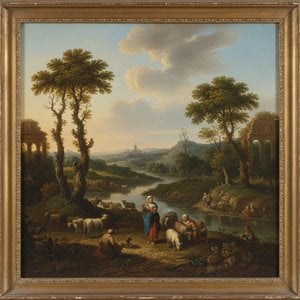
Entrée de forêt
ジークレー/アートプリント
複製画サイズ一覧
-


合計金額
¥ 9952
The Allure of the Woodland Threshold
To stand before Salomon Rombouts' depiction of an "Entrée de forêt" is to step across an invisible threshold, leaving the bright clarity of the known world for the hushed mystery of the woods. This landscape does not merely show a forest entrance; it invites contemplation. The composition masterfully guides the eye from the immediate foreground, where colossal tree trunks anchor the scene with their strong verticality, deep into the shadowed embrace of the woodland beyond. It is a place caught between light and shadow, suggesting both the promise of discovery along the winding path and the quiet solitude that awaits deeper within.
Mastery in Dutch Landscape Tradition
While Rombouts is perhaps best known for his charming genre scenes of village life, this landscape reveals a profound command of the natural world characteristic of the Dutch Golden Age. The technique employed speaks to an era obsessed with capturing fleeting moments of terrestrial beauty. Observe how the artist handles the light; it is diffused, suggesting an overcast sky that softens all edges and deepens all tones. This use of atmospheric perspective is breathtaking—the background recedes into a soft, muted haze, contrasting beautifully with the tangible texture of the foreground bark and undergrowth. The palette itself, dominated by rich greens, earthy browns, and cool grays, speaks of damp moss and ancient wood.
Symbolism and the Journey Within
The forest in art has always been a potent symbol, representing the subconscious mind or the journey of life itself. Here, the path winding through the trees acts as a classic visual metaphor for human endeavor—a passage that requires trust and patience. The subtle placement of figures within the scene suggests companionship on this journey, yet they remain small against the grandeur of nature, reminding us of humanity's place within something vast and enduring. It evokes a feeling of quiet introspection; one feels compelled to slow down, to listen for sounds beyond the immediate view, and to simply wander.
Creating an Atmosphere for Your Space
For those seeking to infuse a room with the depth and tranquility of nature, this piece offers unparalleled ambiance. Whether reproduced as a striking focal point in a study or a serene backdrop in a living area, its muted yet complex color story harmonizes beautifully with sophisticated interior design schemes. The interplay between strong vertical lines from the trees and the gentle curves of the path adds dynamic visual rhythm to any wall. Owning this reproduction is not just acquiring art; it is curating an atmosphere—a permanent portal to a moment of profound, woodland peace.
Q&A
Salomon Rombouts作「Entrée de forêt」の解説ページはありますか?
Salomon Rombouts作「Entrée de forêt」の解説資料ページでは、印刷して活用できる2枚構成のファクトシートを提供しています。これには、作品の詳細をまとめたデータテーブル、アーティストの生涯における時代背景を示す年代チャート、同アーティストによる他の作品、抽出されたカラーパレット、そしてそのままコピーして使用できる4つの形式の引用文献情報が含まれています。
Salomon Rombouts作「Entrée de forêt」の全体的な雰囲気はどのようなものですか?
Salomon Rombouts作「Entrée de forêt」の全体的なムードはSereneです。このムードは、作品が醸し出す全体的な雰囲気。
Salomon Rombouts作「Entrée de forêt」の向き(横長・縦長)はどちらですか?
Salomon Rombouts作「Entrée de forêt」はLandscapeの構図です。プリントサイズを選択する前に、アスペクト比(縦横比)をご確認いただくことをお勧めします。
関連作品


作家プロフィール
Salomon Rombouts: A Painter of Tranquility and Village Life
Salomon Rombouts (1655-1710) stands as a prominent figure within the Dutch Golden Age, celebrated primarily for his captivating genre paintings that portray scenes of everyday life—particularly festive gatherings and charming depictions of village communities. Born in Haarlem, Netherlands, he inherited artistic talent from his father, Gillis Rombouts (1630-1672), who himself was a respected landscape painter known for serene compositions and evocative beachscapes. The family’s lineage extended beyond Gillis; Salomon's elder brother, also named Salomon, tragically perished in infancy, adding an element of familial sorrow to his biographical narrative. Despite the early loss of his siblings, Salomon Rombouts persevered in honing his craft, establishing himself as a skilled artist within Haarlem’s Guild of St. Luke—a cornerstone of artistic patronage and professional development during the period. His formative years were marked by exposure to influential artistic currents circulating throughout Europe, notably the burgeoning Baroque style originating from Italy. This influence is palpable in his oeuvre, where meticulous attention to detail and masterful use of chiaroscuro – dramatic contrasts between light and dark – imbue his canvases with a sense of realism and emotional depth. Traveling extensively during his lifetime, Rombouts undertook a significant journey to Italy in 1681, immersing himself in the artistic fervor of Florence. His residency there from 1689 to 1700 solidified his connection to Italian artistic traditions and allowed him to absorb inspiration from masters such as Caravaggio and Rembrandt—artists who championed dramatic lighting and psychological realism. This period witnessed a blossoming of Rombouts’s creative output, resulting in numerous paintings that capture the vibrancy of Florentine society and its artistic milieu. Rombouts's artistic legacy rests upon his ability to distill complex social realities into accessible and emotionally resonant images. His celebrated works like “A Village Kermesse” exemplify this talent, transporting viewers back to 17th-century Netherlandish customs with remarkable accuracy. The painting captures the joyous spirit of a village celebration—music, dancing, and communal merriment—presented with an understated elegance that underscores Rombouts’s artistic sensibilities. Similarly, “Wooded Landscape” showcases his masterful technique in portraying tranquil natural vistas, reflecting the broader humanist preoccupation with observing and representing the beauty of the natural world. Furthermore, "Peasants by a Wooded Riverbank" exemplifies Rombouts's dedication to capturing the subtleties of rural life—the quiet dignity of hardworking individuals amidst picturesque scenery. His paintings are not merely visual representations; they serve as windows into the cultural values and beliefs of his time, securing Salomon Rombouts’s place as one of the most enduring voices of the Dutch Golden Age.
Salomon Rombouts
1655 - 1710 , Netherlands
プロフィール概要
- Artistic Movement Or Style: Golden Age
- Artists Who Influenced This Artist: Gillis Rombouts
- Date Of Birth: 1655
- Date Of Death: 1710
- Full Name: Salomon Rombouts
- Nationality: Dutch
- Notable Artworks:
- A village kermesse
- Wooded Landscape
- Peasants by a Wooded Riverbank
- Place Of Birth: Haarlem, Netherlands
関連記事

Charles Leickert: Capturing the Dutch Golden Age Light – A Comprehensive Study of Technique, Context, and Legacy
Explore the captivating winter landscapes of Charles Leickert, a master of Dutch Golden Age light & atmosphere. Discover his techniques, symbolism, and lasting legacy – a comprehensive study for art enthusiasts and collectors.

黄金世紀の巨匠たち:バロック絵画が彩る10選|ArtsDot
オランダ黄金時代の10大傑作を紐解く!レンブラント、フェルメール…バロック絵画の魅力と時代背景を深く探求。ArtsDotで、至高のアートコレクションと空間演出のヒントを見つけよう。高品質なアートプリントで、お部屋を華やかに。
Nicolaes Berchem: Dutch Golden Age Pastoralism & the Evolution of Landscape Painting
Explore the captivating world of Nicolaes Berchem, a leading Dutch Golden Age painter. Discover his idyllic landscapes, masterful technique & lasting influence on art history. Learn more at ArtsDot.

Golden Light & Dutch Skies: Bringing the Magic of Dutch Golden Age Landscapes into Your Home
Transform your home with the breathtaking light of Dutch Golden Age landscapes. Discover how hand-painted oil reproductions of masterworks like Ruisdael and Vermeer bring timeless elegance, atmosphere, and soulful texture to modern interiors. Elevate your space with museum-quality art.

Golden Age Reflections: Dutch Baroque Painting & Cultural Innovation
Explore the Dutch Golden Age of painting! Discover key artists like Vermeer & ter Borch, their innovative techniques, and the rich cultural context behind these Baroque masterpieces. Learn about collecting & appreciating this iconic art period.