

- 123.0 x 83.0 cm


The picture follows your choices: , .
アーティストの略歴
Robert Scott Lauder (1803-1869) was a Scottish historical painter & Royal Scottish Academy member known for scenes inspired by Sir Walter Scott's novels, portraits, and genre works. Discover his life & art!
 詳細を表示
詳細を表示
手描き油彩複製画
当社のアーティストが、ご希望のサイズと額縁に合わせてキャンバスに手描きで制作する、オーダーメイドの油彩画です。 ( プリント版に切り替え デジタル画像販売へ切り替え)
More about this painting
 設置イメージを表示
 シェアする
シェアする シェアする
シェアする
 詳細を見る
詳細を見る ガイドを表示

 ダウンロード
 似ている作品
 X線調査
X線調査 スライドショーを表示
 Q&A
Q&A 統計情報
統計情報Order your painting in four simple steps
Take your time. You can change any answer; the price in your order card follows each choice.
1 Step one of four
Which size would you like?
These sizes keep the proportions of the original painting. The drawing shows your choice on a wall, above a two-metre sofa.
Or give your own measurements
作品のオリジナル比率に合わせた、当店の規定サイズからお選びください。

フレームや壁のスペースに合わせて、ご希望の幅と高さを入力してください。本作品は手描きのため、異なる比率のサイズをご希望の場合、絵画の周囲を少し広げて描くか、あるいは端を少しカットして調整することが可能です。お客様のご要望に合わせます。制作を開始する前に、仕上がりを確認するためのデジタルモックアップをお送りいたします。このページに表示されている画像は完成品の実物ではなく、あくまでモックアップによるイメージです。
2 Step two of four
How should it be prepared: rolled, stretched or framed?
The prices below are for the size you chose in step one.
Choose the edges of the stretched canvas
Choose your frame

White ¥1

Blurside ¥1

Extended ¥1

P118B ¥10

P118H ¥10

P118W ¥10

P438Z ¥10

P508JH ¥12

P508YH ¥12

P805H ¥10

P805Z ¥10

P919BZ ¥10

P919G ¥10

P919XJ ¥10

P959ZH ¥10

P968JZ ¥12

W106C ¥8

W218G ¥10

W218JH ¥8

W218Y ¥10

W307PJ ¥10

W316G ¥10

W316PJ ¥8

W316Y ¥10

W398PJ ¥8

W4111J ¥10

W500HY ¥15

W500JH ¥15

W692G ¥12

W849H ¥8

W940BG ¥15

W953PJ ¥8

H24-GOLD ¥30

H24-SILVER ¥30

H36-GOLD ¥45

H36-SILVER ¥45
額装済み
Moulding: . Overall size with the frame: .
3 Step three of four
Would you like anything changed in the painting?
Most people answer no. Because each painting is made by hand, our artist can also adapt it for you.
After order, ArtsDot.com team will email client for instructions and provide a mockup preview
4 Step four of four
A few finishing options
All of them are optional. The answers already selected cost nothing extra.
Who paints it?
A nameplate, as in a museum?
刻印入りブロンズプレートの詳細
This elegant plaque features the artist's name and the title of the artwork, finely engraved for a timeless presentation.
It is made from bronze with a refined, elegant finish. The text is precisely laser-engraved for a sharp and permanent result. Measuring 9x2 cm, the plaque is compact yet easy to read. It's built to be durable and scratch-resistant, offering a professional, museum-quality look. Mounting is simple thanks to the included adhesive backing.
透明アクリル銘板の詳細
The plaque includes essential engraved details such as the artist's name, the title of the artwork, the date it was created, the type of media used-like oil on canvas or watercolor-a brief description of the piece, and a QR code that links to the complete artwork information.
It is crafted from clear acrylic, offering a sleek, modern appearance. The text is UV-engraved in black to ensure strong visual contrast. With a size of 10x15 cm, it ensures optimal readability. It comes equipped with two metal hooks for secure wall mounting. The plaque is designed to be weather-resistant, making it suitable for various environments, and it includes interactive features that work seamlessly with smartphone scanning.
黒アクリル製銘板の詳細
This elegant plaque includes engraved information such as the artist's name, the title of the artwork, the date it was created, the type of media used (like oil on canvas or watercolor), a short description of the artwork, and a QR code for quick access to more information.
The plaque itself is made from refined black acrylic with a premium finish. The text is laser-engraved in white for high contrast and readability. Its size is 10x15 cm, designed to be easy to read. It comes with two metal hooks for professional mounting. The design is sleek and fits any interior style. It is also weather-resistant and durable, with built-in digital integration for mobile compatibility.
A protective varnish?
When do you need it?
✓ Check and order
Your painting, as you ordered it

The Crucifixion (study)
再現技法
複製画サイズ一覧
-

至高の熟練アーティスト
より細部までこだわった表現、洗練された技術、そして十分な制作時間
-

複製画用フレーム
-
-
いずれかの辺が105 cm(約41インチ)を超えるアートワークまたは複製画の場合、フレームは分解されたキットの状態でお届けいたします。この方法は、輸送中の破損を防ぎ、安全に配送するために採用しております。
組み立てには専門知識が必要です(DIY用製品ではありません)。
本キットは、経験豊富なプロの額装師が、木工用ボンド(別売)、キャンバス用プライヤー、およびボンドの乾燥時に桟を直角に保持するためのクランプを使用して、組み立ておよびキャンバスの張り作業を行う必要があります。不適切な組み立てやキャンバスの張りの不均一は、作品に永久的な損傷を与える恐れがあり、弊社の保証対象外となります。
 いずれかの辺が105 cm(約41インチ)を超えるアートワークまたは複製画の場合、フレームは分解されたキットの状態でお届けいたします。この方法は、輸送中の破損を防ぎ、安全に配送するために採用しております。
すべての無垢材のパーツが含まれており、組み立てに最適なサイズに正確にカットされています。
付属のネジを使用し、角の接合部には別途木工用ボンドをご用意ください(ボンドは付属しておりません)。ボンドは額装業者様にてご手配をお願いいたします。
プロ仕様の道具が必要ですが、キットには含まれていません:キャンバス用ストレッチングプライヤー(テンショナー)、および接着剤が乾燥するまで木枠を直角に固定するためのクランプ。
重要:
コーナーの接合部には木工用ボンドが必要です。また、ボンドが完全に乾くまでクランプでバーを固定しておく必要があり、組み立てたフレームにキャンバスを張るにはキャンバス用ストレッチングプライヤーが必要となります。これらの道具はキットに含まれておりません。このサイズをご注文される前に、経験豊富なプロの額装師(フライマー)の手配をお願いいたします。

キャプション
-
-

保護用ワニス
光沢ワニス(色彩を鮮やかに引き立て、光や湿気から保護します)
-

作品をカスタマイズ
カスタマイズの例:顔をお客様の写真に差し替える、ペットを追加する(例:猫を犬に変更)、背景に隠しメッセージを入れる、背景の風景や要素を変更する。
-

お急ぎ便
世界中への配送()は、通常の5週間ではなく、3〜4週間でお届けいたします。(2 11月)。品質には一切の妥協を許しません。
-
お急ぎ便
世界中への配送()は、5週間ほどでお届けします。(9 11月)。
込み
合計金額
¥ 41477
ガラスオプションは、110cm未満のサイズでのみご利用いただけます。
Included with every order
- 世界中へ無料エクスプレス配送
- 高品質なリネンキャンバス
- 配送時完全保険付
- 関税・輸入税の払い戻し保証
- 真の色彩再現に関する保証
- 100日間返品保証(製造上の欠陥がある場合のみ)
- 100% 全額返金保証
- まとめ買い割引のご案内


関連作品


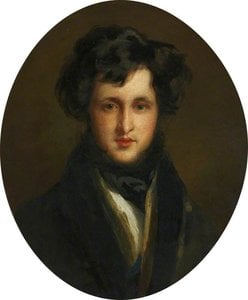
Robert Scott Lauder
1803 - 1869
作家プロフィール
The Romantic Vision of Robert Scott Lauder
In the heart of nineteenth-century Edinburgh, a period defined by a profound reverence for heritage and the sweeping emotions of the Romantic movement, Robert Scott Lauder emerged as a vital voice in Scottish art. Born on June 25, 1803, at Silvermills, Lauder was the son of John Lauder, a respected proprietor of a local tannery. His upbringing in a prominent Edinburgh family provided him with a foundation of stability and cultural access that would eventually propel him toward the heights of academic recognition. While his early life was rooted in the industrious landscape of Scotland, his artistic soul was destined for the grander stages of Europe, seeking to translate the dramatic literary spirit of his era into enduring visual narratives.
Lauder’s intellectual formation began at the Royal High School, but it was his subsequent travels that truly refined his aesthetic sensibilities. Seeking to master the complexities of light and form, he immersed himself in the great artistic hubs of the continent, including Rome, Florence, Bologna, Venice, and Munich. These extended periods of study abroad allowed him to absorb the classical traditions of Italy and the rigorous academic techniques of Germany, blending them with a uniquely Scottish sensibility. This cosmopolitan education prepared him for his pivotal moment in 1830, when he was elected as one of the original members of the Royal Scottish Academy, a distinction that solidified his status among the intellectual and artistic elite of his nation.
Narratives of Legend and Literature
The true essence of Lauder’s work lies in its deep, symbiotic relationship with the literature of Sir Walter Scott. As the novelist’s tales of chivalry, tragedy, and national identity captured the Victorian imagination, Lauder sought to give these words a physical, painterly presence. He did not merely illustrate stories; he attempted to capture the very atmosphere of Scott's romanticized history. His canvases often serve as windows into a bygone era, where the boundaries between historical fact and poetic myth become beautifully blurred.
His oeuvre is marked by several monumental achievements that showcase his ability to handle grand-scale drama:
- The Poet: A poignant portrait of Sir Walter Scott himself, which transcends simple likeness to capture an aura of profound intellectual contemplation and the weight of a literary legacy.
- The Shepherd Boy: A tender and evocative scene drawn from the world of Ivanhoe, demonstrating his ability to find the sublime within intimate, genre-driven moments.
- The Battle of Flodden Field: One of his most ambitious works, this painting depicts the historic Scottish defeat with a mastery of dramatic lighting and expressive movement, embodying the tragic grandeur of Scotland's past.
Technique, Legacy, and the Romantic Spirit
To observe a Lauder painting is to witness the tactile power of the impasto technique. He favored a thick, vigorous application of paint, which allowed him to manipulate light and shadow in a way that heightened the emotional stakes of his subjects. This textured approach lent a sense of immediacy and life to his historical scenes, making the dust of battle or the soft glow of a pastoral afternoon feel palpable to the viewer. His brushwork was never merely decorative; it was an expressive tool used to convey the turbulent emotions central to the Romantic movement.
Beyond his technical prowess, Lauder’s significance resides in his role as a bridge between the classical traditions of the past and the burgeoning national identity of Scotland. Through his dedication to historical painting, he helped codify a visual language for Scottish heroism and romanticism. Though he passed away in 1869, leaving behind a legacy intertwined with the very fabric of the Royal Scottish Academy, his ability to breathe life into the legends of Sir Walter Scott ensures that his work remains a captivating testament to the power of the imagination.