
- ホーム

- キャンバスプリント用
- robert gober
- Untitled

 プレビュー
プレビュー
 シェアする
シェアする シェアする
シェアする
 詳細を見る
詳細を見る

 ダウンロード
 似ている作品
 X線調査
X線調査 スライドショー
Untitled

 詳細を見る
詳細を見る
ジークレー/アートプリント
迅速な制作と多彩な仕上げオプションを備えた、ミュージアムクオリティのジークレーまたはキャンバスプリント。 ( 手描き画への切り替え 画像に切り替え)




P118B $10

P118H $10

P118W $10

P438Z $10

P508JH $12

P508YH $12

P805H $10

P805Z $10

P919BZ $10

P919G $10

P919XJ $10

P959ZH $10

P968JZ $12

W106C $8

W218G $10

W218JH $8

W218Y $10

W307PJ $10

W316G $10

W316PJ $8

W316Y $10

W398PJ $8

W4111J $10

W500HY $15

W500JH $15

W692G $12

W849H $8

W940BG $15

W953PJ $8




作品のオリジナル比率に合わせた、当店の規定サイズからお選びください。

特定のフレームやスペースに合わせて、ご自身でサイズを指定することも可能です。選択されたサイズが元の画像の比率と一致しない場合、作品をトリミングするか、鏡面反射または単色での塗りつぶしによって画像を拡張いたします。制作を開始する前に、ご確認用のデジタルモックアップをお送りいたします。
画面上のプレビューには、実際のトリミングや拡張は反映されませんのでご注意ください。最終的な構図を正確に確認できるのは、モックアップのみとなります。
カスタムサイズも承っておりますが、元の比率を維持するためには、あらかじめ用意されたリストからサイズを選択することをお勧めいたします。


 ガラスオプションは、110cm未満のサイズでのみご利用いただけます。

Untitled
ジークレー/アートプリント
複製画のサイズ
-


合計金額
$ 62
関連作品


アーティストの略歴
The Alchemy of the Ordinary: The Art of Robert Gober
In the quiet, unsettling intersection where the domestic meets the uncanny, the work of Robert Gober resides. An American sculptor whose presence in the contemporary art landscape is both profound and haunting, Gober possesses a singular ability to transform the most mundane objects of our daily lives into vessels of deep psychological resonance. Born in Wallingford, Connecticut, in 1954, his journey into the heart of sculptural mastery was not immediate. After studying literature and fine art at Middlebury College and the Tyler School of Art in Rome, Gober arrived in New York in 1976. His early years were defined by a tactile relationship with materials; working as a carpenter crafting stretchers for other artists and renovating lofts, he developed a profound intimacy with wood, structure, and the physical essence of construction.
This foundational period of craftsmanship became the bedrock of his artistic evolution. While he initially focused on painting—even engaging in experimental processes such as the creation of 89 sequential slides depicting a single, mutating painting—it was in the 1980s that Gober pivoted toward sculpture. This transition allowed him to explore the sculptural potential of the familiar. His work began to center on objects that inhabit our most private spaces: sinks, doors, and even human limbs. These are not merely replicas; they are meticulously handcrafted re-creations that demand a second, more careful look. Through layers of plaster, wood, wire lath, and semi-gloss enamel, Gober breathes a strange, sentient life into the inanimate, making the viewer question the boundary between the object and the observer.
Symbolism and the Uncanny Body
To encounter a Gober sculpture is to enter a space of profound ambiguity. His work often navigates the complex territories of sexuality, religion, nature, and politics, using the language of the domestic to speak of the universal. One of his most iconic contributions to contemporary sculpture is his series of increasingly eccentric sinks. These objects, though appearing as common household fixtures, possess an unsettling quality that suggests a hidden history or a latent biological presence. By manipulating the familiar, Gober taps into the "uncanny"—that psychological state where something deeply known becomes suddenly, strangely foreign.
This exploration of the body reached new heights in 1989, when Gober began casting beeswax into sculptures of men's legs. These works, often completed with shoes, trouser legs, and even real human hair inserted into the wax, evoke a sense of vulnerability and visceral presence. The use of beeswax—a material that is both organic and transformative—serves as a metaphor for the malleability of identity and memory. Through these anatomical fragments, Gober touches upon themes of gender, hermaphrodism, and the fragility of the human form, creating a dialogue that is as much about the biological self as it is about the social construct.
Legacy and Curatorial Vision
Beyond his individual practice, Robert Gober has played a vital role in shaping the discourse of contemporary art through his curatorial endeavors. His ability to interpret the legacies of other artists demonstrates a deep understanding of art history and thematic continuity. Notable achievements include:
- The Whitney Biennial 2012: Where he curated a poignant room of Forrest Bess's paintings, exploring themes of hermaphrodism and archival discovery.
- The Hammer Museum (2009): His curation of "Heat Waves in a Swamp: The Paintings of Charles Burchfield," which traveled to the Burchfield Penney Art Center, showcasing his skill in weaving historical narratives.
- Multidisciplinary Mastery: His ability to seamlessly move between sculpture, photography, prints, and drawings, maintaining a cohesive aesthetic language across all media.
Today, Robert Gober remains a pivotal figure in the sculptural canon. His work does not merely sit in a gallery; it haunts the periphery of our consciousness. By elevating the sink, the door, and the limb to the status of high art, he forces us to confront the profound mysteries hidden within the very fabric of our everyday existence. His legacy is one of meticulous craftsmanship and an unwavering commitment to exploring the shadows cast by the light of the familiar.

robert gober
1954 - , United States of America
基本情報
- Artistic Movement Or Style: Contemporary sculpture
- Date Of Birth: 1954
- Full Name: Robert Gober
- Nationality: American
- Notable Artworks:
- Sink series
- Wax leg sculptures
- Place Of Birth: Wallingford, USA
関連記事

Jim Dine: A Poetic of Everyday Objects – Exploring Autobiographical Narratives & the Evolution of a Pop Art Icon
Explore the captivating world of Jim Dine – Pop Art pioneer & master of autobiographical expression. Discover his iconic tools, robes, and hearts. Expert insights for art collectors.

Hiro Yamagata: Abstraction, Materiality & Spatial Dynamics in Contemporary Sculpture
Explore the captivating world of Hiro Yamagata’s innovative sculptures & paintings. Discover his pioneering use of laser technology, immersive installations, and abstract forms – a must-read for discerning art collectors.

青銅彫刻の永続的遺産:歴史、技法、そして現代における解釈
青銅彫刻の歴史、技法、現代における解釈を専門家が解説。古代から現代までの貴重な作品群を深く理解し、コレクションや投資に役立つ情報を提供します。美術品鑑定、修復についてもご紹介。
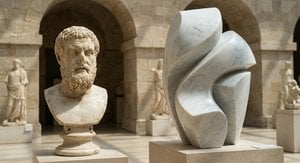
The Enduring Allure of Marble in Art History: From Classical Sculpture to Modern Abstraction
Explore the captivating history of marble sculpture from ancient Greece to modern art. Discover renowned artists like Canova & Michelangelo, carving techniques, and investment insights at ArtsDot.

Emblems of Belonging: Exploring Civic Pride Through Historical & Contemporary Artworks
Explore the evolution of civic art & its powerful role in shaping national identity. From Rembrandt to Monet, discover how masterpieces reflect community values and historical narratives. Learn more at ArtsDot.

