


 プレビュー
プレビュー
 シェアする
シェアする シェアする
シェアする
 詳細を見る
詳細を見る

 ダウンロード
 似ている作品
 X線調査
X線調査 スライドショー
Rocky landscape with castle

 詳細を見る
詳細を見る
ジークレー/アートプリント
迅速な制作と多彩な仕上げオプションを備えた、ミュージアムクオリティのジークレーまたはキャンバスプリント。 ( 手描きの絵画を購入 画像を購入)




P118B $10

P118H $10

P118W $10

P438Z $10

P508JH $12

P508YH $12

P805H $10

P805Z $10

P919BZ $10

P919G $10

P919XJ $10

P959ZH $10

P968JZ $12

W106C $8

W218G $10

W218JH $8

W218Y $10

W307PJ $10

W316G $10

W316PJ $8

W316Y $10

W398PJ $8

W4111J $10

W500HY $15

W500JH $15

W692G $12

W849H $8

W940BG $15

W953PJ $8




作品のオリジナル比率に合わせた、当店の規定サイズからお選びください。

特定のフレームやスペースに合わせて、ご自身でサイズを指定することも可能です。選択されたサイズが元の画像の比率と一致しない場合、作品をトリミングするか、鏡面反射または単色での塗りつぶしによって画像を拡張いたします。制作を開始する前に、ご確認用のデジタルモックアップをお送りいたします。
画面上のプレビューには、実際のトリミングや拡張は反映されませんのでご注意ください。最終的な構図を正確に確認できるのは、モックアップのみとなります。
カスタムサイズも承っておりますが、元の比率を維持するためには、あらかじめ用意されたリストからサイズを選択することをお勧めいたします。


 ガラスオプションは、110cm未満のサイズでのみご利用いただけます。

Rocky landscape with castle
ジークレー/アートプリント
複製画のサイズ
-


合計金額
$ 62
関連作品


アーティストの略歴
A Scottish Visionary: The Life and Legacy of Robert Adam
Born in Kirkcaldy, Scotland, on July 3rd, 1728, Robert Adam emerged from a family already deeply entrenched in the world of architecture. His father, William Adam, was a prominent figure in shaping the Scottish landscape, and young Robert’s initial education wasn't confined to academic pursuits like Latin at Edinburgh’s Royal High School; it was interwoven with the practical realities of building design and construction through apprenticeship under his father’s tutelage. This early immersion laid a crucial foundation, exposing him to both the theoretical principles and the tangible challenges inherent in architectural creation. Projects such as Inveraray Castle and extensions at Hopetoun House served as invaluable learning experiences, honing his skills and igniting a passion that would define his life's work. However, it was a journey beyond Scotland’s borders – the Grand Tour of 1754-1757 – that truly catalyzed Adam’s artistic evolution.The Italian Imprint: Shaping an Aesthetic
Accompanied by his brother James, Robert embarked on an extended exploration of Europe, with Italy serving as its focal point. Rome became a crucible for his developing aesthetic sensibilities. He studied under the tutelage of Charles-Louis Clérisseau and Giovanni Battista Piranesi, immersing himself in the world of classical architecture and ancient art. The ruins of Rome weren’t merely historical relics to Adam; they were living textbooks, offering profound insights into proportion, form, and spatial relationships. The influence of Piranesi's evocative etchings, capturing the grandeur and decay of Roman structures, was particularly potent, shaping his understanding of how to evoke atmosphere and narrative through architectural representation. This period wasn’t simply about copying classical forms; it was about absorbing a philosophy – a belief in the power of architecture to embody order, harmony, and intellectual refinement. He began to formulate a vision that moved beyond the prevailing Baroque styles, seeking instead a lightness, grace, and clarity inspired by antiquity.The Adam Style: A Revolution in Design
Upon his return to Britain, Robert Adam established a thriving architectural practice in London, quickly joined by his brother James. It was here that the “Adam style” began to take shape – a distinctive aesthetic characterized by elegant simplicity, refined proportions, and the seamless integration of classical motifs. This wasn’t merely about applying decorative elements; it was a holistic approach to design, encompassing not only buildings but also their interiors, furniture, and ornamental details. Adam's theory of “movement” in architecture emphasized harmonious transitions between spaces, creating a sense of flow and unity that was revolutionary for its time. He moved away from the heavy ornamentation and dramatic contrasts of Baroque, favoring lighter colors, delicate plasterwork featuring swags, garlands, and classical figures, and an overall emphasis on symmetry and balance. Key features included:- Emphasis on symmetry and balance in composition.
- Use of delicate ornamentation derived from classical sources.
- Integration of architecture with interior design to create cohesive spaces.
- A focus on creating a sense of harmony, flow, and refined elegance.
Landmark Creations and Enduring Influence
Robert Adam’s architectural legacy is etched into the British landscape through numerous significant buildings. Dumfries House stands as one of his earliest major commissions, showcasing the nascent elements of the emerging Adam style. Hopetoun House benefited from extensive renovations and interior designs that exemplified his meticulous attention to detail. Fort George demonstrated his capability in large-scale practical building projects. Syon House underwent a remarkable transformation under his guidance, while Kedleston Hall saw him extensively redesign both its interiors and facades. Kenwood House remains a testament to his ability to create elegant and harmonious spaces. Beyond individual structures, Adam’s influence extended to town planning, most notably in his designs for Charlotte Square in Edinburgh – a masterful example of urban design that continues to define the city's aesthetic character. He also served as Member of Parliament for Kinross-shire from 1768 to 1774, demonstrating an engagement with public life alongside his artistic pursuits. Robert Adam passed away on March 3rd, 1792, leaving behind a profound and lasting impact on Western architecture and design. His work not only shaped the aesthetic landscape of Britain but also resonated across Europe and North America, solidifying his position as a pivotal figure in the Neoclassical revival – an architect whose vision continues to inspire and captivate generations.
Robert Adam
1728 - 1792 , United Kingdom
基本情報
- Artistic Movement Or Style: Neoclassical
- Artists Or Movements Influenced By This Artist: ['Western architecture']
- Artists Who Influenced This Artist:
- Clérisseau
- Piranesi
- Date Of Birth: July 3, 1728
- Date Of Death: March 3, 1792
- Full Name: Robert Adam
- Nationality: Scottish
- Notable Artworks:
- Dumfries House
- Hopetoun House
- Kenwood House
- Syon House
- Kedleston Hall
- Place Of Birth (City And Country): Kirkcaldy, UK
関連記事

Antonio Zucchi: A Venetian Master of Rococo & Neoclassical Charm
Explore the captivating world of Antonio Zucchi, a Venetian master of Rococo and Neoclassical art. Discover his collaborations with Robert Adam & Angelica Kauffmann, stunning frescoes, and enduring legacy. Learn about collecting Zucchi's works today.
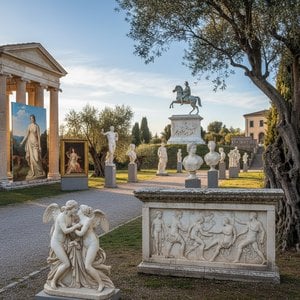
至高の芸術:新古典主義を象徴する10選 – 華麗なる巨匠と時代を彩る傑作の世界
新古典主義を代表する10選!ダビッド、アンジェリカーら巨匠の傑作を紐解き、時代を超えた美と知性を探求。油絵、版画など高精細なアートプリントで、お部屋を華やかに彩りませんか?ArtsDot.comで至高の芸術を体験してください。

Sir John Watson Gordon: A Study in Scottish Landscape Painting & Tonal Impressionism
Explore the captivating portraits of Sir John Watson Gordon, a leading Scottish master. Discover his evolution from neoclassical style to atmospheric Tonalism and influence on 19th-century British art. Learn about his iconic sitters & legacy.

Concrete Visions: Exploring the Urban Landscape in Painting – From Realism to Contemporary Art
Explore the evolution of cityscape painting from Realism to contemporary art with ArtsDot. Discover key artists & invest in timeless urban visions. Expert guidance, museum-quality reproductions.

Harmonizing Hues & Histories: A Comprehensive Guide to Matching Art Reproductions with Interior Design Styles
Discover how to perfectly match art reproductions with your interior design style! Expert guidance, museum-quality prints & custom portraits at ArtsDot. Elevate your home today.

