

 設置イメージを表示
 シェアする
シェアする シェアする
シェアする
 詳細を見る
詳細を見る ガイドを表示

 ダウンロード
 似ている作品
 X線調査
X線調査 スライドショーを表示
 Q&A
Q&A 統計情報
統計情報Cello


 詳細を表示
詳細を表示
このページに掲載されている作品は著作権法によって保護されており、当社の許可なく同一の複製物を制作または販売することは法律で禁じられています。この保護は、以下のような国際条約に基づき執行されます。 ベルヌ条約 および、以下の条項に定められたものを含む各国の法律により、 米国著作権法 第17編。
この手法は、著作権で保護された作品の複製や複写を伴わないため、著作権法に完全に準拠しています。これは単なる模倣ではなく、創造的な再解釈です。元の作品からインスピレーションを受けつつも、それとは異なる、全く新しい絵画を生み出すものです。
ジークレー/アートプリント
スピーディーな制作と多彩な仕上げオプションが魅力の、ミュージアムクオリティなジークレー・キャンバスプリント。 ( 手描き複製画を注文する デジタル画像販売へ切り替え)




P118B ¥10

P118H ¥10

P118W ¥10

P438Z ¥10

P508JH ¥12

P508YH ¥12

P805H ¥10

P805Z ¥10

P919BZ ¥10

P919G ¥10

P919XJ ¥10

P959ZH ¥10

P968JZ ¥12

W106C ¥8

W218G ¥10

W218JH ¥8

W218Y ¥10

W307PJ ¥10

W316G ¥10

W316PJ ¥8

W316Y ¥10

W398PJ ¥8

W4111J ¥10

W500HY ¥15

W500JH ¥15

W692G ¥12

W849H ¥8

W940BG ¥15

W953PJ ¥8




作品のオリジナル比率に合わせた、当店の規定サイズからお選びください。

額縁や壁のスペースに合わせて、ご希望の幅と高さを入力してください。プリントはカットすることは可能ですが、元の画像より大きくすることはできないため、異なる比率のサイズを選択された場合は、画像の一部が欠けることになります。印刷を開始する前に、内容を確認していただくためのデジタルモックアップをお送りいたします。このページに表示されている画像は、実際のカット後の状態を示すものではありません。実際の仕上がりはモックアップにてご確認ください。


 ガラスオプションは、110cm未満のサイズでのみご利用いただけます。

Cello
ジークレー/アートプリント
複製画サイズ一覧
-


合計金額
¥ 9973
A Testament to Craftsmanship: Piero Parravicini’s Cello – A Reflection of Italian Violin Making Tradition
The cello, an instrument steeped in history and revered for its soulful resonance, stands as a testament to the enduring legacy of Italian violin making. This particular cello, crafted by Piero Parravicini in 1922, embodies the meticulous artistry that flourished during the early 20th century – a period marked by both artistic innovation and unwavering adherence to established techniques. Examining its construction reveals not only exceptional craftsmanship but also a profound connection to the traditions of Cremona, Italy, where violin making has been practiced for centuries.- Material Composition: The instrument’s body is constructed primarily from maple, chosen for its density and tonal qualities. Complementing this core material are spruce boards – two carefully selected pieces – forming the soundboard. Spruce, renowned for its stiffness and ability to transmit vibrations efficiently, remains a cornerstone of violin construction globally.
- Purfling & Decoration: Adding visual elegance and structural integrity is white maple and black walnut purfling—thin strips inlaid around the edges of the cello’s body and neck. Purfling serves not only as decorative embellishment but also protects the wood from cracking during handling and contributes to the instrument's overall acoustic performance.
- Historical Context: Piero Parravicini operated within a vibrant artistic milieu, influenced by figures like Romeo Antoniazzi, who himself studied under Giuseppe Stradivari—the undisputed master of violin making. This lineage underscores the importance of preserving traditional methods and honoring the legacy of legendary craftsmen.
Artist Biography: Piero Parravicini – A Maestro Rooted in Tradition
Born in Bovisa, Italy, in 1889, Piero Parravicini was more than just a violin maker; he was an educator and innovator who championed the revival of classical violin making. He honed his skills at Monzino, Milan, absorbing knowledge from Romeo Antoniazzi (1862-1925), whose own approach to instrument construction drew inspiration from Stradivari’s groundbreaking methods.
Parravicini's dedication extended beyond production; he established a workshop where he imparted his expertise to aspiring artisans. His instruments garnered recognition at prestigious competitions—the National Lute-Making Competition in Rome (1925 & 1929), the International Contemporary Lute-Making Competition in Cremona (1949), and the National Exhibition in Florence (1951)—demonstrating his commitment to upholding the highest standards of craftsmanship.
The Instrument’s Aesthetic Appeal: Visual Elements & Sonic Character
The cello's appearance speaks volumes about its maker’s vision. Its maple body exudes warmth and stability, while the spruce soundboard radiates luminosity—a characteristic achieved through meticulous polishing and varnish application. The white maple and black walnut purfling adds subtle textural contrast, enhancing both visual beauty and acoustic projection.
Beyond its physical form, the cello possesses a distinctive sonic character – a rich, resonant timbre capable of conveying profound emotion. This quality is attributable to Parravicini’s careful selection of materials and his meticulous attention to detail during construction—a testament to the enduring power of tradition in shaping artistic expression.
Symbolism & Emotional Resonance
Like all great instruments, the cello transcends mere functionality; it embodies a deeper symbolic significance. Its elongated shape evokes contemplation and introspection – qualities that align perfectly with its expressive capabilities. When played skillfully, it can evoke feelings of melancholy, joy, and spiritual transcendence—connecting musicians and listeners alike to universal human experiences.
Concluding Remarks: A Legacy Preserved
Piero Parravicini’s cello stands as a beacon of Italian violin making tradition – a symbol of unwavering dedication to craftsmanship and artistic excellence. Its enduring beauty and sonic power continue to inspire musicians and collectors worldwide, ensuring that the legacy of this remarkable instrument—and its maker—will endure for generations to come.
Q&A
Piero Parravicini作「Cello」の手描き複製画はどこで購入できますか?
Piero Parravicini作「Cello」の手描き複製画は、本サイトの手描き油彩複製画ページよりリネンキャンバスに手描きされた油彩複製画にてご購入いただけます。
「Cello」の作者は誰で、どの様式に属していますか?
「Cello」は、Piero Parraviciniの手によるContemporary Realism様式の作品です。作者と様式は、その作品が受け継ぐ伝統を定義するものです。
Celloの制作年である1922年は、Piero Parraviciniのキャリアにおけるどの時期にあたりますか?
1922年に制作された「Cello」は、Piero Parraviciniの画業におけるMature Periodに属する作品です。
関連作品


関連記事
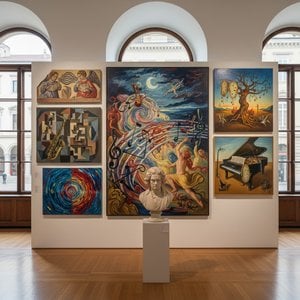
Harmonies on Canvas: Exploring the Visual Representation of Music in Art History
Explore the fascinating history of music's visual representation in art! From ancient symbolism to modern abstraction, discover how artists have captured sound and emotion on canvas. Expert insights & stunning examples.

The Art of Italian Living: Transform Your Home with Timeless Landscapes and Renaissance Masterpieces
Elevate your home with the timeless romance of Italy. Discover expert-curated, hand-painted Italian landscapes and Renaissance-inspired masterpieces. From bespoke oil reproductions to custom portraits from photos, transform your space with elegance and artistic passion.

Piero della Francesca: Renaissance Perspective, Divine Proportion & the Pursuit of Ideal Form
Explore the revolutionary art of Piero della Francesca – master of perspective, divine proportion & Renaissance humanism. Discover his iconic paintings & lasting influence on art history.

10 Iconic Masterpieces That Capture the Magic of Italy
Journey through Italy's soul via 10 iconic masterpieces. From Renaissance classics to romantic landscapes, explore the stories behind these timeless works and find museum-quality art reproductions for your decor. Discover all masterpieces on ArtsDot.com.

Mario Sironi: A Poetic of Modern Italian Identity Through Symbolism & Social Commentary
Explore the profound works of Mario Sironi, a key figure in Italian Modernism. Discover his evolution from Futurism to Metaphysical painting and his powerful social commentary. Learn about his legacy at ArtsDot.