


 設置イメージを確認
 送る
送る シェア
シェア
 詳細情報
詳細情報 ガイドを表示

 画像をダウンロード
 似ている作品
 X線調査
X線調査 スライドショー
 統計情報
統計情報Structural I
 Abstract Expressionism
 1924
1924- Modern
 43.0 x 27.0 cm
 続きを読む
続きを読む
手描き油彩複製画
当社のアーティストが、お客様のご希望のサイズと額縁に合わせて、キャンバスに手描きで制作する油彩画です。 ( プリント版に切り替え デジタル画像販売へ切り替え)




P118B ¥10

P118H ¥10

P118W ¥10

P438Z ¥10

P508JH ¥12

P508YH ¥12

P805H ¥10

P805Z ¥10

P919BZ ¥10

P919G ¥10

P919XJ ¥10

P959ZH ¥10

P968JZ ¥12

W106C ¥8

W218G ¥10

W218JH ¥8

W218Y ¥10

W307PJ ¥10

W316G ¥10

W316PJ ¥8

W316Y ¥10

W398PJ ¥8

W4111J ¥10

W500HY ¥15

W500JH ¥15

W692G ¥12

W849H ¥8

W940BG ¥15

W953PJ ¥8




作品のオリジナル比率に合わせた、当店の規定サイズからお選びください。

フレームや壁のスペースに合わせて、ご希望の幅と高さを入力してください。本作品は手描きのため、異なる比率のサイズをご希望の場合、絵画の周囲を少し広げて描くか、あるいは端を少しカットして調整することが可能です。お客様のご要望に合わせます。制作を開始する前に、仕上がりを確認するためのデジタルモックアップをお送りいたします。このページに表示されている画像は完成品の実物ではなく、あくまでモックアップによるイメージです。
ご注文後、ArtsDot.com チームより詳細な指示をお送りするとともに、仕上がりイメージ(モックアップ)をご提供いたします。


 ガラスオプションは、110cm未満のサイズでのみご利用いただけます。

Structural I
再現技法
複製画サイズ一覧
-


合計金額
¥ 41735
A Universe in Miniature: Paul Klee’s ‘Structural I’
Paul Klee's “Structural I,” painted in 1924, isn’t merely a depiction of stars; it’s an invitation to contemplate the very architecture of perception. Created during a period of intense experimentation within his oeuvre, this gouache on cardboard piece exemplifies Klee’s masterful synthesis of musical and visual ideas – a core tenet of his artistic philosophy. The painting immediately draws the eye with its vibrant constellation of shapes, each meticulously rendered in a palette of black, red, green, yellow, and blue. These aren't random splashes; they are carefully constructed elements, echoing the principles of musical composition where individual notes contribute to a larger harmonic whole.
The Language of Geometry and Emotion
Klee’s approach during this period was deeply rooted in geometric abstraction, influenced by movements like Cubism, yet infused with his uniquely personal sensibility. “Structural I” showcases this brilliantly. The overlapping circles, squares, and triangles aren't simply decorative; they represent a deliberate exploration of spatial relationships – mirroring the way musical intervals create depth and resonance. Notice how the varying sizes and orientations of these forms generate a dynamic tension, suggesting movement and energy within the seemingly static composition. This technique reflects Klee’s belief that art should be both intellectually stimulating and emotionally resonant.
Historical Context: A Moment of Artistic Revolution
1924 was a pivotal year for Klee, coinciding with his work on the mural for the Bauhaus Dessau, a project that profoundly shaped his artistic trajectory. The Bauhaus, with its emphasis on functional design and universal principles, encouraged artists to explore abstraction as a means of communicating fundamental truths. “Structural I” embodies this spirit – it’s a distillation of these ideas, stripped down to their essential components. The painting also reflects the broader European fascination with mythology and symbolism during the early 20th century, particularly the exploration of celestial imagery.
Decoding the Symbolism: Stars as Building Blocks
While abstract in its overall design, “Structural I” is rich with symbolic meaning. The stars themselves are not simply representations of distant suns; they function as building blocks – fundamental units within Klee’s visual language. Their arrangement suggests a network, a complex system of interconnectedness, reflecting the artist's interest in exploring order and chaos simultaneously. Some scholars interpret the varying sizes and colors of the stars as representing different musical notes or harmonies, further reinforcing Klee’s belief in the inherent connection between art forms.
A Timeless Appeal: For Collector and Interior Designer
"Structural I" remains a captivating work, offering a glimpse into the mind of one of 20th-century's most innovative artists. Its vibrant colors, intricate composition, and profound symbolism make it an ideal addition to any art collection or interior space. A hand-painted reproduction captures the essence of this masterpiece, allowing you to bring its contemplative beauty into your home – a reminder that even in abstraction, there is a universe waiting to be discovered.
よくあるご質問
「Structural I」の作者と制作年はいつですか?
「Structural I」は、1924年にパウル・クレーによって制作されました。
「Structural I」の色彩は、どの程度鮮やかですか?
パウル・クレー作「Structural I」の色調は、Mutedな彩度を持っています。彩度とは、色の鮮やかさや落ち着きの度合いを表すものです。
「Structural I」の主題は、パウル・クレーの通常のテーマとどのように関連していますか?
「Structural I」はpaul klee, structural i, abstract, geometric, color, stars, patternを描いていますが、パウル・クレーのこれまでのテーマとして記録されているのはexpressionism, swiss, color theory, abstract forms, klee’s explorationです。この二つを比較することで、本作が作家のいつもの主題とどのように関連しているかが明らかになります。


アーティストについて
パウル・クレー:色彩と形が生み出す夢幻の世界
パウル・クレー。その名は、遊び心溢れる抽象表現と深遠な感情の交錯を象徴する存在として、20世紀美術史に燦然と輝いています。1879年12月18日、スイスのミュンヘンブッシュゼーで生まれ、彼の芸術的遍歴は、常に探求を続け、表現主義、立方主義、シュルレアリスムといった様々な潮流の影響を受けつつも、独自の視覚言語を構築していくものでした。音楽教師である父と歌手の母のもとに育まれた幼少期からの芸術への親しみは、彼の作品に色彩と音の調和をもたらす基盤となり、絵画を単なる再現ではなく、感情や思想を抽象的に表現する手段として捉えることへと繋がっていきます。ミュンヒェンの美術アカデミーでの学びを通して、彼は写実的な表現の限界を見抜き、内面世界への扉を開くべく、独自の芸術的探求を開始したのです。初期の試行錯誤と北アフリカ体験
クレーの初期作品には、アール・ヌーヴォーや象徴主義の影響が見られますが、その中でも既に彼の未来的なスタイルを予感させる要素が垣間見えます。1914年のチュニジアへの旅は、彼の芸術的発展における転換点となりました。北アフリカの強烈な光と鮮やかな色彩は、彼に抑制された色調から大胆で表現豊かなパレットへと移行する勇気を与えました。この経験を通して、彼は単なる表面的な模倣ではなく、知覚の本質を捉えるための抽象化へのコミットメントを深めていったのです。クレーにとって、チュニジアとは、単に風景を描写する対象ではなく、感情の共鳴を視覚的形態へと翻訳する媒体だったと言えるでしょう。彼は様々な芸術運動と関わりながらも、決して特定のイデオロギーに囚われることなく、独自の道を歩み続けました。音楽との深い結びつきは、彼の作品における構成のアプローチだけでなく、芸術を音響的な配置と同様の抽象表現の一形態として捉える理論的理解にも影響を与えました。バウハウス時代:創造性の花開く園
1921年から1933年にかけて、クレーはヴァルター・グロピウスによって招聘され、ドイツのバウハウスで教鞭を執るという輝かしい時期を迎えます。この期間は、彼の芸術的発展において極めて重要なものでした。革新的な思想家や芸術家たちに囲まれた環境の中で、彼は色彩理論と形式の関係性をさらに深く探求し、抽象的な形態と感情表現の相互作用を探求しました。しかし、1933年、ナチス政権が台頭すると、彼の作品は「退廃的」であるとして非難され、バウハウスからの解雇という憂き目に遭います。故郷のスイスへと帰還したクレーは、ますます深刻化する政治情勢と自身の健康悪化の中で、不安を抱えながらも創作活動を続けました。作品に込められた象徴性と普遍性
パウル・クレーの作品は、遊び心と深遠な思索が織り交ざった魅惑的な世界です。彼はしばしば子供のようなイメージや気まぐれな構成を用いながらも、それらに多層的な象徴的意味を込めました。彼の作品に登場する庭園、風景、肖像画、抽象的な形態の配置は、人間の経験の複雑さを探求するための手段として機能しています。「パウル・クレーノート」には、色彩とデザインに関する広範な理論的考察が記されており、芸術創造に対する綿密かつ知的なアプローチを垣間見ることができます。ハママット、兄弟たち、六つの閾は、彼の色彩感覚と形態構成の卓越性を象徴する作品です。クレーの影響は絵画の世界にとどまらず、デザインや建築、音楽といった分野にも及んでいます。彼の作品が持つ普遍的な魅力は、見る者を驚きと感動で包み込み、芸術に対する感情的・知的関与を促す力にあります。美術館とさらなる探求
- ツェントルム・パウル・クレー(ベルン): クレーの作品を世界最大規模で所蔵し、彼の芸術的遍歴を包括的に紹介しています。
- ベルン州立美術館: ピカソなどの名画とともに、クレーの重要な作品も展示されています。
- ベルン美術館: スイス最古の美術館であり、クレーを含む多くの近代美術の巨匠の作品を所蔵しています。

パウル・クレー
1879 - 1940 , スイス
アーティスト情報
- フルネーム: パウル・クレー
- 主な作品:
- ハマメット
- 兄弟
- エン・ラ・コレンテ・セイス・ウンブラレス
- 出生地: ミュンヘンブッシュゼー, スイス
- 国籍: スイス・ドイツ系
- 影響を与えた芸術家/運動: ['現代美術']
- 影響を受けたアーティスト: ['ワシリー・カンディンスキー']
- 死亡年月日: 1940年6月29日
- 生年月日: 1879年12月18日
- 芸術運動/スタイル: 表現主義、構成主義、シュルレアリスム
関連記事

抽象表現主義を定義する十大傑作:芸術と装飾の深遠な旅
抽象表現主義を定義する10の傑作。ポロック、ロスコら巨匠たちの情熱と色彩の世界へ。各作品に込められた物語と技法を紐解き、至高のアート体験を。ArtsDot.comで、ミュージアムクオリティの複製画や洗練されたインテリアアイデアを発見してください。

Paul Klee: A Poetics of Form and Color – Exploring the Inner Landscape of a Modern Master
Explore the captivating world of Paul Klee! Discover his innovative art, Bauhaus influence, & unique symbolic language. Expert analysis & high-quality reproductions at ArtsDot.

パウル・クレー傑作25選:色彩と象徴に満ちた芸術の世界 | ArtsDot
パウル・クレーの傑作25選🎨 色彩と象徴に満ちた抽象絵画の世界を旅。ドイツ表現主義からバウハウスまで、クレーの革新的な技法と感動的な作品群をArtsDotで。高品質な美術品複製やインテリアアートも豊富です。オンラインストアで全コレクションをご覧ください。

幾何学的抽象絵画を定義した傑作10選|アート、アーティスト、インテリア装飾
モンドリアン、マレーヴィチ…幾何学的抽象絵画を代表する傑作10選。各作品の背景や色彩構成、アーティストの情熱に迫ります。美術館品質の複製画はArtsDot.comで。オンラインでアートコレクションをご覧ください。
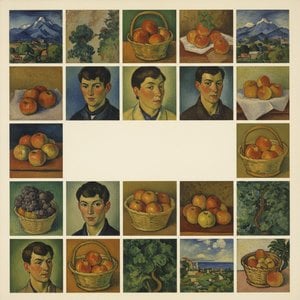
ポール・セザンヌ:至高の25選 - 傑作と革新の軌跡 | ArtsDot
ポール・セザンヌの至高の25選。ポスト印象派を代表する画家、セザンヌの傑作と革新的な技法を紐解きます。ArtsDotで高品質な複製画やインテリアアートを見つけ、芸術の世界をご自宅に。今すぐコレクションをご覧ください。


