


 設置イメージを確認
 送る
送る シェア
シェア
 詳細情報
詳細情報 ガイドを表示

 画像をダウンロード
 似ている作品
 X線調査
X線調査 スライドショー
 統計情報
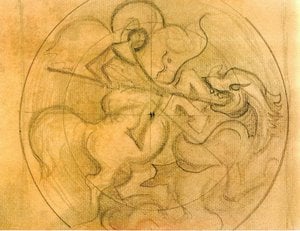
統計情報Untitled
 1962
1962 152.0 x 122.0 cm
 続きを読む
続きを読む
このページに掲載されている作品は著作権法によって保護されており、当社の許可なく同一の複製物を制作または販売することは法律で禁じられています。この保護は、以下のような国際条約に基づき執行されます。 ベルヌ条約 および、以下の条項に定められたものを含む各国の法律により、 米国著作権法 第17編。
この手法は、著作権で保護された作品の複製や複写を伴わないため、著作権法に完全に準拠しています。これは単なる模倣ではなく、創造的な再解釈です。元の作品からインスピレーションを受けつつも、それとは異なる、全く新しい絵画を生み出すものです。
ジークレー/アートプリント
スピーディーな制作と多彩な仕上げオプションが魅力の、ミュージアムクオリティなジークレー・キャンバスプリント。 ( 手描きの複製画を注文する デジタル画像販売へ切り替え)




































作品のオリジナル比率に合わせた、当店の規定サイズからお選びください。

額縁や壁のスペースに合わせて、ご希望の幅と高さを入力してください。プリントはカットすることは可能ですが、元の画像より大きくすることはできないため、異なる比率のサイズを選択された場合は、画像の一部が欠けることになります。印刷を開始する前に、内容を確認していただくためのデジタルモックアップをお送りいたします。このページに表示されている画像は、実際のカット後の状態を示すものではありません。実際の仕上がりはモックアップにてご確認ください。


 ガラスオプションは、110cm未満のサイズでのみご利用いただけます。

Untitled
ジークレー/アートプリント
複製画サイズ一覧
-


合計金額
¥ 9767
関連作品


アーティストについて
The Structural Logic of Paul Feeley
To look at the work of Paul Feeley is to confront a deliberate reduction of form. He did not rely on decorative flourishes to hold attention; instead, he utilized the fundamental mechanics of painting and sculpture to command space. His practice was defined by a rigorous approach to geometry and scale. As a painter, sculptor, and muralist, his output moved between the two-dimensional plane and three-dimensional presence with a singular focus on how shapes interact within a frame.
His career was not limited to the canvas. He operated as an educator and portrait painter, yet his most significant contributions lie in his ability to manipulate visual weight. The archives of his life reveal a man deeply engaged with the physical reality of his materials, from sketchbooks to correspondence that tracked his technical evolution.
A Multidimensional Practice
Feeley’s versatility was a functional necessity rather than a pursuit of variety. His work as a muralist required an understanding of architectural integration, while his sculptural endeavors demanded a grasp of volume and mass. This breadth allowed him to approach the concept of space from multiple angles.
- Painting: Focused on the interaction of shapes and color fields.
- Sculpture: An exploration of physical form and spatial occupation.
- Murals: Large-scale applications designed for specific environments.
- Portraiture: A secondary but present engagement with figurative representation.
The technical foundation of his work is visible in the surviving records of his process. His notes and writings suggest a disciplined method where every line and color choice was calculated to achieve a specific visual equilibrium. He avoided the unnecessary, stripping his compositions down to their essential components.
The Archive of an Artist
The historical weight of Feeley’s contribution is preserved through a substantial collection of papers held by the Smithsonian Institution. These documents provide a direct look at the mechanics behind his creative decisions. The collection includes:
- Biographical materials and personal correspondence.
- Writings, notes, and printed materials.
- Photographs and detailed sketchbooks.
These records do more than document a life; they map the development of an aesthetic that prioritized clarity. By examining his sketches alongside his finished works, one sees the transition from initial thought to executed form. His legacy is found in this precision.

Paul Feeley
1910 - 1966 , United States of America
アーティスト情報
- Full Name: Paul Feeley
- Place Of Birth: Des Moines, United States of America
- Date Of Birth: 1910
- Date Of Death: 1966