

 設置イメージを表示
 シェアする
シェアする シェアする
シェアする
 詳細を見る
詳細を見る ガイドを表示

 ダウンロード
 似ている作品
 X線調査
X線調査 スライドショーを表示
 Q&A
Q&A 統計情報
統計情報Man with mandolin

- 27.0 x 21.0 cm


 詳細を表示
詳細を表示
このページに掲載されている作品は著作権法によって保護されており、当社の許可なく同一の複製物を制作または販売することは法律で禁じられています。この保護は、以下のような国際条約に基づき執行されます。 ベルヌ条約 および、以下の条項に定められたものを含む各国の法律により、 米国著作権法 第17編。
この手法は、著作権で保護された作品の複製や複写を伴わないため、著作権法に完全に準拠しています。これは単なる模倣ではなく、創造的な再解釈です。元の作品からインスピレーションを受けつつも、それとは異なる、全く新しい絵画を生み出すものです。
ジークレー/アートプリント
スピーディーな制作と多彩な仕上げオプションが魅力の、ミュージアムクオリティなジークレー・キャンバスプリント。 ( 手描き複製画を注文する デジタル画像販売へ切り替え)




P118B ¥10

P118H ¥10

P118W ¥10

P438Z ¥10

P508JH ¥12

P508YH ¥12

P805H ¥10

P805Z ¥10

P919BZ ¥10

P919G ¥10

P919XJ ¥10

P959ZH ¥10

P968JZ ¥12

W106C ¥8

W218G ¥10

W218JH ¥8

W218Y ¥10

W307PJ ¥10

W316G ¥10

W316PJ ¥8

W316Y ¥10

W398PJ ¥8

W4111J ¥10

W500HY ¥15

W500JH ¥15

W692G ¥12

W849H ¥8

W940BG ¥15

W953PJ ¥8




作品のオリジナル比率に合わせた、当店の規定サイズからお選びください。

額縁や壁のスペースに合わせて、ご希望の幅と高さを入力してください。プリントはカットすることは可能ですが、元の画像より大きくすることはできないため、異なる比率のサイズを選択された場合は、画像の一部が欠けることになります。印刷を開始する前に、内容を確認していただくためのデジタルモックアップをお送りいたします。このページに表示されている画像は、実際のカット後の状態を示すものではありません。実際の仕上がりはモックアップにてご確認ください。


 ガラスオプションは、110cm未満のサイズでのみご利用いただけます。

Man with mandolin
ジークレー/アートプリント
複製画サイズ一覧
-


合計金額
¥ 9988
Man with mandolin, 1920 - Pablo Picasso
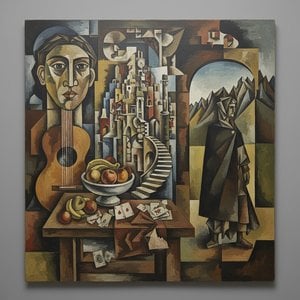
Pablo Picasso’s “Man with Mandolin” stands as a cornerstone of Synthetic Cubism, encapsulating the movement's radical departure from its predecessor and cementing Picasso’s position as one of the most influential artists of the early 20th century. Created in 1920, this deceptively simple composition—a solitary figure seated on the ground holding a mandolin—reveals layers of intellectual complexity beneath its surface. It's more than just an image; it’s a carefully constructed manifesto of artistic innovation that continues to resonate with audiences today. ### Artistic Context: The Crystallization of Cubism Synthetic Cubism emerged from the ashes of Proto-Cubism and Analytical Cubism, marking a pivotal moment in art history. While Analytical Cubism focused on dissecting objects into geometric planes—breaking down form into fragmented cubes—Synthetic Cubism sought to rebuild these fragments into unified, decorative surfaces. This stylistic shift was driven by a desire for clarity and order, responding directly to the anxieties of the post-war era. Artists like Jean Metzinger, Juan Gris, and Albert Gleizes championed this approach, establishing Rosenberg Gallery as a hub for experimentation and artistic discourse. Picasso himself recognized the need for a new aesthetic language—one that prioritized visual impact over meticulous representation—and Synthetic Cubism provided precisely that vehicle. ### Technique: Gouache on Canvas – Controlled Illusion The painting’s execution in gouache on canvas exemplifies the precision and deliberate control characteristic of Synthetic Cubism. Gouache, unlike watercolor or oil paint, is known for its opacity and ability to achieve vibrant colors with minimal blending. Picasso skillfully utilized this medium to create a striking visual experience—a harmonious blend of color and form that defies easy categorization. The artist meticulously applied geometric planes onto the canvas, employing a technique that prioritized flatness and spatial illusion. This careful layering contributes to the painting’s overall sense of stability and grandeur, despite its apparent simplicity. ### Composition: Harmony Amidst Fragmentation The composition itself is remarkably balanced, despite the inherent fragmentation of Cubist principles. The central figure—a man with his head turned away from the viewer—dominates the canvas, anchoring the scene while simultaneously conveying a profound sense of introspection. Two additional figures appear in the background, subtly interwoven into the geometric tapestry. These figures are rendered as simplified forms, mirroring the broader stylistic concerns of Synthetic Cubism. The artist’s masterful manipulation of perspective and spatial relationships creates an illusionistic depth that draws the eye inward, inviting contemplation. ### Symbolism: Echoes of Melancholy and Resilience Beyond its formal innovations, “Man with Mandolin” carries a palpable emotional weight—a subtle expression of melancholy tempered by resilience. The mandolin itself—a traditional instrument associated with Spanish folk music—represents both solace and longing. Its placement in the figure’s hands suggests an attempt to find comfort amidst solitude. The muted color palette—primarily blues and ochres—underscores this mood, evoking feelings of quiet contemplation and understated beauty. Yet, the unwavering gaze of the man conveys a determination to confront adversity with dignity and grace—a testament to Picasso's enduring artistic vision. ### Legacy: A Defining Moment in Modern Art History “Man with Mandolin” remains an iconic exemplar of Synthetic Cubism and Picasso’s contribution to modern art history. Its influence extends far beyond its immediate stylistic context, inspiring artists across generations to explore new approaches to representation and composition. The painting's enduring appeal lies not only in its visual beauty but also in its intellectual depth—a reminder that art can communicate complex emotions and ideas through deceptively simple forms. For those seeking inspiration or contemplating the purchase of a high-quality reproduction, “Man with Mandolin” offers an unparalleled glimpse into Picasso’s artistic genius and the transformative power of Synthetic Cubism.Q&A
パブロ・ピカソ作「Man with mandolin」のデジタルデータを入手するには、どうすればよいですか?
「Man with mandolin」は、高解像度デジタル画像にて直接ご購入いただける高解像度デジタル画像のダウンロードとしてご利用いただけます。
パブロ・ピカソ作「Man with mandolin」の配色はどのように表現されていますか?
パブロ・ピカソ作「Man with mandolin」のカラーパレットはDarkと表現されており、作品の色使いを簡潔に表しています。
「Man with mandolin」において、コントラストと調和はどのように組み合わさっているのでしょうか?
パブロ・ピカソ作「Man with mandolin」の色彩構成は、BoldなコントラストとUnified Paletteな調和を併せ持っています。
作家プロフィール
幼少期、家族、そして研鑽の時
1881年10月25日、スペインのマラガという街で、パブロ・ピカソという名の少年が産声を上げました。彼の両親はマリア・ピカソ・イ・ロペスと、絵筆の重みとキャンバスに向き合う規律を熟知した画家、ホセ・ルイス・ブルスコでした。幼い頃から、この少年は描くことに対して、抗いがたい情熱を抱いていました。その才能は、彼が初めて言葉を発しようとした瞬間からすでに現れていたかのようでした。画家であった父は、息子の中に宿る芸術の火花をいち早く見抜き、その芽生え始めた才能を育てるべく、自ら教育の道を歩ませました。父の厳格かつ慈しみ深い指導のもと、少年はデッサンや油彩画の複雑な技法を学び、巨匠たちの作品を模写し、石膏像の形態を深く研究することで、芸術の基礎を血肉としていくことになります。
家族の歩みは、やがてア・コルクーニャを経てバルセロナへと続いていきますが、成長の過程にあるこれらの歳月は、静かで重い悲しみに影を落としていました。パブロがわずか7歳の時、姉のコンチータがジフテリアによってこの世を去ったのです。この早すぎる喪失の経験は、家庭に沈鬱な空気をもたらし、その憂鬱な色調は、後に彼が描く作品のトーンへと静かに溶け込んでいくことになります。こうした悲しみという重圧にさらされながらも、彼の技術的な成長は驚異的な速さで進んでいきました。13歳になる頃には、すでにバルセロナで上級クラスに入るための厳しい入学試験に挑むほどになっていました。他の生徒たちが自らの実力を証明するために何週間も費やすなか、彼はわずか一週間でその要件をすべて満たしてしまい、教え手たちさえもその天賦の才に畏敬の念を抱かせるほどの精密さを見せつけたのです。
スペインでの形成期
1891年、家族がア・コルクーニャへと移り住んだことで、少年の歩みはマラガの温もりから離れていきました。それは、移ろいゆく風景とともに、芸術的訓練という厳格な枠組みを歩み始めた、技術が飛躍的に向上していく時期でもありました。鉛筆と紙を操るその手は、すでに驚くべき適性を見せており、その精密な筆致はしばしば師たちを驚愕させました。バルセロナ美術学校での学びの中で、彼の才能はアカデミーの伝統的な教えを追い越し始めます。さらなる高みへと手を伸ばした彼は、やがてマドリードのサン・フェルナンド王立芸術アカデミーへと身を置き、巨匠たちが課す厳格な規範の中で、自らの限界を試していくことになります。
しかし、その歳月は家族に深い影を落としました。特に、姉のコンチータがジフテリアでこの世を去ったことは、彼らの生活に重い悲しみをもたらしました。この喪失感は家族をバルセロナへと向かわせることになりますが、この街は後に彼の初期の成長において中心的な役割を果たすこととなりました。バルセロナの街角で、若き芸術家はすでに父の作品を単に模倣する段階を超え始めていました。彼は常に安住を拒む自由な精神の持ち主であり、学問的な制約にしばしば葛藤を感じていました。むしろ、彼は古の巨匠たちの作品に没頭することを好み、世界を独自の視点で捉えるための、彼だけの方法を模索していたのです。
- ファースト・コミュニオン (1896)
- 科学と慈愛 (1897)
青の時代と薔薇の時代
若き日のパブロ・ピカソが歩みを進めるにつれ、その筆致には深い憂鬱がにじみ始めた。1901年から1904年にかけて、彼は「青の時代」として知られる時期へと足を踏み入れます。この時代は、彼自身の個人的な苦難の重みと、周囲に溢れる社会的な苦痛への鋭い認識から生まれました。彼は疎外された人々へと眼差しを向け、孤独な者、盲目の者、そして物乞いたちを、藍色やアズールといった沈んだ単色調で描き出しました。これらのキャンバスは、単に人物を描写しているのではなく、彼自身の内面的な風景と共鳴するかのような、深い孤立感を捉えていたのです。その色彩は冷たく、遠く、そして容赦のない世界を映し出しているかのようでした。
しかし1904年を迎えると、それまでの影は退き、気質とパレットの両方に変化が訪れます。この変遷は、1906年頃まで続く「薔薇の時代」へと彼を導きました。重苦しい青は、ピンク、オレンジ、赤といった、より温かく楽観的な色調へと取って代わられます。この時期、描かれる主題も変化し、アクロバットや道化師といったサーカス団員たちが頻繁に登場するようになりました。この時代におけるピカソは、色彩の温度感の変化を通じて世界に反応しており、悲哀の深淵から、よりニュアンスに富んだ色彩豊かな現実へと歩みを進めていたのです。
- 1901年: サバルテス
- 1905年: 塩imbancosの一族(サーカス団員の一族)
キュビスムの展開
1904年にパリへと移り住んだ頃には、パブロ・ピカソの内に秘めた飽くなき探求心は、すでに視覚における伝統的な規範を解体する術を追い求めていました。彼は決して孤独な探求者ではありませんでした。むしろ、それまで数世紀にわたって守られてきたキャンバスの概念を根底から覆す、ラジカルな芸術運動であるキュビスムを共同で創設したのです。それは、確固たる実体として存在していた世界が、幾何学的な形状のモザイクへと砕け散っていく、深遠なる実験の時代でした。彼は、単一の固定された遠近法という幻想を打ち砕き、対象を同時に多角的な視点から捉えることで、物の本質を写し取ろうと試みたのです。
この革命の第一段階は、「分析的キュビスム」として知られています。この時期の彼は、抑えられた色彩のパレットを用い、あたかも対象に対して視覚的な解剖を行っているかのように、形態を断片化し、重なり合う平面へと解体していきました。色彩はしばしば沈鬱なトーンを帯び、鑑賞者の意識を色彩の温もりから引き離し、構図の構造や複雑な幾何学的秩序へと向けさせました。それは、見るという行為に対する、極めて知的で規律あるアプローチであったと言えるでしょう。
思考がさらなる進化を遂げるにつれ、彼は「総合的キュビスム」へと歩みを進めます。これは「クリスタル期」とも呼ばれる段階です。この手法は、布の端切れや新聞の切り抜きといったコラージュの要素をキャンバスの表面に直接取り入れることで、作品に全く新しい質感をもたらしました。この手法によって、彼は意味と物質の層を積み重ねることを可能にし、初期の純粋に分析的な解体から、現実を再構築していくためのより建設的なプロセスへと移行していったのです。この時期の彼の作品には、芸術という言語そのものを再定義しようとする、絶え間ない衝動が刻み込まれています。
- Les Demoiselles d'Avignon (1907)
- Three Musicians (1921)
主要な作品と芸術的里程標
1907年、彼の筆致を通じて世界が捉えられるあり方に、深遠な転換が訪れました。アヴィニョンの娘たちの誕生とともに、彼は空間と形態を規定してきた伝統的なルールを解体し始めたのです。この作品は、若き日の自然主義的な表現からの決別を告げ、やがて視覚的思考の新たな時代を定義することになる、断片化された現実へと向かう足がかりとなりました。彼はもはや、ただ世界を観察する存在ではありませんでした。世界の根底にある構造を理解するために、あえてそれを解体し、再構築しようとしていたのです。
人間が引き起こす紛争の混沌は、しばしば悲劇に対する彼の最も力強い応答へと昇華されました。1937年、バスク地方の町を襲った凄惨な爆撃、すなわちゲルニカの悲報が彼のもとに届きます。この出来事が、犠牲者たちの苦悶を捉えた巨大な油彩画ゲルニカの制作へと彼を突き動かしました。黒、白、そして灰色という峻烈なパレットを通じて、彼は突き刺された馬の悶え、叫びを上げる女性たち、そして倒れた兵士の苦悩を見事に描き出しました。それは、戦争の暴力に対する、重厚でモノクロームな魂の叫びとして今もなお語り継がれています。
晩年に至っても、彼の表現領域は遠く離れた都市の公共広場にまで広がっていました。1967年、彼はシカゴ市に対し、コルテン鋼を用いた無題の記念碑的な彫刻を寄贈しました。愛犬のアフガン・ハウンド、カブールを模したとされるこの高さ50フィートにも及ぶ巨大な構造物は、デイリー・プラザの都市景観を一変させました。街の中心に毅然と、そして抽象的に佇むその姿は、彼の飽くなき探求心が、油彩やキャンバスのみならず、重厚な金属という媒体においても自在に形を成し得ることを証明していました。
技法と様式の変遷
パブロ・ピカソの手が、単一の手法に留まることは決してありませんでした。彼は自らの目に映る世界を解体するための、新たな表現方法を常に追い求めていたのです。若き日の規律ある油彩画から、成熟期におけるより触覚的な実験へと、彼は絶え間ないエネルギーとともに時代を駆け抜けました。コラージュという芸術を自らのものとし、新聞の切り抜きや布の端切れを構図の中に引き込むことで、キャンバスの平坦な表面に、既存の概念を覆すような質感の層を築き上げました。この新たな形態への渇望は、彼を構成彫刻の領域へと駆り立てます。石を彫り抜くという伝統的な手法を超え、多様な素材を用いて立体を構築していったのです。パステル画の柔らかな感触から、鉛筆による迅速かつ決断力に満ちた線に至るまで、彼はあらゆる道具を自在に操り、自らの表現へと昇華させました。
その視界が広がるにつれ、彼は前へと進むために、しばしば過去へと眼差しを向けることがありました。新古典主義の重厚な様式へと立ち返り、彫刻のような圧倒的な存在感を放つ、巨大で記念碑的な人物像を描き出したのです。しかし、それは過去への退行ではなく、人間という形態が持つ重力、その本質を探求するための試みでした。その後、彼はシュルレアリスムの歪んだ遠近法に惹きつけられ、潜在意識のイメージを用いることで、観る者を夢幻の世界へと引き込んでいきます。彼は単に主題を描くのではなく、それを問い直しました。対象を幾何学的な形状へと解体することで、私たちが現実をいかに多角的に、同時に知覚しているかを提示したのです。彼の作品は、構造という秩序と、感情という混沌との間で繰り広げられる、終わりのない闘争そのものでした。
- ゲルニカ (1937年)
- アヴィニョンの娘たち (1907年)
- アヴィニョンの娘たち (1907年)
レガシーと影響
パブロ・ピカソの創造的な生涯が投げかけた波紋は、パリや南仏にあるアトリエの壁を越え、遥か遠くまで広がっていきました。キュビスムという運動を共同創設したことで、彼は視覚が世界を捉える仕組みを根本から変えてしまいました。伝統的な遠近法のルールを打ち砕き、断片化された新たな現実を提示したのです。この転換は単にキャンバス上の表現を変えただけではありません。物事の表面的な姿を超えて、その奥にあるものを見つめるよう次世代の芸術家たちを鼓舞し、20世紀美術の進むべき道を決定づけたのです。伝統という枷を拒絶し続ける彼の飽くなき探求心は、人間存在の複雑さを表現するための、常に新しい視覚言語を追い求め続けました。
また、彼の足跡は社会的な良心や、世界的なシンボリズムの領域にも深く刻まれています。平和への深い献身を通じて、彼は「鳩」を普遍的な平和の象徴へと変貌させました。それは、彼個人の信念を人類全体の希望へと結びつける、崇高な身振りでもありました。スペイン内戦から二度の世界大戦に至るまで、彼は20世紀の最も激しい動乱の時代を生き抜きました。そうした混沌を視覚的な言語へと昇華させる彼の力は、彼の作品が常に「人間とは何か」を映し出す鏡であり続けることを確かなものにしました。彼の持つ影響力とは、単発的な出来事ではなく、現代文化の構造そのものを形作り続けてきた、絶え間なく進化し続ける生命体のようなものなのです。
- ゲルニカ (1937年)
- アヴィニョンの娘たち (1907年)
- シカゴ・ピカソ (1967年)
今日、その作品に触れるために
パリのピカソ美術館の回廊を歩くことは、芸術家の絶え間ない情熱が今なお息づく聖域へと足を踏み入れることに他なりません。このパリの美術館では、初期の憂鬱な実験作から、現代の視覚概念を根底から覆した急進的な変革に至るまで、彼の思考の進化を深く辿ることができます。また、その原点に触れたいと願うなら、スペインのマラガにあるピカソ美術館が最適でしょう。そこは、彼の幼少期の訓練と形成期を形作った、まさにその土地に位置しています。
マドリードのソフィア王妃芸術センターには、戦争の混沌に対する彼の重厚なモノクロームの応答が刻まれています。そこには、爆撃を受けた町の苦悩を鮮烈に突きつける、巨大な白黒の油彩画『ゲルニカ』が鎮座しています。さらに海を越えたニューヨークのメトロポリタン美術館には、彼の膨大な作品群の重要な一部が収蔵されており、広大な国際的コレクションの中で、その多種多様なスタイルを目の当たりにすることができます。これらの美術館は、絶え間ない自己変革に捧げられた人生の断片を守り続ける、彼の視覚言語の主要な守護者なのです。
- ゲルニカ (1937年)
- アヴィニョンの娘たち (1907年)
- 三人の音楽家 (1921年)
- アンブロワーズ・ヴォラール肖像 (1910年)
- アヴィニョンの若い女性たち (1907年)

パブロ・ピカソ
1881 - 1973 , スペイン
プロフィール概要
- Artistic Movement Or Style: キュビスム、シュルレアリスム
- Artists Or Movements Influenced By This Artist:
- キュビスム
- 近代美術
- Artists Who Influenced This Artist:
- ヴェラスケス
- ゴヤ
- マティス
- Date Of Birth: 1881年
- Date Of Death: 1973年
- Full Name: パブロ・ディエゴ・ホセ・ルイス・イ・ピカソ
- Nationality: スペイン
- Notable Artworks:
- アヴィニョンの娘たち
- ゲルニカ
- 老いたギター弾き
- 生命
- 道化師の一族
- Place Of Birth: スペイン、マラガ
関連記事

Cubism's Revolution: 10 Masterpieces That Redefined Modern Art | ArtsDot
Explore 10 Cubist masterpieces by Picasso, Braque & more! Delve into the history of this revolutionary art movement. Find museum-quality reproductions and elevate your home decor with ArtsDot. Discover all masterpieces on ArtsDot.com

Cubist Portraits: 10 Masterpieces That Revolutionized Art | ArtsDot
Explore 10 revolutionary Cubist portraits by Picasso, Braque & more! Discover the stories behind these iconic paintings and how they shaped modern art. Find museum-quality reproductions to elevate your home decor on ArtsDot.com.

Deconstructing Reality: Cubism's Revolutionary Impact on 20th-Century Art
Explore the revolutionary world of Cubism with ArtsDot. Discover Picasso & Braque's groundbreaking techniques, its philosophical roots, and lasting impact on modern art. Expert insights for collectors.
Cubist Expression: 10 Masterpieces That Revolutionized Modern Art | ArtsDot
Explore 10 Cubist masterpieces by Picasso, Braque & more! Discover the stories behind these revolutionary paintings and their impact on modern art. Find museum-quality reproductions for your home at ArtsDot.com – where art comes to life.

Pablo Picasso: A Revolutionary Vision – Cubism, Symbolism & Enduring Legacy
Explore the revolutionary art of Pablo Picasso with ArtsDot.com. Discover Cubism's origins, symbolism in his masterpieces & investment insights for collectors. Expert appraisal & custom reproductions available.


