


 設置イメージを確認
 送る
送る シェア
シェア
 詳細情報
詳細情報 ガイドを表示

 画像をダウンロード
 似ている作品
 X線調査
X線調査 スライドショー
 統計情報
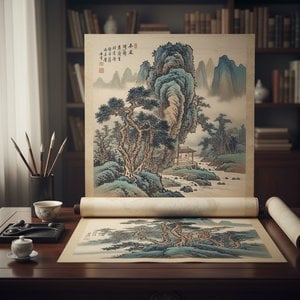
統計情報POEMS IN CURSIVE SCRIPT
 Ming Dynasty Art
 23.0 x 186.0 cm
 続きを読む
続きを読む
ジークレー/アートプリント
スピーディーな制作と多彩な仕上げオプションが魅力の、ミュージアムクオリティなジークレー・キャンバスプリント。 ( 手描きの複製画を注文する デジタル画像販売へ切り替え)




































作品のオリジナル比率に合わせた、当店の規定サイズからお選びください。

額縁や壁のスペースに合わせて、ご希望の幅と高さを入力してください。プリントはカットすることは可能ですが、元の画像より大きくすることはできないため、異なる比率のサイズを選択された場合は、画像の一部が欠けることになります。印刷を開始する前に、内容を確認していただくためのデジタルモックアップをお送りいたします。このページに表示されている画像は、実際のカット後の状態を示すものではありません。実際の仕上がりはモックアップにてご確認ください。


 ガラスオプションは、110cm未満のサイズでのみご利用いただけます。

POEMS IN CURSIVE SCRIPT
ジークレー/アートプリント
複製画サイズ一覧
-


合計金額
¥ 9767
関連作品


アーティストについて
Ni Yuanlu: A Master of Ming Dynasty Calligraphy and the Echoes of a Turbulent Era
Ni Yuanlu (c. 1593 – 1644), a name often whispered in the halls of Chinese art history, was more than simply a calligrapher and painter; he was a man inextricably linked to the tumultuous final years of the Ming Dynasty. Born Ni Wenzhong in Shangyu, Zhejiang province, his life unfolded against a backdrop of political upheaval, rebellion, and ultimately, tragic suicide – an event that imbued his work with a profound sense of melancholy and quiet dignity. His art, particularly his semicursive script style, offers a poignant window into the era’s anxieties and the artist's own complex character.
Ni’s early life was marked by rigorous study and imperial examinations. He quickly established himself as a skilled scholar and calligrapher, earning the courtesy name Yuru (玉汝) and the art name Hongbao (鴻寶). His training emphasized traditional techniques, but it was his willingness to experiment with form and expression that distinguished him. Unlike many of his contemporaries who adhered rigidly to established conventions, Ni developed a distinctive style characterized by its fluidity, dynamism, and subtle emotional depth. This wasn’t merely aesthetic; it reflected a growing dissatisfaction with the corruption and inefficiency within the Ming court – a sentiment he would later embody in his final act.
The Semicurative Script: A Reflection of Character
Ni Yuanlu's most celebrated achievement lies in his mastery of the semicursive script, or kaishu (楷書). This style, a hybrid between the rigid formality of traditional calligraphy and the looseness of cursive writing, allowed for both precision and expressive freedom. He employed a unique technique – holding the brush at an oblique angle – to create strokes that were simultaneously sharp and graceful, conveying a sense of controlled energy. His work is often described as “angular,” reflecting his personality and the turbulent times he inhabited. Unlike the smoother, more rounded styles favored by some other masters, Ni’s script possessed a certain tension, a feeling of contained force.
His paintings, frequently executed in monochrome ink wash (guohua), complemented this calligraphic style perfectly. He often depicted landscapes, birds, and flowers – subjects common to Chinese painting – but imbued them with a sense of quiet contemplation and subtle symbolism. A particularly striking example is “Cloud Rock,” where the dynamic brushstrokes capture the essence of a rocky outcrop against a vast expanse of sky, evoking both strength and vulnerability. Similarly, his inscription on a hanging scroll, "Poems in Cursive Script," demonstrates his ability to seamlessly blend calligraphy and painting, creating a unified artistic statement.
A Life Defined by Service and Disillusionment
Ni Yuanlu’s career was marked by a rise through the imperial bureaucracy. He served as a minister of revenue and lecturer to the emperor, gaining recognition for his intelligence and administrative skills. However, he became increasingly disillusioned with the corruption and decadence within the Ming court, particularly under the influence of the powerful eunuch Wei Zhongxian. He was a vocal critic of these abuses, advocating for reform and challenging the established order.
This opposition ultimately led to his tragic demise. As the rebel Li Zicheng seized Beijing in 1644, Ni Yuanlu, along with the emperor, chose to commit suicide rather than surrender to the enemy. This act of defiance – a refusal to compromise one’s principles – cemented his legacy as a symbol of integrity and resistance against tyranny. It's believed that this decision was driven by a deep sense of moral obligation and a profound disappointment in the state of affairs.
Legacy and Historical Significance
Despite his untimely death, Ni Yuanlu’s artistic legacy endures. His work is prized for its technical mastery, emotional depth, and unique stylistic innovations. He stands as a significant figure in Ming Dynasty art, representing a bridge between traditional techniques and a more expressive approach to calligraphy and painting. His life story – one of service, disillusionment, and ultimately, sacrifice – provides a powerful commentary on the political and social turmoil of his era.
Today, Ni Yuanlu’s works are housed in prestigious collections around the world, including the Metropolitan Museum of Art in New York and the Palace Museum in Beijing. His art continues to inspire artists and scholars alike, offering a glimpse into the soul of a man who sought to uphold his principles amidst a period of profound crisis.

Ni Yuanlu
1593 - 1644
アーティスト情報
- Full Name: Ni Yuanlu
- Nationality: Chinese
- Date Of Birth: 1593
- Date Of Death: 1644
- Place Of Birth: Shangyu, Zhejiang, China
- Notable Artworks:
- Poems in Cursive Script
- Cloud Rock
- Calligraphy Couplet
- Artistic Movement Or Style: Semicursive script
- Artists Who Influenced This Artist: ['None specified']
- Artists Or Movements Influenced By This Artist: ['None specified']
関連記事

Xie Zhiliu: A Legacy of Ink Wash Painting & Modern Chinese Literati Tradition
Explore the legacy of Xie Zhiliu, a master of Chinese ink wash painting & prominent figure in modern art. Discover his techniques, influences, and contributions to literati tradition. A guide for discerning collectors.

Timeless Elegance: Discovering the Soulful Beauty of Chinese Calligraphy for Sophisticated Home Interiors
Elevate your home with the serene beauty of Chinese calligraphy art. Explore our collection of hand-painted ink wash reproductions and bespoke commissions at ArtsDot.com. Discover museum-quality pieces designed to bring cultural elegance and tranquility to your modern interior.

Cy Twombly: Scribbles of Emotion – Deconstructing Post-War Expressionism Through Calligraphy & Abstraction
Explore the captivating world of Cy Twombly with ArtsDot. Discover the emotional depth & artistic significance behind his abstract calligraphy. Expert insights for collectors.

Ink & Inspiration: Discovering Timeless Artworks That Celebrate the Magic of the Written Word
Explore the enchanting intersection of literature and fine art. From ancient manuscripts to Japanese Shodo, discover exquisite hand-painted reproductions that celebrate the magic of writing. Elevate your home with meaningful, museum-quality pieces curated for every history lover.
Pu Xinyu's 'Puru': A Legacy of Literati Painting & Emotional Resonance
Explore the captivating world of Pu Xinyu (Puru), the last great literati painter. Discover his imperial heritage, masterful ink wash techniques & enduring legacy – a valuable addition to any discerning art collection.