


 設置イメージを確認
 送る
送る シェア
シェア
 詳細情報
詳細情報 ガイドを表示

 画像をダウンロード
 似ている作品
 X線調査
X線調査 スライドショー
 統計情報
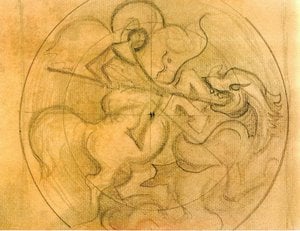
統計情報Floating Circle
 35.0 x 43.0 cm
 Royal West of England Academy
 続きを読む
続きを読む
このページに掲載されている作品は著作権法によって保護されており、当社の許可なく同一の複製物を制作または販売することは法律で禁じられています。この保護は、以下のような国際条約に基づき執行されます。 ベルヌ条約 および、以下の条項に定められたものを含む各国の法律により、 米国著作権法 第17編。
敬意を払った法的な代替手段として、私たちはオリジナルにインスピレーションを与えられた、カスタムの手描きアートワークを提供しています。私たちの熟練したプロのアーティストは、元の作品が持つスタイル、情緒、そして芸術的なエッセンスを注意深く研究し、独自の創作物でありながら、同じ感性を呼び起こすような、新しくユニークな作品を作り上げます。
この手法は、著作権で保護された作品の複製や複写を伴わないため、著作権法に完全に準拠しています。これは単なる模倣ではなく、創造的な再解釈です。元の作品からインスピレーションを受けつつも、それとは異なる、全く新しい絵画を生み出すものです。
手描き油彩複製画
当社のアーティストが、お客様のご希望のサイズと額縁に合わせて、キャンバスに手描きで制作する油彩画です。 ( プリント版に切り替え デジタル画像販売へ切り替え)




































作品のオリジナル比率に合わせた、当店の規定サイズからお選びください。

フレームや壁のスペースに合わせて、ご希望の幅と高さを入力してください。本作品は手描きのため、異なる比率のサイズをご希望の場合、絵画の周囲を少し広げて描くか、あるいは端を少しカットして調整することが可能です。お客様のご要望に合わせます。制作を開始する前に、仕上がりを確認するためのデジタルモックアップをお送りいたします。このページに表示されている画像は完成品の実物ではなく、あくまでモックアップによるイメージです。
ご注文後、ArtsDot.com チームより詳細な指示をお送りするとともに、仕上がりイメージ(モックアップ)をご提供いたします。


 ガラスオプションは、110cm未満のサイズでのみご利用いただけます。

Floating Circle
再現技法
複製画サイズ一覧
-


合計金額
¥ 41587
関連作品


アーティストについて
Margaret Gregory: A Weaver of Myth and Memory
Margaret Gregory (1927-2011) wasn’t merely an artist; she was a chronicler, a storyteller deeply rooted in the folklore and landscape of County Galway. Her work, particularly her monumental “Homage to Joseph Beuys” series, transcends simple abstraction, becoming intricate tapestries woven with personal memory, Irish mythology, and a profound engagement with the social and political currents of her time. Born Margaret Parry in Cheltenham, England, she inherited a rich artistic lineage through her mother’s family, steeped in Victorian art patronage and a deep appreciation for the visual arts. This early exposure fostered a lifelong fascination with color, texture, and the evocative power of image – elements that would become central to her distinctive style.
Gregory's formative years were spent largely at Coole Park, the ancestral home of Lady Gregory, a pivotal figure in the Irish Literary Revival. Living within this vibrant intellectual community—a gathering place for Yeats, Joyce, Synge, and countless others—shaped her artistic sensibilities profoundly. She witnessed firsthand the struggles for cultural identity and independence that defined Ireland’s 20th-century experience. This engagement with national narratives, coupled with a deep connection to the rural landscape, fueled a desire to capture not just visual appearances but also the spirit of place – the whispers of history embedded within the stones and fields of Galway.
Her artistic journey began in earnest after marrying Robert Gregory, son of Lady Gregory, in 1907. This union brought her firmly into the heart of Irish cultural life, providing access to a wealth of knowledge and experience. She initially worked as an illustrator for her mother-in-law’s books, meticulously rendering scenes from Irish mythology – tales of fairies, giants, and ancient heroes—with a remarkable attention to detail and a subtle infusion of personal interpretation. These early illustrations reveal a nascent talent for layering symbolism and creating images that resonate with both the literal and the metaphorical.
The “Homage to Joseph Beuys” Series: A Dialogue Across Generations
Gregory’s most celebrated work, the “Homage to Joseph Beuys” series (1986-1993), represents a significant shift in her artistic practice. Inspired by the German artist's concept of ‘shamanic art,’ which sought to connect with ancestral spirits and revitalize communities through ritualistic creation, Gregory developed a complex visual language that blended abstract expressionism with elements of Irish folk art. The panels—each measuring approximately six feet tall—are not simply representations of Beuys’s work; they are layered meditations on his ideas, filtered through her own experiences and memories.
The series is characterized by a rich palette of earthy tones – ochres, siennas, and umbers – punctuated by bursts of vibrant color. Gregory employed a variety of techniques: layering acrylic paint, incorporating collage elements (including fragments of Irish newspapers and textiles), and applying textured surfaces to create a tactile and immersive experience for the viewer. Recurring motifs—circles, spirals, and animal figures—evoke ancient symbols and connect her work to the pre-Christian traditions of Ireland. The deliberate ambiguity of these images invites multiple interpretations, suggesting a dialogue between past and present, personal and collective memory.
Minimalist Compositions: “Floating Circle” and Beyond
Alongside the “Homage” series, Gregory produced a body of smaller, more restrained works—often referred to as her minimalist compositions. These pieces, exemplified by "Floating Circle" (1998), demonstrate a remarkable control over color and form. She pared down her palette to its essential elements – often just two or three colors – and employed simple geometric shapes to create visually arresting arrangements. The “Floating Circle,” for instance, is a deceptively complex work that suggests both stability and movement, inviting the viewer to contemplate the relationship between interiority and exteriority.
These minimalist works can be seen as a counterpoint to the more elaborate scale of her larger paintings. They represent a distillation of her artistic principles—a commitment to clarity, precision, and the power of suggestion. They also reflect a growing interest in exploring the fundamental elements of visual perception – color, line, and space – without relying on narrative or symbolic content.
Legacy and Historical Context
Margaret Gregory’s work occupies a unique position within the history of Irish art. She was part of a generation grappling with questions of national identity in the wake of independence, yet she resisted easy categorization. Her paintings are not simply portraits of Ireland; they are reflections on its past, present, and future—a complex tapestry woven from personal memory, folklore, and social commentary.
Her engagement with Joseph Beuys’s ideas is particularly significant. Beuys's emphasis on the transformative power of art resonated deeply with Gregory’s own belief in the potential of creativity to heal and revitalize communities. Her “Homage” series can be interpreted as a gesture of solidarity—a recognition of shared struggles and aspirations across generations and cultures. Margaret Gregory died in 2011, leaving behind a substantial body of work that continues to inspire and challenge viewers today. Her paintings serve as a powerful reminder of the enduring relevance of folklore, myth, and memory in shaping our understanding of the world.

Margaret Gregory
1927 - 2011
アーティスト情報
- Artistic Movement Or Style: Abstract expressionism, Color field painting, Minimalist art
- Artists Or Movements Influenced By This Artist:
- Color field painting
- Minimalist art
- Artists Who Influenced This Artist: ['Joseph Beuys']
- Date Of Birth: 1927
- Date Of Death: 2011
- Full Name: Margaret Gregory
- Nationality: American
- Notable Artworks:
- Homage to Joseph Beuys
- Floating Circle
- Place Of Birth: WahooArt