

 設置イメージを表示
 シェアする
シェアする シェアする
シェアする
 詳細を見る
詳細を見る ガイドを表示

 ダウンロード
 似ている作品
 X線調査
X線調査 スライドショーを表示
 Q&A
Q&A 統計情報
統計情報Man sitting beside a window


 詳細を表示
詳細を表示
このページに掲載されている作品は著作権法によって保護されており、当社の許可なく同一の複製物を制作または販売することは法律で禁じられています。この保護は、以下のような国際条約に基づき執行されます。 ベルヌ条約 および、以下の条項に定められたものを含む各国の法律により、 米国著作権法 第17編。
この手法は、著作権で保護された作品の複製や複写を伴わないため、著作権法に完全に準拠しています。これは単なる模倣ではなく、創造的な再解釈です。元の作品からインスピレーションを受けつつも、それとは異なる、全く新しい絵画を生み出すものです。
ジークレー/アートプリント
スピーディーな制作と多彩な仕上げオプションが魅力の、ミュージアムクオリティなジークレー・キャンバスプリント。 ( 手描き複製画を注文する デジタル画像販売へ切り替え)




P118B ¥10

P118H ¥10

P118W ¥10

P438Z ¥10

P508JH ¥12

P508YH ¥12

P805H ¥10

P805Z ¥10

P919BZ ¥10

P919G ¥10

P919XJ ¥10

P959ZH ¥10

P968JZ ¥12

W106C ¥8

W218G ¥10

W218JH ¥8

W218Y ¥10

W307PJ ¥10

W316G ¥10

W316PJ ¥8

W316Y ¥10

W398PJ ¥8

W4111J ¥10

W500HY ¥15

W500JH ¥15

W692G ¥12

W849H ¥8

W940BG ¥15

W953PJ ¥8




作品のオリジナル比率に合わせた、当店の規定サイズからお選びください。

額縁や壁のスペースに合わせて、ご希望の幅と高さを入力してください。プリントはカットすることは可能ですが、元の画像より大きくすることはできないため、異なる比率のサイズを選択された場合は、画像の一部が欠けることになります。印刷を開始する前に、内容を確認していただくためのデジタルモックアップをお送りいたします。このページに表示されている画像は、実際のカット後の状態を示すものではありません。実際の仕上がりはモックアップにてご確認ください。


 ガラスオプションは、110cm未満のサイズでのみご利用いただけます。

Man sitting beside a window
ジークレー/アートプリント
複製画サイズ一覧
-


合計金額
¥ 9974
A Moment of Quietude: The Soul of Duchamp’s Early Mastery
In the vast, often turbulent history of modern art, there exists a rare, fleeting moment where the revolutionary spirit of Marcel Duchamp was still anchored in the serene beauty of the visible world. Man Seated by a Window, painted in 1907, captures this exquisite tension. Before he became the iconoclast who would dismantle the very definition of art through Dada and Readymades, Duchamp was a painter deeply engaged with the sensory delights of his surroundings. This piece invites the viewer into a private sanctuary, presenting a solitary figure lost in thought, framed by the soft light of a window and the vibrant life of blossoming flora. It is not merely a depiction of a man at rest; it is an invitation to pause, to breathe, and to find resonance in the quiet intervals of existence.
The composition functions as a delicate dialogue between the interior and the exterior worlds. As the eye wanders across the canvas, one encounters a masterful use of Post-Impressionist techniques that prioritize emotional atmosphere over rigid anatomical precision. The artist employs loose, gestural brushstrokes that imbue the scene with a sense of living movement—the gentle sway of leaves, the dappled light filtering through the glass, and the soft texture of the man's clothing. This stylistic choice creates a luminous quality, where the muted blues and greens of the background harmonize with warmer, sun-drenched hues from the garden outside, establishing a visual equilibrium that is both soothing and intellectually stimulating.
Technique and the Art of Atmosphere
Executed in oil on canvas, the painting showcases Duchamp’s formidable command over medium and light. The texture of the oil paint allows for a rich layering of color, which lends depth to the shadows within the room and brilliance to the petals of the flowers. For the discerning collector or interior designer, this work offers a sophisticated interplay of tones that can anchor a room with its tranquil energy. Unlike the starker, more clinical works of later modernism, this painting possesses a tactile warmth; it feels inhabited, as if the scent of the garden could drift through the frame. The way the light interacts with the subject suggests a daytime setting filled with the gentle vitality of spring or summer, making it an ideal centerpiece for spaces designed for contemplation and repose.
Beyond its aesthetic charm, the painting serves as a profound historical document. It captures a period of transition in art history, where the boundaries between Impressionism and the burgeoning movements of Cubism were still being negotiated. In this work, we see the seeds of Duchamp’s later philosophical inquiries—the way he uses the window not just as a physical object, but as a metaphorical lens through which we perceive reality. To possess a reproduction of this masterpiece is to hold a piece of the very foundation of modern thought, wrapped in the beautiful, accessible language of classical beauty.
An Inspiration for the Modern Interior
For those looking to curate an environment of elegance and intellectual depth, Man Seated by a Window offers unparalleled versatility. Its palette—a sophisticated blend of organic greens, deep blues, and soft floral accents—complements a wide array of interior styles, from contemporary minimalism to classic European aesthetics. The painting’s ability to evoke a sense of peace makes it a transformative element in a study, a library, or a quiet corner of a living space. It does not demand attention through noise, but rather commands respect through its profound stillness, acting as a window into a more thoughtful and reflective way of being.
Q&A
「Man sitting beside a window」の高解像度ダウンロード版は購入可能ですか?
マルセル・デュシャン作「Man sitting beside a window」のデジタルファイルをご希望の場合は、高解像度デジタル画像ページより高解像度デジタル画像のダウンロードをご注文ください。
「Man sitting beside a window」のPost-Impressionismには、どの国のルーツが反映されているのでしょうか?
「Man sitting beside a window」は、作者の出生地を通じて、Post-Impressionism運動とフランスを結びつけています。
マルセル・デュシャン作「Man sitting beside a window」 に近い雰囲気の作品を探すには?
マルセル・デュシャン作「Man sitting beside a window」の関連作品ページでは、関連する作品をご紹介しています。
関連作品


作家プロフィール
マルセル・デュシャンの生涯と芸術
1887年7月28日、フランス・ノルマンディー地方のブレーヌヴィル=シュル=メールに生を受けたマルセル・デュシャンは、創造への衝動がその血肉に深く刻み込まれた世界へと足を踏み入れました。ユージーンとルシー・デュシャンの間に生まれた7人の子供たちのうち、彼は4番目の存在でした。その家庭は、まさに「作る者」と「考える者」が集う場所でした。彼の兄弟たちもまた、この創造的な情熱を共有しており、兄のジャック・ヴィヨンやレイモン・デュシャン=ヴィヨン、そして姉のスザンヌ・デュシャン=クロッティは、皆が芸術家としての道を歩んでいったのです。後に彼は、極めて複雑な背景を持つフランス系アメリカ人の重要人物となりますが、その原点は常にノルマンディーの静謐な風景の中に根ざしていました。
彼の人生は、決して筆やノミを追い求めるだけの単一的な探求ではありませんでした。彼は多くの仮面を使い分け、多種多様な関心を持つ人物であり、芸術家として、発明家として、そして熱狂的なチェスプレイヤーとして、変幻自在に世界を渡り歩きました。さらには、アイデンティティの境界をさらに揺さぶるために、ローズ・セレヴィという女性の別名さえも採用したのです。この飽くなき探求心は、彼をパリとニューヨークという二つの文化の中心地へと駆り立て、常に自らの時代の「確実性」を解体しようと試みさせました。彼は単に世界を写し取るために描きたかったのではありません。私たちが世界をどのように知覚しているのか、そのメカニズムそのものを再考しようとしたのです。
現代美術に対する彼の貢献は、予想もしないほど多岐にわたるものでした。彼は、知性を表現するための新たな言語を見出すべく、機械や日常的なオブジェへと目を向けました。彼の作品は、しばしば以下のような形をとって現れました。
幼少期、家族、そして研鑽
フランス・ノルマンディー地方の静かな村、ブレーヌヴィル=クレヴォン。そこでアンリ=ロベール=マルセル・デュシャンという名の少年は、後に創造性の根幹そのものを揺るがすことになる、波乱に満ちた人生の第一歩を踏み出しました。彼が生まれた家庭において、芸術はごく当たり前の共通言語でした。兄弟であるジャック・ヴィヨンとレイモン・デュシャン=ヴィヨンもまた、それぞれ画家や彫刻家として独自の道を切り拓いていくことになります。このような表現を重んじる家庭環境は、彼の初期の芸術的傾向を育み、正統な芸術の学びへと彼を導きました。彼はパリのアカデミー・ジュリアンに身を置き、1904年から1905年にかけて研鑽を積みますが、その心はアトリエよりも、しばしばビリヤード台へと向いていました。また、エコール・デ・ボザールでも1年間の修行を重ねましたが、それがアカデミックな伝統への永続的な傾倒へと繋がることはありませんでした。
彼の若き日の色彩と形態は、時代の移ろいゆく潮流によって形作られていきました。フォーヴィスムの強烈なパレットや、ポスト印象派の構造的な探求に惹かれていく中で、彼の感性は磨かれていったのです。しかし、その歩みは決して単調な学問的進歩の道のりではありませんでした。1905年、国家の義務として第39歩兵連隊での兵役が始まります。その期間中、彼はルーアンで印刷業に従事することになります。インクの香りと印刷機の律動に包まれたこの場所で、彼はタイポグラフィの技術や様々な印刷プロセスを習得しました。パリの華やかなサロンから遠く離れた場所で身につけたこれらの実務的な技術は、後に、物体やイメージがいかにして複製され、知覚されるのかという、彼の芸術観を形作る重要な礎となったのです。
パリにおける芸術的進化
若き日のマルセル・デュシャンがパリの街角を歩むにつれ、当時の主要な展覧会を通じて、芸術界における彼の存在感は確かな形を成し始めていました。1909年までには、すでにサロン・デパンダンやサロン・ドートンヌといった重要な舞台で作品を発表しており、同時代の表現者たちの中に自らの居場所を見出そうと模索していました。その過程で、彼はポール・セザンヌの思想に強く惹きつけられていきます。セザンヌが提示した形態と構造へのアプローチは、発展途上にあった彼の芸術的ヴィジョンに深い刻印を残しました。この時期の彼は、単に絵画の技法を習得しようとしていたのではありません。むしろ、変容し続ける世界の複雑さをいかにして表現するか、その術を求めていたのです。
1911年、彼はキュビスムのグループとの関わりを通じて、決定的な転換期を迎えます。断片化された形態や多角的な視点との出会いは、彼を伝統的な再現表現の枠組みから解き放っていきました。この時期に生み出されたコーヒーミルは、機械的なものや概念的なものに対する彼の関心の高まりを象徴する重要な作品となりました。また、彼は「第四次元」という概念に心を奪われ、静止したキャンバスという制約の中で、いかにして動きや時間を描き出すかという問いに没頭していきます。こうした飽くなき知的探求心は、事物の表面的な美しさを超えた先へと彼を突き動かし、「芸術とは果たして、ただ視覚に訴えるためだけのものなのか」という根源的な問いを投げかけることになったのです。
ニューヨークにおける革命の歳月
アメリカ大陸に降り立ったとき、マルセル・デュシャンは、自身の内に秘めた破壊的な衝動を解き放つのにふさわしい、変革の予感に満ちた風景の中に身を置いていました。彼がこの地に渡ってからわずか2年足らずの間に、芸術の概念を根底から覆す、最も有名な転覆行為が成されることとなります。活気あふれるニューヨークの知的な社交界において、彼は好奇の目をもって迎え入れられました。そこには、伝統の境界線を押し広げようと渇望する思想家や表現者たちが集い、彼に居場所を与えたのです。こうした形成期において、自らの生計を立てるためにフランス語を教えることは、実利的な必要性であると同時に、より知的な探求へと身を投じるための自由を確保するための手段でもありました。
このような環境の中で、彼はニューヨークにおけるプロト・ダダ運動の中心的役割を担う存在へと成長していきます。フランシス・ピカビア、マン・レイ、そしてベアトリス・ウッドといった表現者たちと共に街を闊歩し、既存の秩序を解体しようとする反逆の精神に火をつけました。彼の存在は、ニューヨーク・ダダ運動の礎を築く一助となり、この街を、アーティストの定義そのものに挑戦するアイデアの実験場へと変貌させたのです。彼は単なる変革の傍観者ではありませんでした。彼は、変革を加速させる触媒そのものだったのです。
アメリカという土地との結びつきは、数十年の時を経てより深いものへと変わっていきました。知性を表現する新たな手法を求めて訪れた一人の訪問者であった彼は、1955年にはアメリカ市民権を取得します。この時期の彼の歩みは、職業画家としての安泰な地位に安住することを拒絶し続けるものでした。むしろ彼は、都市を深遠で、時に人々の心を揺さぶるような概念的な探求の場として捉え、その空間の中で独自の哲学を研ぎ澄ませていったのです。
技法、スタイル、そしてレディメイド
マルセル・デュシャンは、自らが「網膜的な芸術」と呼んだものに、次第に倦怠感を抱くようになっていました。それは、表面的な美しさによってただ視覚を愉しませるためだけの作品を指していました。その罠から逃れるべく、彼は対象の背後にある「概念」へと意識を向け、焦点を受容的な視覚的快楽から、知的な探求へと移し替えていったのです。この転換が、1914年頃における「レディメイド」の誕生へと彼を導きました。これらの作品は、美しさや醜さによって選ばれたのではなく、むしろ視覚的な無関心さによって選ばれたものでした。ありふれた既製品を手に取り、それを芸術として提示することで、彼は伝統的な職人技という概念を剥ぎ取ったのです。彼は筆の技術よりも、意図的な「選択」という行為が持つ力を重んじ、アーティストの手による直接的な介入を完全に回避しようと試みたのでした。
彼の芸術実践は、単一の様式に定着することを拒む、絶え間なく変容し続けるものでした。キュビスムが提示する断片化された視点に深く関わる一方で、ダダイズムの混沌を駆け抜け、さらにはコンセプチュアル・アートの知的な深淵へと足を踏み入れていきました。その表現媒体は、彫刻やコラージュといった触覚的なものから、短編映画のような刹那的なもの、さらには彼自身の身体そのものに至るまで、極めて広範に及びました。また、彼はしばしばアイデンティティの境界を揺さぶり、ローズ・セレヴィという女性のオルター・エゴを用いることで、ジェンダーの流動性を探求しました。言葉遊びや偶然性の要素を巧みに操りながら、彼は「創造」という行為を、論理と転覆のゲームへと変貌させたのです。
- Fountain (1917)
- Bicycle Wheel (1913)
- Bottle Rack (1914)
- Comb (1916)
主要な作品と革新的な試み
マルセル・デュシャンの芸術が、絵画という伝統的な枠組みから概念的な探求へと大きく舵を切ったのは、動きへの執着と形態の断片化に対する深い関心を通じてでした。1912年に生み出された階段を下りる裸体、第2番は、重なり合い、重ね合わされた断片的な面を通じて、人物の機械的な動きを捉えた記念碑的な作品です。それは静止したポーズを描くのではなく、流動する「動き」そのものを描き出そうとする試みでした。その後、1913年には、木製のスツールに車輪とフォークを取り付けた自転車の車輪に見られるように、既製品の組み合わせへとその関心は移り変わっていきます。この「選択」という行為は、伝統的な職人技からの決別を意味しており、対象をいかに手作業で作り上げるかではなく、いかに概念として提示するかという点に、新たな価値を見出したのです。
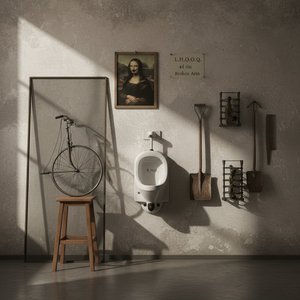
ニューヨークの急進的な空気の中に身を置くにつれ、彼の挑発はより直接的で鋭いものへと進化していきました。1917年、彼はありふれた陶器の小便器に「R. Mutt」という署名を施し、泉として提示するという、芸術史を揺るがす事件を引き起こします。このレディメイドの彫刻は、「アーティストとは何をする者か」という定義そのものに挑戦し、オブジェクトを選択するという行為自体が芸術になり得ることを示唆しました。彼は1914年のボトルラックでもこうした転覆を続け、さらに1919年には、モナ・リザのポストカードに口ひげと顎髭を描き加えたL.H.O.O.Q.を発表しました。これらの作品は、鑑賞者の既成概念を打ち砕き、美的な判断がいかに恣意的なものであるかを突きつけることを目的としていたのです。
そして、彼の最も複雑で謎めいた構築物である大ガラスは、1915年から1923年にかけての長年にわたる思索の結晶となりました。独身男たちによって裸にされた花嫁、あるいは、それですらとも呼ばれるこの作品は、鉛箔やワイヤーを駆使し、複雑で象徴的なイメージを探索しています。こうした多種多様な実験を通じて、マルセル・デュシャンは芸術の焦点を「目」から解放し、「精神」へと向かわせるという、革命的な転換を成し遂げたのです。
晩年と最期
アメリカでの波乱に満ちた歳月を経て、マルセル・デュシャンは1923年にパリへと帰還しました。彼は1942年までこの街に留まりましたが、その期間、彼は伝統的な美術界からは事実上、身を引いたような生活を送っていました。かつて彼の過激な挑発の原動力となっていた知的な厳格さは、今度はチェスという、静かで戦略的な複雑さを伴う世界へとその矛先を変えたのです。彼は人生の多くの時間をこのゲームに捧げました。それは、かつて彼が概念的な探求に注ぎ込んだものと同じほどの、凄まじい精神的集中を必要とする追求でした。
1954年、彼はアレキシナ・サトラーという生涯の伴侶を見出し、ニューヨークで結婚の儀を挙げました。二人の生活は献身的なものであり、変化し続ける文化的な潮流の中で、彼が自らの立ち位置を模索し続ける日々を支えました。その後、1955年にはアメリカ市民権を取得したものの、その魂の根源は常にフランスの土壌と深く結びついていました。マルセル・デュシャンは、1968年10月2日、フランスのヌイイ=シュル=セーヌにて、その波乱に満ちた生涯を閉じました。
遺産と永続的な影響
マルセル・デュシャンが投げかけた挑発の波紋は、アヴァンギャルドという狭いサークルを遥かに越えて広がり、最終的には私たちの創造性に対する認識の根底を塗り替えました。彼はしばしばコンセプトアートの先駆者と見なされています。それは、関心の対象を物理的なオブジェクトから、人間の知性へと移行させる劇的な転換でした。視覚的な結果よりも「アイデア」を優先させることで、彼は20世紀の幕開けにおける造形芸術の軌道を根本から変えたのです。この変化は突発的な断絶ではなく、シュルレアリスム、ミニマリズム、そしてポップアートの誕生を可能にした、緩やかで深遠な変容でした。彼は、アーティストの意図こそが意味を生み出す主要な原動力となる、新しい時代の定義を助けたのです。
彼の最も強烈な影響は、伝統的な技術の必要性を解体した手法に現れています。彼は「芸術係数」という概念を提唱しました。これは、アーティストが意図することと、実際に表現されるものとの間の関係性を問う思想です。この概念は、後の世代のアーティストたちが「流用(アプロプリエーション)」の境界や、鑑賞者の役割を探求し続けるための礎となりました。彼は単にオブジェクトを制作したのではありません。創造という行為そのものに対する、新しい思考のあり方を創り出したのです。美術史における彼の存在は、何が芸術作品と見なされ得るのかという境界線に挑み続ける、不変の光として輝き続けています。
- 噴水 (1917年)
- 階段を下りる裸体、第2番 (1912年)
- 大ガラス (1915年–1923年)
- 自転車の車輪 (1913年)
今日、その作品を辿る旅へ
マルセル・デュシャンの、決して留まることのない知性の足跡を辿るならば、フィラデルフィア美術館へと旅をすることになるでしょう。この美術館は、一箇所に留まることを拒み続けた彼のキャリアの広がりを保存しており、世界最大級のコレクションを擁しています。彼の思想とオブジェクトが、その生涯を通じて集められ、展示されているこの場所では、彼が現代美術に与えた影響の重みを、最も肌で感じることができるのです。
ロンドンでは、テート・モダンが、あのあまりにも有名な陶器製の小便器、泉(Fountain)を大切に守り続けています。かつて展覧会に出品された際に社会に大きな旋風を巻き起こしたこのオブジェクトは、今やロンドンのコレクションの核心をなす存在となりました。一方、パリのポンピドゥー・センターには、ロトレリーフ第11号やロトレリーフ第12号といった、彼のより実験的でキネティック(動的)な探求の成果が収められています。これらの作品は、動きへの執着と、オブジェクトがいかにして視覚を欺き得るかという、彼の飽くなき好奇心を鮮やかに反映しています。
また、彼の多岐にわたる関心を反映するように、他の作品たちは専門的な美術館へとその居場所を見出しています。パリ造幣局には、初期の活動期を過ぎた後も彼が形態と概念に対して抱き続けた探求心を物語る作品、トレブシェ(罠)が収蔵されています。これらの作品を目の当たりにすることは、芸術を「目」から「精神」へと解き放とうとした一人の男の、肉体的な遺志に触れることに他ならないのです。
- 階段を下りる裸体、第2番 (1912年)
- 大きなガラス (1915–1923年)
- 自転車の車輪 (1913年)
- ボトルラック (1914年)

マルセル・デュシャン
1887 - 1968 , フランス
プロフィール概要
- Artistic Movement Or Style:
- キュビスム
- ダダイズム
- コンセプチュアル・アート
- Artists Or Movements Influenced By This Artist:
- コンセプチュアル・アート
- ミニマリズム
- ポップアート
- シュルレアリスム
- Artists Who Influenced This Artist: ['セザンヌ']
- Date Of Birth: 1887年
- Date Of Death: 1968年
- Full Name: アンリ=ロベール=マルセル・デュシャン
- Nationality: フランス系アメリカ人
- Notable Artworks: ['泉', 'L.H.O.O.Q', '大ガラス', '階段を下りる裸体、第2番']
- Place Of Birth: フランス、ブレーヌヴィル=シュル=メール
関連記事

Impressionism's Masterpieces: 10 Paintings That Defined a Movement | ArtsDot
Journey through Impressionism's heart with 10 iconic paintings by Monet, Renoir & Degas. Explore light, color & the stories behind these masterpieces. Find museum-quality art reproductions and elevate your home decor on ArtsDot.com.

光と色彩の彼方:知的な収集家のための印象派とポスト印象派
印象派とポスト印象派の傑作を深く理解し、知的なコレクションを築くための情報を提供。ArtsDotでは、高品質な油絵複製やカスタムアートをご用意。専門家が最適な作品選びをお手伝いします。
Marcel Duchamp: Challenging Conventions & Redefining Art in the 20th Century
Explore the revolutionary art of Marcel Duchamp! Discover how his Dadaist readymades challenged artistic conventions & redefined modern art. A deep dive into 'Fountain', conceptual shifts, and his lasting impact.

没後印象派を彩る至宝:時代を定義した10大名作
時代を彩る没後印象派の名作10選。ゴッホ、セザンヌら巨匠の傑作を深く掘り下げ、その物語と技法に迫ります。色彩豊かなアートで空間を演出。ArtsDot.comで至高のアートプリントを見つけませんか?

Beyond Impressionism: Exploring the Emotional Depth of Post-Impressionist Painting
Explore the profound emotional depth & innovative techniques of Post-Impressionism with ArtsDot. Discover Cézanne, Van Gogh, Gauguin & more – and their lasting impact on modern art.


