

- 145.0 x 145.0 cm


選択した条件に基づいた画像: , .
作品解説
A man in visible distress lies amidst scattered birds in this evocative 1979 painting by Jörg Immendorff, offering a profound glimpse into the artist's provocative vision that you can bring to your collection.
 詳細を表示
詳細を表示
アーティストの略歴
Explore the provocative art of jörg immendorff – a German painter & sculptor known for 'Lidl,' political cycles, & experimental stage design. Discover his unique vision.
手描き油彩複製画
当社のアーティストが、ご希望のサイズと額縁に合わせてキャンバスに手描きで制作する、オーダーメイドの油彩画です。 ( プリント版に切り替え デジタル画像販売へ切り替え)
本作品の著作権について
このページに掲載されている作品は著作権法によって保護されており、当社の許可なく同一の複製物を制作または販売することは法律で禁じられています。この保護は、以下のような国際条約に基づき執行されます。 ベルヌ条約 および、以下の条項に定められたものを含む各国の法律により、 米国著作権法 第17編。
敬意を払った法的な代替手段として、私たちはオリジナルにインスピレーションを与えられた、カスタムの手描きアートワークを提供しています。私たちの熟練したプロのアーティストは、元の作品が持つスタイル、情緒、そして芸術的なエッセンスを注意深く研究し、独自の創作物でありながら、同じ感性を呼び起こすような、新しくユニークな作品を作り上げます。
この手法は、著作権で保護された作品の複製や複写を伴わないため、著作権法に完全に準拠しています。これは単なる模倣ではなく、創造的な再解釈です。元の作品からインスピレーションを受けつつも、それとは異なる、全く新しい絵画を生み出すものです。
この絵画の詳細を見る
 設置イメージを表示
 シェアする
シェアする シェアする
シェアする
 詳細を見る
詳細を見る ガイドを表示

 ダウンロード
 似ている作品
 X線調査
X線調査 スライドショーを表示
 Q&A
Q&A 統計情報
統計情報絵画のご注文は、わずか4つの簡単なステップで完了します
ゆっくりとお選びください。回答はいつでも変更可能です。選択内容に応じて、注文カート内の価格が随時更新されます。
1 全4ステップ中のステップ1
サイズをご選択ください。
これらのサイズは、原画の比率を維持しています。図は、高さ2メートルのソファの上の壁に、選択したサイズを配置した際のイメージです。
または、ご希望のサイズを指定する
作品のオリジナル比率に合わせた、当店の規定サイズからお選びください。

フレームや壁のスペースに合わせて、ご希望の幅と高さを入力してください。本作品は手描きのため、異なる比率のサイズをご希望の場合、絵画の周囲を少し広げて描くか、あるいは端を少しカットして調整することが可能です。お客様のご要望に合わせます。制作を開始する前に、仕上がりを確認するためのデジタルモックアップをお送りいたします。このページに表示されている画像は完成品の実物ではなく、あくまでモックアップによるイメージです。
2 4ステップ中の2番目
どのような状態での配送をご希望ですか:ロール状、キャンバス張り、または額装済み?
以下の価格は、ステップ1で選択されたサイズに基づいています。
キャンバスの側面仕上げを選択
フレームを選択

白の側面仕上げ ¥1

エッジぼかし仕上げ ¥1

回り込み仕上げ ¥1

P118B ¥10

P118H ¥10

P118W ¥10

P438Z ¥10

P508JH ¥12

P508YH ¥12

P805H ¥10

P805Z ¥10

P919BZ ¥10

P919G ¥10

P919XJ ¥10

P959ZH ¥10

P968JZ ¥12

W106C ¥8

W218G ¥10

W218JH ¥8

W218Y ¥10

W307PJ ¥10

W316G ¥10

W316PJ ¥8

W316Y ¥10

W398PJ ¥8

W4111J ¥10

W500HY ¥15

W500JH ¥15

W692G ¥12

W849H ¥8

W940BG ¥15

W953PJ ¥8

H24-GOLD ¥30

H24-SILVER ¥30

H36-GOLD ¥45

H36-SILVER ¥45
額装済み
額縁の形状: . 額縁を含む全体サイズ: .
3 4ステップ中の3ステップ目
絵画の内容に変更をご希望されますか?
ほとんどの方は「いいえ」と答えます。一枚一枚が手描きであるため、アーティストがお客様のご要望に合わせて調整することも可能です。
ご注文後、ArtsDot.com のチームより詳細な手順についてメールをお送りし、仕上がりイメージ(モックアップ)をご提示いたします。
4 4ステップ中、第4ステップ
仕上げのオプション(数種類)
すべて任意です。すでに選択されている回答に追加料金はかかりません。
作者は誰?
美術館にあるような、銘板(ネームプレート)を。
刻印入りブロンズプレートの詳細
This elegant plaque features the artist's name and the title of the artwork, finely engraved for a timeless presentation.
It is made from bronze with a refined, elegant finish. The text is precisely laser-engraved for a sharp and permanent result. Measuring 9x2 cm, the plaque is compact yet easy to read. It's built to be durable and scratch-resistant, offering a professional, museum-quality look. Mounting is simple thanks to the included adhesive backing.
透明アクリル銘板の詳細
The plaque includes essential engraved details such as the artist's name, the title of the artwork, the date it was created, the type of media used-like oil on canvas or watercolor-a brief description of the piece, and a QR code that links to the complete artwork information.
It is crafted from clear acrylic, offering a sleek, modern appearance. The text is UV-engraved in black to ensure strong visual contrast. With a size of 10x15 cm, it ensures optimal readability. It comes equipped with two metal hooks for secure wall mounting. The plaque is designed to be weather-resistant, making it suitable for various environments, and it includes interactive features that work seamlessly with smartphone scanning.
黒アクリル製銘板の詳細
This elegant plaque includes engraved information such as the artist's name, the title of the artwork, the date it was created, the type of media used (like oil on canvas or watercolor), a short description of the artwork, and a QR code for quick access to more information.
The plaque itself is made from refined black acrylic with a premium finish. The text is laser-engraved in white for high contrast and readability. Its size is 10x15 cm, designed to be easy to read. It comes with two metal hooks for professional mounting. The design is sleek and fits any interior style. It is also weather-resistant and durable, with built-in digital integration for mobile compatibility.
保護用ニスをご希望ですか?
お届け希望日をお選びください
✓ 内容を確認して注文する
ご注文通りの絵画内容

Untitled
再現技法
複製画サイズ一覧
-

至高の熟練アーティスト
より細部までこだわった表現、洗練された技術、そして十分な制作時間
-

複製画用フレーム
-
-
いずれかの辺が105 cm(約41インチ)を超えるアートワークまたは複製画の場合、フレームは分解されたキットの状態でお届けいたします。この方法は、輸送中の破損を防ぎ、安全に配送するために採用しております。
組み立てには専門知識が必要です(DIY用製品ではありません)。
本キットは、経験豊富なプロの額装師が、木工用ボンド(別売)、キャンバス用プライヤー、およびボンドの乾燥時に桟を直角に保持するためのクランプを使用して、組み立ておよびキャンバスの張り作業を行う必要があります。不適切な組み立てやキャンバスの張りの不均一は、作品に永久的な損傷を与える恐れがあり、弊社の保証対象外となります。
 いずれかの辺が105 cm(約41インチ)を超えるアートワークまたは複製画の場合、フレームは分解されたキットの状態でお届けいたします。この方法は、輸送中の破損を防ぎ、安全に配送するために採用しております。
すべての無垢材のパーツが含まれており、組み立てに最適なサイズに正確にカットされています。
付属のネジを使用し、角の接合部には別途木工用ボンドをご用意ください(ボンドは付属しておりません)。ボンドは額装業者様にてご手配をお願いいたします。
プロ仕様の道具が必要ですが、キットには含まれていません:キャンバス用ストレッチングプライヤー(テンショナー)、および接着剤が乾燥するまで木枠を直角に固定するためのクランプ。
重要:
コーナーの接合部には木工用ボンドが必要です。また、ボンドが完全に乾くまでクランプでバーを固定しておく必要があり、組み立てたフレームにキャンバスを張るにはキャンバス用ストレッチングプライヤーが必要となります。これらの道具はキットに含まれておりません。このサイズをご注文される前に、経験豊富なプロの額装師(フライマー)の手配をお願いいたします。

キャプション
-
-

保護用ワニス
光沢ワニス(色彩を鮮やかに引き立て、光や湿気から保護します)
-

作品をカスタマイズ
カスタマイズの例:顔をお客様の写真に差し替える、ペットを追加する(例:猫を犬に変更)、背景に隠しメッセージを入れる、背景の風景や要素を変更する。
-

お急ぎ便
世界中への配送()は、通常の5週間ではなく、3〜4週間でお届けいたします。(10 11月)。品質には一切の妥協を許しません。
-
お急ぎ便
世界中への配送()は、5週間ほどでお届けします。(17 11月)。
込み
合計金額
¥ 41614
ガラスオプションは、110cm未満のサイズでのみご利用いただけます。
すべての注文に同梱
- 世界中へ無料エクスプレス配送
- 高品質なリネンキャンバス
- 配送時完全保険付
- 関税・輸入税の払い戻し保証
- 真の色彩再現に関する保証
- 100日間返品保証(製造上の欠陥がある場合のみ)
- 100% 全額返金保証
- まとめ買い割引のご案内


A Vision of Disquiet: Decoding Immendorff’s Untitled
In the vast, evocative landscape of late 20th-century German painting, few voices resonate with as much raw, psychological intensity as that of Jörg Immendorff. His 1979 work, Untitled, serves as a profound window into a mind grappling with the complexities of existence, identity, and the fractured reality of post-war Europe. At first glance, the canvas presents a striking, almost surreal tableau: a solitary figure lies prone upon the earth, hands clasped behind him in a posture that oscillates between weary resignation and acute physical distress. This central subject, rendered with a visceral sense of weight, anchors the composition, drawing the viewer into a silent dialogue regarding human vulnerability and the heavy burden of being.
The painting’s atmosphere is thick with a sense of restless movement, achieved through a masterful orchestration of symbolic elements. Scattered throughout the scene, birds act as ethereal messengers—some perched in quiet contemplation, others caught in mid-flight, slicing through the composition. These avian figures introduce a layer of kinetic energy that contrasts sharply with the stillness of the man on the ground. The presence of a solitary potted plant to the right adds a touch of domesticity or perhaps a symbol of cultivated life amidst a wilder, more chaotic environment. Through this interplay of the grounded and the airborne, Immendorff creates a visual tension that keeps the eye wandering, searching for meaning within the layers of the scene.
Technique and the Language of Expressionism
Immendorff’s technique in this piece is a testament to his ability to blend expressive freedom with structural intent. The brushwork, though appearing spontaneous, possesses a deliberate rhythm that guides the viewer's emotional response. There is a palpable texture to the work, where the application of pigment feels as much like an emotional outburst as it does a formal application of paint. This approach, deeply rooted in the traditions of Neo-Expressionism, allows the artist to bypass mere representation and instead tap into a more primal, symbolic language. The scale of the 145 x 145 cm canvas demands attention, enveloping the viewer in its large-format presence and making the psychological landscape feel immersive and inescapable.
For the discerning collector or interior designer, this artwork offers more than just aesthetic beauty; it provides a profound intellectual anchor. The piece functions as a conversation starter, inviting scrutiny of its historical context—a period marked by political upheaval and the search for a new German identity. Its ability to command a room through its sheer emotional gravity makes it an ideal centerpiece for spaces dedicated to contemplation, modern curation, or avant-garde design. To possess a high-quality reproduction of this work is to bring a piece of art history’s most provocative era into one's personal sanctuary, offering a permanent connection to the turbulent, beautiful spirit of Jörg Immendorff.
Q&A
「Untitled」は、どのような色彩と感情を併せ持っているのでしょうか?
Jörg Immendorff作「Untitled」のDarkなパレットは、そのTenseな情緒的トーンと見事に調和しています。色彩は、作品が感情を伝えるための重要な要素の一つです。
Jörg Immendorff作「Untitled」の活用方法や、おすすめの設置スペースについて教えてください。
Jörg Immendorff作「Untitled」 のおすすめの用途は (Conversation)、飾る場所は (Living Room) です。
「Untitled」には、どのような情緒や感情が込められているのでしょうか?
「Untitled」は、DramaticなムードにTenseな感情が添えられた作品です。
関連作品


Jörg Immendorff
1945 - 2007
作家プロフィール
Early Life and Artistic Awakening
Jörg Immendorff, born in 1945 in Bleckede, Lower Saxony, emerged from the fractured landscape of post-World War II Germany—a context that would indelibly shape his artistic vision. The early departure of his father cast a long shadow, fostering a sense of emotional distance and inadequacy that resonated throughout his life and work. This personal trauma became a catalyst for exploring themes of identity, belonging, and the weight of history. Immendorff’s initial foray into the art world began at sixteen with an exhibition in a Bonn jazz cellar, a modest beginning hinting at the provocative path ahead. His formal training commenced in 1963 at the prestigious Kunstakademie Düsseldorf, initially under the tutelage of theater designer Teo Otto. However, Immendorff’s rebellious spirit and refusal to compromise his artistic integrity led to a swift expulsion from Otto's class—a pivotal moment that propelled him towards the mentorship of the iconoclastic Joseph Beuys.
The Radical Years: Expulsion and the Birth of LIDL
Immendorff’s time with Beuys was transformative, yet his inherent contrarianism and fervent political activism ultimately led to another expulsion from the academy. This rejection fueled a period of intense experimentation and defiance. From 1969 to 1980, he navigated a dual existence as an art teacher and a free artist, accepting visiting professorships across Europe while simultaneously challenging conventional artistic boundaries. It was during this time that Immendorff founded the “LIDL Academy,” a deliberately provocative gesture mocking the elitism of established art institutions. The name itself—inspired by the sound of a child’s rattle—underscored his fascination with new beginnings and innocence, contrasting sharply with the complexities of postwar German society. The LIDL project wasn't a formal group but rather a constellation of artists – including James Lee Byars, Marcel Broodthaers, and Nam June Paik – engaging in actions that ridiculed artistic pretension. His early work incorporated sculptures, performances, and documents alongside paintings, all imbued with a playful yet subversive energy.
Café Deutschland: A Stage for National Identity
The late 1970s marked a turning point in Immendorff’s career with the creation of his renowned *Café Deutschland* series. Inspired by Renato Guttuso’s *Caffè Greco*, these sixteen large-scale paintings transformed nightclubs into vibrant stages for exploring Germany's fractured cultural and political landscape. These weren’t mere depictions of scenes; they were elaborate tableaux vivants populated with a cast of historical figures—from Adolf Hitler to Otto Dix—engaged in chaotic, often unsettling interactions. The series served as a poignant reflection on the division between East and West Germany, grappling with themes of guilt, memory, and national identity. The paintings are characterized by expressive realism, caricature, and symbolic imagery, creating a visually arresting and emotionally charged experience for the viewer. Immendorff’s masterful use of color and composition draws the eye into these complex narratives, inviting contemplation on the enduring legacy of Germany's past.
Grand Cycles and Political Engagement
Immendorff consistently worked in what he termed “grand cycles of paintings,” ambitious projects that spanned years and were deeply rooted in political commentary. Beyond *LIDL* and *Café Deutschland*, notable series included the *Maoist Paintings* and *The Rake’s Progress*. These weren't simply artistic statements; they were attempts to engage directly with the pressing social and ideological issues of his time. His work often reflected a profound inner conflict—a tension between his desire for artistic expression and his commitment to political activism. He questioned the efficacy of art as a tool for change, famously asking in one painting, “Can one change anything with these?” Despite this skepticism, Immendorff continued to use his art as a platform for challenging established norms and provoking critical dialogue.
Legacy and Historical Significance
Jörg Immendorff’s return to the Düsseldorf Art Academy—the institution that had once dismissed him—in 1996 solidified his position as a leading figure in contemporary German art. He mentored a new generation of artists, including Oda Jaune and Renata Jaworska, passing on his rebellious spirit and commitment to artistic innovation. Immendorff’s work remains profoundly relevant today, offering a powerful commentary on the complexities of identity, memory, and political engagement. His willingness to confront difficult truths and challenge conventional boundaries continues to inspire artists and viewers alike. He left behind a body of work that is not only visually striking but also intellectually stimulating—a testament to his enduring legacy as one of Germany’s most provocative and important painters.
関連記事
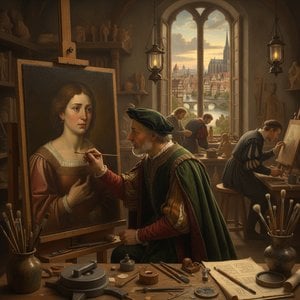
The Northern Awakening: Artistic Innovation & Cultural Transformation in the German Renaissance
Explore the artistic innovation of the German Renaissance! Discover Dürer, the Danube School & Reformation art. Learn about techniques, materials & lasting influence. Find museum-quality reproductions at ArtsDot.

Fritz von Uhde: Bridging Realism & Symbolism in Late 19th-Century German Painting
Explore the captivating world of Fritz von Uhde, a pivotal German painter bridging Realism & Symbolism. Discover his plein-air techniques, religious themes, and influence on modern art. Learn about this fascinating artist at ArtsDot.

Feathered Visions: A Historical & Artistic Exploration of Birds in Painting
Explore the rich history of birds in painting! Discover symbolism, artistic movements & master artists like Audubon. High-quality reproductions available at ArtsDot.