

- 49.0 x 66.0 cm


The picture follows your choices: , .
作品解説
A striking television set transformed by blue and white guardian figures on a vibrant yellow background by John Murray Thomson offers a symbolic shield against malevolence, inviting you to explore this unique 1980 masterpiece.
 詳細を表示
詳細を表示
アーティストの略歴
Discover Tom Thomson's iconic Canadian landscapes! Explore his evocative oil paintings of forests, lakes & skies – a pivotal figure in 20th-century art.
手描き油彩複製画
当社のアーティストが、ご希望のサイズと額縁に合わせてキャンバスに手描きで制作する、オーダーメイドの油彩画です。 ( プリント版に切り替え デジタル画像販売へ切り替え)
本作品の著作権について
このページに掲載されている作品は著作権法によって保護されており、当社の許可なく同一の複製物を制作または販売することは法律で禁じられています。この保護は、以下のような国際条約に基づき執行されます。 ベルヌ条約 および、以下の条項に定められたものを含む各国の法律により、 米国著作権法 第17編。
敬意を払った法的な代替手段として、私たちはオリジナルにインスピレーションを与えられた、カスタムの手描きアートワークを提供しています。私たちの熟練したプロのアーティストは、元の作品が持つスタイル、情緒、そして芸術的なエッセンスを注意深く研究し、独自の創作物でありながら、同じ感性を呼び起こすような、新しくユニークな作品を作り上げます。
この手法は、著作権で保護された作品の複製や複写を伴わないため、著作権法に完全に準拠しています。これは単なる模倣ではなく、創造的な再解釈です。元の作品からインスピレーションを受けつつも、それとは異なる、全く新しい絵画を生み出すものです。
More about this painting
 シェアする
シェアする シェアする
シェアする
 詳細を見る
詳細を見る ガイドを表示

 ダウンロード
 似ている作品
 スライドショーを表示
 Q&A
Q&A 統計情報
統計情報Order your painting in four simple steps
Take your time. You can change any answer; the price in your order card follows each choice.
1 Step one of four
Which size would you like?
These sizes keep the proportions of the original painting. The drawing shows your choice on a wall, above a two-metre sofa.
Or give your own measurements
作品のオリジナル比率に合わせた、当店の規定サイズからお選びください。

フレームや壁のスペースに合わせて、ご希望の幅と高さを入力してください。本作品は手描きのため、異なる比率のサイズをご希望の場合、絵画の周囲を少し広げて描くか、あるいは端を少しカットして調整することが可能です。お客様のご要望に合わせます。制作を開始する前に、仕上がりを確認するためのデジタルモックアップをお送りいたします。このページに表示されている画像は完成品の実物ではなく、あくまでモックアップによるイメージです。
2 Step two of four
How should it be prepared: rolled, stretched or framed?
The prices below are for the size you chose in step one.
Choose the edges of the stretched canvas
Choose your frame

White ¥1

Blurside ¥1

Extended ¥1

P118B ¥10

P118H ¥10

P118W ¥10

P438Z ¥10

P508JH ¥12

P508YH ¥12

P805H ¥10

P805Z ¥10

P919BZ ¥10

P919G ¥10

P919XJ ¥10

P959ZH ¥10

P968JZ ¥12

W106C ¥8

W218G ¥10

W218JH ¥8

W218Y ¥10

W307PJ ¥10

W316G ¥10

W316PJ ¥8

W316Y ¥10

W398PJ ¥8

W4111J ¥10

W500HY ¥15

W500JH ¥15

W692G ¥12

W849H ¥8

W940BG ¥15

W953PJ ¥8

H24-GOLD ¥30

H24-SILVER ¥30

H36-GOLD ¥45

H36-SILVER ¥45
額装済み
Moulding: . Overall size with the frame: .
3 Step three of four
Would you like anything changed in the painting?
Most people answer no. Because each painting is made by hand, our artist can also adapt it for you.
After order, ArtsDot.com team will email client for instructions and provide a mockup preview
4 Step four of four
A few finishing options
All of them are optional. The answers already selected cost nothing extra.
Who paints it?
A nameplate, as in a museum?
刻印入りブロンズプレートの詳細
This elegant plaque features the artist's name and the title of the artwork, finely engraved for a timeless presentation.
It is made from bronze with a refined, elegant finish. The text is precisely laser-engraved for a sharp and permanent result. Measuring 9x2 cm, the plaque is compact yet easy to read. It's built to be durable and scratch-resistant, offering a professional, museum-quality look. Mounting is simple thanks to the included adhesive backing.
透明アクリル銘板の詳細
The plaque includes essential engraved details such as the artist's name, the title of the artwork, the date it was created, the type of media used-like oil on canvas or watercolor-a brief description of the piece, and a QR code that links to the complete artwork information.
It is crafted from clear acrylic, offering a sleek, modern appearance. The text is UV-engraved in black to ensure strong visual contrast. With a size of 10x15 cm, it ensures optimal readability. It comes equipped with two metal hooks for secure wall mounting. The plaque is designed to be weather-resistant, making it suitable for various environments, and it includes interactive features that work seamlessly with smartphone scanning.
黒アクリル製銘板の詳細
This elegant plaque includes engraved information such as the artist's name, the title of the artwork, the date it was created, the type of media used (like oil on canvas or watercolor), a short description of the artwork, and a QR code for quick access to more information.
The plaque itself is made from refined black acrylic with a premium finish. The text is laser-engraved in white for high contrast and readability. Its size is 10x15 cm, designed to be easy to read. It comes with two metal hooks for professional mounting. The design is sleek and fits any interior style. It is also weather-resistant and durable, with built-in digital integration for mobile compatibility.
A protective varnish?
When do you need it?
✓ Check and order
Your painting, as you ordered it

Untitled
再現技法
複製画サイズ一覧
-

至高の熟練アーティスト
より細部までこだわった表現、洗練された技術、そして十分な制作時間
-

複製画用フレーム
-
-
いずれかの辺が105 cm(約41インチ)を超えるアートワークまたは複製画の場合、フレームは分解されたキットの状態でお届けいたします。この方法は、輸送中の破損を防ぎ、安全に配送するために採用しております。
組み立てには専門知識が必要です(DIY用製品ではありません)。
本キットは、経験豊富なプロの額装師が、木工用ボンド(別売)、キャンバス用プライヤー、およびボンドの乾燥時に桟を直角に保持するためのクランプを使用して、組み立ておよびキャンバスの張り作業を行う必要があります。不適切な組み立てやキャンバスの張りの不均一は、作品に永久的な損傷を与える恐れがあり、弊社の保証対象外となります。
 いずれかの辺が105 cm(約41インチ)を超えるアートワークまたは複製画の場合、フレームは分解されたキットの状態でお届けいたします。この方法は、輸送中の破損を防ぎ、安全に配送するために採用しております。
すべての無垢材のパーツが含まれており、組み立てに最適なサイズに正確にカットされています。
付属のネジを使用し、角の接合部には別途木工用ボンドをご用意ください(ボンドは付属しておりません)。ボンドは額装業者様にてご手配をお願いいたします。
プロ仕様の道具が必要ですが、キットには含まれていません:キャンバス用ストレッチングプライヤー(テンショナー)、および接着剤が乾燥するまで木枠を直角に固定するためのクランプ。
重要:
コーナーの接合部には木工用ボンドが必要です。また、ボンドが完全に乾くまでクランプでバーを固定しておく必要があり、組み立てたフレームにキャンバスを張るにはキャンバス用ストレッチングプライヤーが必要となります。これらの道具はキットに含まれておりません。このサイズをご注文される前に、経験豊富なプロの額装師(フライマー)の手配をお願いいたします。

キャプション
-
-

保護用ワニス
光沢ワニス(色彩を鮮やかに引き立て、光や湿気から保護します)
-

作品をカスタマイズ
カスタマイズの例:顔をお客様の写真に差し替える、ペットを追加する(例:猫を犬に変更)、背景に隠しメッセージを入れる、背景の風景や要素を変更する。
-

お急ぎ便
世界中への配送()は、通常の5週間ではなく、3〜4週間でお届けいたします。(2 11月)。品質には一切の妥協を許しません。
-
お急ぎ便
世界中への配送()は、5週間ほどでお届けします。(9 11月)。
込み
合計金額
¥ 41477
ガラスオプションは、110cm未満のサイズでのみご利用いただけます。
Included with every order
- 世界中へ無料エクスプレス配送
- 高品質なリネンキャンバス
- 配送時完全保険付
- 関税・輸入税の払い戻し保証
- 真の色彩再現に関する保証
- 100日間返品保証(製造上の欠陥がある場合のみ)
- 100% 全額返金保証
- まとめ買い割引のご案内


A Sentinel of Glass and Light
In the evocative realm of John Murray Thomson’s 1980 work, Untitled, we encounter a profound intersection between the mundane objects of modern life and the ancient, spiritual impulse to protect. This striking piece, executed on a found television set, transcends its technological origins to become something far more esoteric. At first glance, the viewer is met with a vibrant yellow background that radiates an almost solar energy, yet beneath this brightness lies a complex layer of symbolic defense. Thomson utilizes the very nature of the medium—the glass screen of the television—to explore themes of vulnerability and fortification. Because glass is inherently penetrable by light, sound, and even malevolent energies, the artist transforms this window into a shield, turning a common household appliance into a sacred talisman.
The technique employed in this piece is as much about ritual as it is about artistry. Thomson’s brushwork creates vertical forms in shades of blue and white, which act as guardian figures—both human and spiritual—standing watch over the interior space. These figures are buttressed by bold yellow accents, creating a visual barrier designed to repel external threats. On the reverse side of the object, the artist left traces of meandering red lines that appear to crawl through vents like living organisms, accompanied by cryptic red inscriptions that suggest a warning or perhaps a protective curse. This layering of meaning creates a tension between the visible surface and the hidden, more primal intentions of the creator.
Symbolism and the Art of Protection
To understand Untitled is to understand Thomson’s unique philosophy regarding the environment of the home. For the artist, the choice of materials was never arbitrary; every object held a specific weight of meaning. By painting over an old television set, he recontextualized a symbol of mass media and domestic passivity into a vessel for spiritual vigilance. The blue and white patterns on the screen, which some might mistake for the mechanical interior of a microwave or a digital glitch, are actually carefully composed elements intended to stabilize the energy of the piece. This work serves as a fascinating study in how art can function as an architectural component of a living space, acting not just as decoration, but as a perimeter defense against the unseen.
For collectors and interior designers, this painting offers a rare opportunity to possess a piece that is both intellectually stimulating and visually arresting. Its unique composition—combining the industrial texture of a found object with the ethereal quality of spiritual iconography—makes it a commanding centerpiece for any contemporary collection. It invites conversation about the boundaries between our technological world and our ancestral fears, making it an ideal acquisition for those who seek art that possesses both a historical soul and a modern, avant-garde edge. Whether placed in a minimalist gallery setting or a richly textured domestic interior, Untitled continues to pulse with the protective energy of its creator.
Q&A
John Murray Thomson作「Untitled」の色味の強さはどの程度ですか?
「Untitled」の彩度はMonochromaticです。彩度とは、色の鮮やかさの度合いを表します。
John Murray Thomson作「Untitled」の形状とサイズを教えてください。
John Murray Thomson作「Untitled」は、サイズ49 x 66 cmのLandscape作品です。
Untitledは、John Murray Thomsonのキャリアにおけるどの時期の作品にあたりますか?
「Untitled」は、John Murray Thomsonの画業におけるLate Periodに属します。この分類は、作品をアーティストの作風の変遷に関連付けるものです。
関連作品


作家プロフィール
The Echoes of the Wild: Exploring the Art and Life of John Murray Thomson
John Murray Thomson, a name perhaps less familiar than his contemporaries within the Group of Seven, nevertheless holds a profound significance in Canadian art history. Born in 1885 in Crieff, Scotland, and later establishing himself as a prominent figure in the burgeoning landscape movement of early 20th-century Canada, Thomson’s work transcends mere representation; it embodies a deep connection to the natural world, infused with a quiet reverence for the wilderness he so passionately depicted. His journey from a childhood steeped in rural life to becoming a celebrated artist reveals not only an exceptional talent but also a remarkable sensitivity to the rhythms and textures of the Canadian landscape.
Thomson’s early years were shaped by a strong connection to nature, nurtured within his family's farming community. He spent much of his youth exploring the Scottish countryside, developing a keen eye for detail and an appreciation for the subtle variations in light and colour that define the natural world. This formative experience would later become the bedrock of his artistic vision. Following his father’s death, the family moved to Ontario, where Thomson continued to immerse himself in the outdoors, honing his skills as a fisherman and tracker – activities that profoundly influenced his approach to painting. He initially pursued a career in penmanship before finding his true calling in art, receiving a Carnegie Travelling Scholarship which allowed him to study at the Académie Julian in Paris, exposing him to the Impressionist techniques of artists like Monet and Pissarro.
Upon returning to Canada, Thomson’s artistic focus solidified around the Algonquin Park region. He was captivated by its vastness, its shimmering lakes, and the dense forests teeming with wildlife. Unlike some of his more overtly romantic contemporaries, Thomson's paintings rarely depict grand vistas or dramatic skies. Instead, he favored intimate scenes—a lone canoe gliding across a still lake, a cluster of pines silhouetted against the twilight sky, or a close-up study of a jack pine’s rough bark. His technique was characterized by broad brushstrokes and a generous application of paint, creating a sense of immediacy and texture that captured the essence of the landscape. He wasn't interested in photographic realism; rather, he sought to convey the *feeling* of being immersed within nature – its stillness, its solitude, and its inherent beauty.
Thomson’s artistic development was inextricably linked to his personal life. His marriage to Ellen, a talented artist herself, provided him with a supportive partnership, while his deep love for animals—he kept a rhesus monkey, falcon, owl, and numerous smaller creatures as pets – further informed his work. His paintings are imbued with a sense of empathy and understanding towards the creatures he depicted, reflecting a belief in their inherent worth and dignity. He was also an avid angler and spent considerable time observing and sketching wildlife in its natural habitat. His meticulous attention to detail—the texture of bark, the ripples on water, the delicate veins of leaves—demonstrates a profound respect for the intricacies of the natural world.
Despite his significant contributions to Canadian art, Thomson’s legacy has often been overshadowed by that of the Group of Seven. However, his work deserves recognition as a pivotal figure in shaping the Canadian landscape tradition. His paintings offer a unique perspective on the wilderness—one characterized by quiet contemplation, understated beauty, and a deep sense of connection to the natural world. His influence can be seen in the works of subsequent generations of Canadian artists, who continue to draw inspiration from his masterful depictions of the Canadian landscape. Today, Thomson’s paintings are held in prominent collections across Canada, ensuring that his artistic vision continues to resonate with audiences for years to come.
Thomson's Artistic Style and Techniques
Thomson’s distinctive style is immediately recognizable through a combination of several key elements. He largely eschewed the highly finished, polished surfaces favored by some of his contemporaries, opting instead for a more expressive and textured approach. His brushwork is often loose and gestural, conveying a sense of spontaneity and immediacy. He employed a technique known as “alla prima,” meaning he would complete a painting in a single sitting, capturing the fleeting effects of light and atmosphere with remarkable speed and accuracy.
Color played a crucial role in Thomson’s work. He was particularly adept at capturing the subtle shifts in color that occur throughout the day, from the cool blues and greens of dawn to the warm oranges and reds of sunset. His palette was generally restrained, relying on earthy tones—browns, greens, and grays—to evoke the mood and atmosphere of the landscape. However, he wasn’t afraid to introduce bursts of vibrant color—the brilliant blue of a lake or the fiery red of a maple leaf—to draw attention to specific details.
Furthermore, Thomson's use of light was particularly noteworthy. He paid close attention to how light interacted with the landscape, creating a sense of depth and atmosphere through subtle gradations of tone and color. He often painted in the early morning or late afternoon, when the light was softest and most evocative. His paintings are not simply representations of landscapes; they are carefully constructed compositions designed to evoke specific emotions and sensations.
Thomson's Connections to the Group of Seven
While Thomson never formally joined the Group of Seven—a collective of Canadian artists who sought to establish a distinct national art style—he maintained close relationships with many of its members, including J.E.H. MacDonald and Franklin Carmichael. He frequently exhibited alongside them and shared their interest in depicting the Canadian wilderness. Many believe that Thomson’s work served as an important influence on the Group's development, particularly in terms of his emphasis on capturing the essence of the landscape rather than simply reproducing its appearance.
Despite this connection, Thomson maintained a somewhat independent artistic trajectory. His paintings often lacked the overtly symbolic or mythological elements that characterized some of the Group’s work. Instead, he focused primarily on depicting the natural world with honesty and directness. However, his shared commitment to portraying the Canadian landscape—and his willingness to experiment with new techniques and approaches—cemented his place as a key figure in the broader context of early 20th-century Canadian art.
Legacy and Historical Significance
John Murray Thomson’s legacy extends far beyond his individual artistic achievements. He is considered a foundational figure in the development of Canadian landscape painting, paving the way for subsequent generations of artists who sought to capture the beauty and spirit of the Canadian wilderness. His work has been celebrated for its honesty, its emotional resonance, and its profound connection to the natural world.
Thomson’s paintings continue to be exhibited in museums and galleries across Canada, attracting a wide range of admirers. His art serves as a reminder of the importance of preserving our wilderness areas and appreciating the beauty of the natural world. Furthermore, his life story—a journey from rural Scotland to artistic recognition—offers an inspiring example of perseverance, dedication, and a deep love for nature.
関連記事

Slate Blue Masterpieces: 10 Iconic Paintings & Timeless Home Decor Ideas
Immerse yourself in the captivating world of slate blue! Explore 10 iconic paintings by Monet, Van Gogh & Renoir. Discover their stories, techniques & find museum-quality art reproductions for your home at .
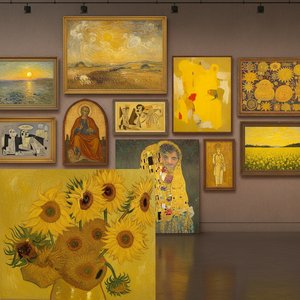
Golden Hues: 10 Masterpieces Dominated by Chrome Yellow | ArtsDot
Immerse yourself in golden light! Explore 10 famous paintings dominated by 'Chrome Yellow', from Van Gogh’s Sunflowers to Monet's Haystacks. Discover the stories behind these iconic Impressionist & Post-Impressionist masterpieces and find museum-quality art reproductions at ArtsDot.com.
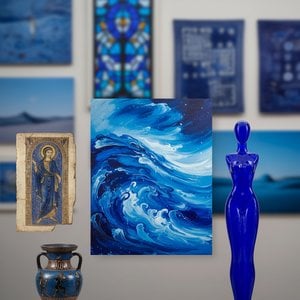
The Allure of Azure: Exploring the Symbolic & Aesthetic Depths of Blue in Art History
Explore the rich history of blue in art! Discover its symbolism, from ancient pigments to modern masterpieces by Kandinsky & Seurat. Uncover the psychological impact and cultural meanings behind this captivating hue.