

 設置イメージを表示
 シェアする
シェアする シェアする
シェアする
 詳細を見る
詳細を見る ガイドを表示

 ダウンロード
 似ている作品
 X線調査
X線調査 スライドショーを表示
 Q&A
Q&A 統計情報
統計情報Blue III

- 270.0 x 355.0 cm


 詳細を表示
詳細を表示
ウェブ上のプレビューを遥かに凌駕する、印刷に最適なファイルをご提供します。当サイトで販売しているすべてのデジタル画像は、弊社のデータベース内にある高解像度のマスターデータ(通常、幅5,000〜15,000ピクセル)から作成されています。そのため、大判印刷や大胆なクロップ、細部まで緻密な再現も、安心してお楽しみいただけます。
当スタジオから送り出される画像は、すべて丁寧に加工されています。デジタルエキスパートが原画と照らし合わせて色調を精査し、必要に応じて補正を行った上で、プロ仕様のリタッチツールを用いて鮮明さと細部を向上させます。その際、アーティストの筆致やスタイルに忠実であることを常に追求しています。その結果、単なるスキャン画像にフィルターをかけたようなものではなく、まるで本物の絵画を見ているかのような仕上がりを実現しています。
仕上がりをご確認いただいてから完了となります。専門スタッフが、ご確認用の画像を72時間以内にメールでお送りいたします。もしご満足いただけない場合は、修正や改善のご要望を承るほか、品質が基準に満たない場合には返金も可能です。
出版社、デザインスタジオ、ギャラリー、そして印刷所から信頼される品質です。
デジタルアート
個人での鑑賞、印刷、クリエイティブなプロジェクトにご利用いただける高解像度ファイルをダウンロードできます。 ( プリント版に切り替え 手描き複製画を注文する)
デジタル画像のご注文に付随する特典
確かな品質による、プロフェッショナルなデジタル配信
ArtsDot.com を選ぶことは、単に画像を手に入れることではありません。プロの手によって精密に仕上げられ、満足保証が付いた高品質なデジタルアートワークを受け取ることを意味します。ご注文いただいた際に自動的に付随する内容は、以下の通りです:

メールですぐにお届け
ご注文から72時間以内に、高解像度のデジタル画像ファイルをメールでお送りいたします。お手元に届き次第、すぐにご利用いただけます。

AI技術で最適化されたデジタルファイル
お客様の作品は、高度なAI技術と専門家による手作業を組み合わせてプロフェッショナルに最適化されており、細部のディテール、鮮明さ、そして正確な色再現性を最大限に引き出しています。

生涯無料の再送サービス
ファイルを誤って削除したり、紛失してしまったりしましたか?ご安心ください。いつでも無料で再送いたします。

輸入手数料は、いつでも一切かかりません
関税や手数料、配送料を気にすることなく、お気に入りのアートワークをすぐにお楽しみいただけます。デジタルダウンロードは常に免税です。

正確な色彩の保証
プロ仕様のツールとカラーマネジメント技術を用いることで、デジタル画像が元の色を最大限に忠実に再現することを保証いたします。

100日間満足保証
ご購入いただいたデジタル画像にご満足いただけない場合は、100日以内であれば、理由を問わず修正または100%の返金対応をさせていただきます。

100% 返金保証
ご満足いただけない場合は、デジタルファイルを受け取ってから100日以内であれば、理由を問わず全額返金いたします。

まとめ買い割引
3枚購入で10%OFF、5枚購入で15%OFF、10枚以上のご購入で20%OFF。クリエイティブなプロジェクトやギャラリー、エージェンシーに最適です。
A Blue Dreamscape: Unpacking Joan Miró’s “Blue III”
Joan Miró’s “Blue III,” painted in 1961, isn't merely a painting; it’s an invitation into the artist’s subconscious. Measuring a substantial 270 x 355 cm on canvas, this work pulsates with a quiet energy—a testament to Miró’s mastery of abstract expressionism and his unique ability to distill complex emotions into deceptively simple forms. At first glance, it presents as a serene expanse of blue, punctuated by the bold silhouette of a red kite soaring against an azure sky. Yet, beneath this apparent simplicity lies a rich tapestry of Surrealist influences, Catalan symbolism, and a profound exploration of the human psyche. The painting’s power resides not in representational accuracy but in its evocative capacity to trigger memories, dreams, and a sense of childlike wonder—a characteristic Miró relentlessly pursued throughout his career.The Composition: Geometry and Movement
The composition of “Blue III” is meticulously balanced despite its abstract nature. The dominant blue field acts as a grounding force, providing a backdrop for the dynamic interplay of shapes and colors. The most striking element is undoubtedly the red kite, positioned towards the upper left corner. Its two connected pieces, reminiscent of wings or abstracted figures, suggest flight, aspiration, and perhaps even a touch of melancholy. Miró’s use of bold, geometric forms—the kite itself, along with the three circles scattered across the canvas—creates a sense of controlled chaos, inviting the viewer to lose themselves in its depths. The tail of the kite extends downwards and slightly to the right, adding a subtle diagonal movement that prevents the composition from feeling static. These carefully placed elements aren’t merely decorative; they are integral to the painting's narrative, contributing to an overall sense of dynamic equilibrium.Echoes of Surrealism and Expressionism
Miró’s artistic lineage is deeply intertwined with both Surrealism and German Expressionism. The influence of artists like André Masson and Max Ernst—known for their automatic drawing techniques and exploration of the unconscious—is readily apparent in Miró's use of spontaneous, gestural brushstrokes and his willingness to embrace irrationality. However, unlike the often frenetic energy of some Surrealists, Miró’s approach is characterized by a more measured restraint, a deliberate attempt to channel the subconscious into a coherent visual language. Simultaneously, there’s a palpable resonance with German Expressionism—a shared interest in conveying intense emotions through distorted forms and vibrant color palettes. The painting's emotional intensity, its ability to evoke feelings of both serenity and unease, reflects this dual influence.A Catalan Soul: Symbolism and Memory
“Blue III” is deeply rooted in Miró’s Catalan identity. The blue itself—a shade he famously associated with dreams and the subconscious—holds particular significance for him. It wasn't simply a color; it was a portal to another realm, a space where memories, fantasies, and primal emotions could surface. The kite, too, carries symbolic weight. In Catalan folklore, kites are often associated with wishes and aspirations, representing the desire to transcend earthly limitations. Miró frequently incorporated elements of Catalan culture—from farm animals to traditional costumes—into his work, imbuing them with personal meaning and celebrating his homeland’s unique heritage. The painting can be interpreted as a meditation on memory, longing, and the enduring power of cultural identity.A Legacy of Abstraction: Relevance Today
“Blue III” stands as a pivotal masterpiece in the history of abstract art. Created during a period when Abstract Expressionism was gaining momentum in the United States—a movement that championed spontaneity and emotional expression—Miró’s work helped to shape its trajectory. His innovative use of color, form, and symbolism continues to inspire artists and captivate viewers today. The painting's enduring appeal lies in its ability to bypass rational thought and connect directly with our emotions, offering a glimpse into the boundless depths of the human imagination. For those seeking a profound and visually arresting experience, reproductions of “Blue III” offer a remarkable opportunity to engage with one of Miró’s most iconic works—a blue dreamscape that transcends time and speaks to the universal language of art.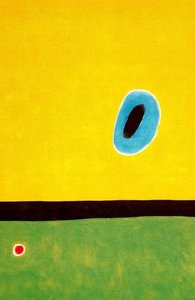


作家略歴
ジョアン・ミロの生涯と芸術
1893年4月20日、バルセロナ。時計職人の家に生まれたジョアン・ミロ・イ・フェラーは、精密な歯車が刻むリズムに満ちた世界へと生を受けました。この幼少期の環境が育んだ緻密な職人技への感性は、後に画家、彫刻家、そして陶芸家へと進化を遂げる彼の芸術の底流に、静かに、しかし力強く流れ続けることになります。彼は決して定められた道を歩むことはありませんでした。絶えずその関心を変化させ、変容を繰り返しながら、やがてシュルレアリスムと抽象芸術の発展における中心的な存在へと昇華していったのです。
彼の創造的な営みは、安易な分類を拒絶します。多くの人々が彼を単一の芸術運動の中に閉じ込めようと試みますが、ジョアン・ミロは常に強烈な独立心を保ち、既成の美学的な階層を覆そうとする情熱を表現し続けました。無意識の領域を捉えるために、彼は多種多様なメディアを駆使し、休むことのないエネルギーで実験を繰り返します。その制作活動は、有機的なものと幾何学的なもの、夢幻的なものと実体的なものとの間に生じる、絶え間ない緊張感に満ちています。1983年12月25日、彼がこの世を去る時、そこには芸術的表現の定義そのものに挑戦するような、全く新しい視覚言語が遺されていました。
幼少期、家族、そして研鑽の時代
1893年、バルセロナ。ジョアン・ミロの視覚言語の礎は、このカタルーニャの首都で築かれました。彼の幼少期を特徴づけるのは、二つの異なる世界が共存するような日々でした。14歳の時、彼は実利的な道としてビジネススクールへと進みますが、それは芽生え始めた創造的な衝動と並行して進むものでした。彼は商業と芸術のどちらかを選ぶのではなく、その両方を追い求めたのです。ビジネスの学問に励む傍ら、彼はEscuela Superior de Artes Industriales y Bellas Artesの美術クラスにも同時に身を置いていました。
情熱は、着実に高まっていきます。1911年、ミロはすでに公の場へと足を踏み出し、バルセロナで開催された第6回国際美術展において、自身初の絵画を展示しました。この初期の経験は、教室という学びの場から、プロフェッショナルな芸術の世界への脱皮を意味していました。1912年から1915年にかけて、彼はEscola d’Artにてフランセスク・ガリに師事し、その正式な芸術訓練を深めていきます。この時期の厳格な指導こそが、後に彼が起こすことになる、既存の枠組みを打ち破るような急進的な表現への、技術的な骨組みとなったのです。
パリでの形成期
1920年、パリ。その街は彼を強烈に引き寄せました。ジョアン・ミロがフランスの首都に降り立ったとき、そこはモダニズムの奔流と、彼自身のカタルーニャとしてのアイデンティティとの間に生じる緊張が、彼の創造的な核心を揺さぶり始めた場所でもありました。彼はパリの街角を歩き、パブロ・ピカソのような巨匠たちの存在を肌で感じていきます。この時期は、激しい摩擦と実験に満ちた時代でした。彼は単に既存のスタイルを吸収していたのではありません。アバンギャルドの最前線と、自らのルーツである風景との間で、その狭間を彷徨い、探求していたのです。
しかし、時代の政治情勢は大きく変化します。スペイン内戦の勃発は、彼の置かれた地理的な環境を強制的に変えてしまいました。1940年半ばまで、彼はフランスでの不本意な亡命生活を余儀なくされます。この流浪の期間は、それまでの落ち着いた探求とは一線を画す、新たな展開の幕開けとなりました。1937年から1938年初頭にかけて、彼の作品は突如として、そして鋭敏な変容を遂げます。彼はそれまでの確立されたパターンを脱ぎ捨て、過去の作風とは全く異なる、独自の様式を持つ二つの絵画を生み出したのです。
技法と独自の芸術的スタイル
ジョアン・ミロは、既成の技法がもたらす安寧を拒絶しました。彼は伝統的な絵画をブルジョワ社会の道具と見なし、絶え間ない破壊的かつ偶像破壊的な実践を通じて、その枠組みを解体しようと試みたのです。彼の作品は、しばしばシュルレアリスムとして解釈されるものの、単一の「主義」に収まることを拒む、極めて個人的なスタイルによって突き動かされており、容易な分類を許しません。絵画、パステル、版画、彫刻、陶芸、コラージュ、壁画、そしてタペストリーに至るまで、彼は熱狂的なエネルギーを持ってあらゆる媒体を渡り歩きました。この驚くべき多才さこそが、彼を伝統的な再現表現の制約から解き放つ原動力となったのです。
彼のバイオモーフィック(生命形態的)な絵画は、かろうじて何であるか判別できる程度の、粗削りな形や物体として立ち現れます。そこには、独自の絵画的語法を通じて描き出された無意識の感覚、すなわち緊張感が宿っています。彼はアクリル絵具を駆使して、光に満ちた質感のある表面を構築し、自身の構成に物理的な実在感を与えました。キャンバスの上に置かれた形は、単にそこに留まっているのではありません。それらは常に流動的な状態にあり、目に見える世界と想像の世界の隔たりを繋ぐ、記号や象徴のように現れるのです。
- 『農場』(1922年)
- 『耕された畑』(1924年)
- 『世界の誕生』(1925年)
- 『紺碧の黄金』(1967年)
主要な作品と傑作の系譜
ジョアン・ミロが独自の象徴的な言語へと踏み出した転換点は、『農場』において確固たるものとなります。この作品は、それまでの伝統的な訓練からの脱却を告げるものであり、進化を続ける彼の抽象表現をカタルーニャの風景という現実の中に根付かせた、全作品の礎石といえる存在です。その後、1924年には『耕された畑』において、大地との繋がりはさらに深化していきます。そこでは、物理的な世界と無意識の境界が曖昧になり始め、イメージは伝統的な写実主義を離れ、彼独自の暗号化された私的な語彙へと変貌を遂げていくのです。
1925年、『世界の誕生』が登場し、より流動的で原始的な空間への移行を鮮烈に示しました。ここでは、キャンバスは自発的な創造の場となり、形が虚無の中から立ち上がってくるかのような感覚を呼び起こします。こうした形態の起源に対する探求は、晩年に至るまで続いていきました。1967年の『ひばりの翼……』では、スタイルが成熟を極めてなお、独自の視覚言語を見事に操り、動きの感覚と詩的な暗示を維持し続けていることが示されています。
また、彼の芸術的プレゼンスは、大規模で記念碑的な作品としても結実しました。『女と鳥』は、モザイク画や不規則な輪郭を用いることで都市空間の中に存在感を主張し、カタルーニャの解放を象徴する重要な記念碑となっています。この作品は、彼の内省的で夢幻的な絵画の世界と、後年のビジョンが持つ公共的かつ建築的なスケール感とを繋ぐ架け橋となっているのです。
- 『農場』
- 『耕された畑』(1924年)
- 『世界の誕生』(1925年)
- 『ひばりの翼……』(1967年)
- 『女と鳥』
遺産と永続的な影響
90歳でのジョアン・ミロの逝去は、一つの時代の終焉を意味していました。彼はモダニズムの星々における最後の巨星の一人と広く見なされてきました。キャンバスに対する彼の絶え間ない探求と、既成概念を打ち破るアプローチは、単に美学的な階層に挑むだけにとどまりませんでした。形態をその本質へと削ぎ落としていく彼の作品は、抽象表現主義への道を切り拓いたのです。彼の独特なpersonages(ペルソナージュ)—それら特異で象徴的な形態—は、近代美術の軌跡に深い刻印を残し、ロバート・マザーズウェルやルイーズ・ブルジョワといった後世のアーティストたちに多大な影響を与えました。
芸術の未来に対する彼の情熱は、実験的な試みを育むために設立された機関という形で、具体的な形となって残されました。1975年、彼はバルセロナにジョアン・ミロ財団を設立しました。これに続き、1981年にはパルマ・デ・マヨルカにピラール・イ・ジョアン・ミロ財団が設立されました。これらの場所は、単に作品を静止した状態で展示する場であることを超え、現代的な探求の拠点として機能し続けることで、彼の精神が今なお脈動し続けていることを証明しています。
作品を辿る旅へ
ジョアン・ミロの創造的な軌跡を最も濃密に感じることができるのは、スペイン、バルセロナのモンジュイックの丘です。ここには、ジョアン・ミロ財団が1万点を超える膨大なコレクションを大切に守り続けています。ジョセップ・リュイス・セルトによって設計されたこの美術館は、テラスや中庭が連なる空間構成となっており、空間に対するアーティスト自身の有機的なアプローチを彷彿とさせます。ここは、彼の視覚言語がいかにして進化を遂げてきたのかを深く探求するための、最も重要な聖地といえるでしょう。
スペインを越えて、彼の存在感は世界の主要な美術館にも深く刻まれています。ニューヨークでは、ニューヨーク近代美術館(MoMA)が数々の作品を所蔵し、メトロポリタン美術館もまた、その恒久コレクションの中に彼の作品を抱えています。これらのコレクションは、ジョアン・ミロ独自の抽象表現と象徴主義が、モダニズムという大きな物語の中にどのように溶け込んでいったのかを教えてくれます。また、パリのポンピドゥー・センターも、ヨーロッパのアバンギャルドに彼が与えた影響を観察する上で、欠かすことのできない場所となっています。
- 農場 (1922)
- 耕された畑 (1924)
- オランダのインテリア I (1928)
- 絵画 (1933)
- 男の頭部 (1935)
- 古い靴のある静物 (1937)

ジョアン・ミロ
1893 - 1983 , スペイン
プロフィール概要
- Artistic Movement Or Style:
- シュルレアリスム
- フォーヴィスム
- 表現主義
- Artists Or Movements Influenced By This Artist: ['抽象表現主義']
- Artists Who Influenced This Artist:
- アントニ・ガウディ
- パブロ・ピカソ
- Date Of Birth: 1893年
- Date Of Death: 1983年
- Full Name: ジョアン・ミロ・イ・フェラー
- Nationality: スペイン
- Notable Artworks:
- 農場
- 耕された畑
- 世界の誕生
- 絵画
- Place Of Birth: スペイン、バルセロナ