


 設置イメージを確認
 送る
送る シェア
シェア
 詳細情報
詳細情報 ガイドを表示

 画像をダウンロード
 似ている作品
 X線調査
X線調査 スライドショー
 統計情報
統計情報Grey numbers

 続きを読む
続きを読む
手描き油彩複製画
当社のアーティストが、お客様のご希望のサイズと額縁に合わせて、キャンバスに手描きで制作する油彩画です。 ( プリント版に切り替え デジタル画像販売へ切り替え)




































作品のオリジナル比率に合わせた、当店の規定サイズからお選びください。

特定のフレームやスペースに合わせて、ご希望のサイズをご入力いただけます。選択されたサイズが元の画像の比率と異なる場合、アートワークをトリミングするか、手描きで要素を追加して絵画を拡張いたします。デジタルモックアップ を制作し、制作開始前にご確認(承認)をいただきます。
画面上のプレビューは、実際のトリミングや拡張を正確に反映しているものではありません。最終的な構図は、モックアップによってのみ正確にご確認いただけます。
カスタムサイズもご利用いただけますが、元の比率を維持するためには、あらかじめ用意されたリストからサイズを選択することをお勧めいたします。
ご注文後、ArtsDot.com チームより詳細な指示をお送りするとともに、仕上がりイメージ(モックアップ)をご提供いたします。


 ガラスオプションは、110cm未満のサイズでのみご利用いただけます。

Grey numbers
再現技法
複製画サイズ一覧
-


合計金額
¥ 298766
Grey Numbers
Jasper Johns’ ‘Grey Numbers’ – a densely packed, abstract composition resembling a chaotic crowd or mass of figures. It’s dominated by shades of blue and grey, creating a somber and somewhat unsettling atmosphere. The image is constructed from numerous small, roughly rectangular shapes, each containing a partial depiction of human faces – some clearly defined, others obscured or fragmented. The style leans towards Expressionism with elements of Cubism due to the broken-down forms and multiple perspectives within each individual block.
Compositionally, it’s highly compressed, lacking any clear focal point; the eye is forced to move across the entire surface. Lines are predominantly rough and gestural, contributing to a sense of urgency and instability. Shapes are primarily rectangular with irregular edges, adding to the disorienting effect. Texture appears thick and impastoed, suggesting a heavily layered application of paint.
Lighting seems diffuse and even, lacking strong highlights or shadows, which further emphasizes the flatness of the image. Perspective is largely absent; it’s a two-dimensional representation without any sense of depth. The subject matter revolves around the collective human experience – perhaps representing anxiety, alienation, or the overwhelming nature of modern life.
Symbolically, the fragmented faces could suggest loss of identity or the breakdown of individual consciousness within a larger group. They represent a deliberate rejection of traditional pictorial conventions and an embrace of the materiality of paint itself. Johns’ fascination with repetition—particularly the numbering system—reflects a broader interest in exploring fundamental concepts of order and chaos.
Technique involves oil paint applied with broad brushstrokes and heavy impasto, creating a tactile surface that invites contemplation. The artist meticulously crafted each shape using encaustic wax alongside pigment, resulting in an exceptionally durable and luminous finish. This method underscores Johns’ commitment to pushing the boundaries of artistic expression and capturing the essence of visual experience.
- Artist: Jasper Johns
- Born Year: 1930
- Death Year: Living
- Birth City: Augusta
- Birth Country: United States of America
Johns emerged as a pivotal figure in the landscape of American art, bridging the emotive intensity of Abstract Expressionism with the burgeoning Pop Art movement that would soon redefine artistic boundaries. Born in Augusta, Georgia, in 1930, his early life was marked by a sense of displacement following his parents’ divorce, an experience that perhaps subtly informed his later explorations of identity and belonging within the context of American iconography.
His formative years unfolded across various schools before he briefly attended the University of South Carolina, but it wasn't until his move to New York City in 1949 that Johns truly began to forge his artistic path. A period of service during the Korean War further shaped his perspective, exposing him to a world far removed from the burgeoning art scene he was eager to embrace upon his return.
Breaking with Abstraction: The Dawn of a New Visual Language
The post-war years witnessed a seismic shift in artistic sensibilities, as artists wrestled with the legacy of Surrealism and sought new avenues for conveying emotion and meaning. Johns’ groundbreaking approach—characterized by a deliberate simplification of form and an obsession with everyday objects—challenged prevailing aesthetic norms and paved the way for innovations that would resonate throughout subsequent decades.
“Three Flags,” created in 1958, exemplifies this stylistic trajectory. Johns meticulously layered three painted images of the flag onto a single canvas, employing a technique reminiscent of Cubism to fracture visual perception and disrupt conventional spatial relationships. This ambitious undertaking underscores Johns’ unwavering commitment to experimenting with materials and processes—specifically encaustic wax—to achieve unprecedented textural depth and luminosity.
Furthermore, Johns' preoccupation with repetition—evident in works like *0 through 9* and *Figure 2*, 1961– reflects a broader intellectual engagement with mathematical concepts and the exploration of fundamental visual principles. As critic Michael Crichton aptly observed, “Looking closely helps, though the paint is applied so sensually there is always the danger of falling in love” (M. Crichton,*Jasper Johns*, New York, 1994, p. 32).
The influence of Picasso’s still lifes—particularly his masterful manipulation of perspective and form—is palpable in Johns’ oeuvre. By adopting a similar strategy of distilling visual experience into its most essential elements, Johns achieved a remarkable feat of artistic synthesis.
“Gray Numbers” stands as a testament to Johns' enduring fascination with the materiality of paint and his unwavering dedication to pushing the boundaries of artistic convention. Its textured surface—created through meticulous encaustic layering—captures the subtle nuances of light and color, inviting viewers to contemplate the complexities of perception and representation.
The Tremaine Collection’s patronage played a crucial role in fostering Johns' artistic development, providing him with invaluable resources and opportunities for experimentation. As curator Douglas Druick eloquently stated, “The Tremaine Collection’s patronage played a crucial role in fostering Johns’ artistic development, providing him with invaluable resources and opportunities for experimentation.”
よくあるご質問
ジャスパー・ジョーンズ作「Grey numbers」の手描き複製画はどこで購入できますか?
「Grey numbers」はリネンキャンバスに手描きされた油彩複製画としてご購入いただけます。サイズをお選びの上、このページよりご注文いただけます。
「Grey numbers」は、ジャスパー・ジョーンズのキャリアにおけるどの時期の作品でしょうか?
「Grey numbers」は、ジャスパー・ジョーンズのキャリアにおけるMature Periodに属します。この分類は、作品をアーティストの画業の変遷に関連付けるものです。
「Grey numbers」は、どのアーティストの作品とされていますか?
「Grey numbers」はジャスパー・ジョーンズによって制作されました。このページでは、ジャスパー・ジョーンズのオリジナル作品についてご紹介しています。
「Grey numbers」のスタイルは、作者の時代背景とどのように関わっていますか?
ジャスパー・ジョーンズ作「Grey numbers」は、作者の近代美術という時代における、Abstract Expressionismのムーブメントに位置づけられます。
ジャスパー・ジョーンズ作「Grey numbers」は、どのようにしてAbstract Expressionismをアーティストの母国と結びつけているのでしょうか?
「Grey numbers」は、その作者の出生地を通じて、Abstract Expressionism運動とアメリカ合衆国を結びつけています。
ジャスパー・ジョーンズ作「Grey numbers」 のプリントはどこで購入できますか?
ジャスパー・ジョーンズ作「Grey numbers」のプリントをご希望の方は、このページよりご注文いただけます:コットンキャンバスまたはアーカイブ品質のキャンバスペーパーに施されたファインアートプリント。
「Grey numbers」において、コントラストと調和はどのように組み合わさっているのでしょうか?
ジャスパー・ジョーンズ作「Grey numbers」 の色彩分析は、Gentle なコントラストと Strong Color Unity な調和を記録しています。


アーティストについて
ジャスパー・ジョーンズ:象徴と探求の画家
ジャスパー・ジョーンズは、抽象表現主義からポップアートへと移行するアメリカ美術における重要な転換点であり、その作品は、私たちが世界をどのように認識し、解釈するかという根源的な問いを投げかける。1930年にジョージア州オーガスタで生まれ、幼少期をサウスカロライナ州で過ごしたジョーンズは、複雑な家庭環境の中で育ち、それが後の作品におけるアイデンティティや帰属意識の探求に影響を与えたのかもしれない。ニューヨークでの芸術活動が本格化する以前には、軍隊での経験も彼の視点を形作り、その後の芸術的表現に深みをもたらした。既成概念への挑戦:象徴主義と新たな視覚言語
戦後のアメリカ美術界は抽象表現主義によって支配されていたが、ジョーンズは純粋な非対象性から脱却し、より新しい視覚言語を模索した。彼は、マルセル・デュシャンのレディメイドの思想に影響を受け、既成のイメージ——星条旗、標的、地図、数字など——を芸術作品に取り込むことで、美術に対する従来の概念を揺さぶった。これらのモチーフは単なるイラストレーションではなく、より深い考察のための媒体として機能した。ジョーンズは、世界を描写することだけでなく、私たちがどのように象徴を認識し、解釈するかという問題を提起したのである。彼の初期の作品、特に1954年から1955年にかけて制作された星条旗の連作は、その象徴的な意味合いを問い直し、アメリカ文化における愛国心やアイデンティティについて深く考えさせる。象徴の探求:星条旗、標的、そして言語
ジョーンズの作品において、星条旗は単なる国の旗ではなく、認識と表現の本質を探るための複雑な象徴として機能する。ワックスとコラージュ技法を組み合わせた彼の絵画は、表面にテクスチャを与え、見る者に多層的な意味合いを感じさせる。標的の連作も同様に、一見単純なイメージを通して、知覚と意味の曖昧さを問いかける。1961年の『地図』は、地理、アイデンティティ、そして国家表現という複雑なテーマを探求する作品であり、断片化された描写がアメリカ合衆国の多様性と矛盾を暗示している。また、『False Start』(1959)に見られるように、言語と視覚コードの実験も彼の作品の特徴の一つであり、見る者にその背後にある意味を解読させる挑戦的な構成となっている。ポップアートへの影響と芸術的遺産
ジャスパー・ジョーンズは、抽象表現主義からポップアートへと移行する過程において、アメリカ美術に大きな影響を与えた。彼は、アンディ・ウォーホルやロイ・リキテンスタインといったアーティストたちに道を開き、ハイアートと大衆文化の境界線を曖昧にした。ロバート・ラウシェンバーグとのコラボレーションもまた、芸術的探求における実験精神を育み、芸術実践の限界を押し広げる上で重要な役割を果たした。ジョーンズは、数々の賞を受賞し、世界中の主要な美術館に作品が収蔵されている。彼の作品は、単なる絵画にとどまらず、彫刻や版画にも及び、その多才さと芸術的革新への揺るぎないコミットメントを示している。現代美術における永続的な影響
ジョーンズの遺産は、象徴、表現、そして世界を理解する上での私たちが抱く先入観に対する問いかけを通して、現代美術に深く根付いている。彼の作品は、世代を超えてアーティストたちにインスピレーションを与え続け、芸術家が既成概念に挑戦し、新しい表現の可能性を探求することを促している。ジョーンズは、20世紀から21世紀にかけてのアメリカ美術における最も重要な人物の一人として、その地位を確立しており、彼の作品は、美術史において永遠に記憶されるだろう。
ジャスパー・ジョーンズ
1930 - , アメリカ合衆国
アーティスト情報
- フルネーム: ジャスパー・ジョーンズ
- 主な作品: ['旗', '標的', '地図', '白い旗']
- 出生地: オーガスタ(アメリカ合衆国)
- 国籍: アメリカ合衆国
- 影響を与えたアーティスト:
- アンディ・ウォーホル
- ロイ・リキテンスタイン
- 影響を受けたアーティスト: ['マルセル・デュシャン']
- 生年月日: 1930年5月15日
- 芸術運動またはスタイル: ポップアート、抽象表現主義
関連記事

Kandinsky's Masterpieces: 25 Paintings That Define Abstract Art | ArtsDot
Journey through Wassily Kandinsky's 25 most iconic abstract paintings. Explore his revolutionary use of color, form & spiritual expressionism. Find museum-quality Kandinsky reproductions and elevate your home decor with ArtsDot.com. Discover all masterpieces on ArtsDot.com!
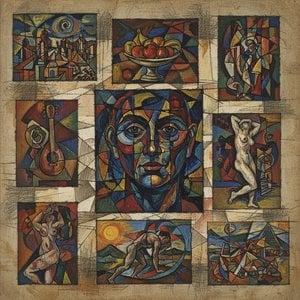
Cubist Expressionism's 10 Defining Masterpieces | Art for Your Home
Explore 10 defining Cubist Expressionism masterpieces by Picasso, Braque & more. Discover the stories behind these bold, geometric paintings and bring museum-quality art to your home with ArtsDot.com. Explore the full collection online.

抽象表現主義を定義する十大傑作:芸術と装飾の深遠な旅
抽象表現主義を定義する10の傑作。ポロック、ロスコら巨匠たちの情熱と色彩の世界へ。各作品に込められた物語と技法を紐解き、至高のアート体験を。ArtsDot.comで、ミュージアムクオリティの複製画や洗練されたインテリアアイデアを発見してください。

ジョン・コンスタブルの傑作25選:英国風景画の巨匠が描く自然と光の詩 | ArtsDot
ジョン・コンスタブルの傑作25選。英国風景画の巨匠が描く自然と光の詩の世界へ。ロマン主義を代表する絵画、デダム・ヴェールやヘイ・ウェインなど、ArtsDotで高品質なアートプリントをお楽しみください。インテリアに深みと感動を。コレクションはこちら。

ジョン・シンガー・サージェント:至高の25選 - 美と光の肖像画の世界 | ArtsDot
ジョン・シンガー・サージェントの至高の25選。肖像画、写実主義、光と影の表現が美しい作品群を紐解きます。マダムXや少女の肖像など、時代を超えて愛される名作をArtsDotで鑑賞。高品質なアート複製で、お部屋に美術館のような空間を。今すぐコレクションをご覧ください。


