

 設置イメージを表示
 シェアする
シェアする シェアする
シェアする
 詳細を見る
詳細を見る ガイドを表示

 ダウンロード
 似ている作品
 X線調査
X線調査 スライドショーを表示
 Q&A
Q&A 統計情報
統計情報Pol

- 55.0 x 76.0 cm


 詳細を表示
詳細を表示
ウェブ上のプレビューを遥かに凌駕する、印刷に最適なファイルをご提供します。当サイトで販売しているすべてのデジタル画像は、弊社のデータベース内にある高解像度のマスターデータ(通常、幅5,000〜15,000ピクセル)から作成されています。そのため、大判印刷や大胆なクロップ、細部まで緻密な再現も、安心してお楽しみいただけます。
当スタジオから送り出される画像は、すべて丁寧に加工されています。デジタルエキスパートが原画と照らし合わせて色調を精査し、必要に応じて補正を行った上で、プロ仕様のリタッチツールを用いて鮮明さと細部を向上させます。その際、アーティストの筆致やスタイルに忠実であることを常に追求しています。その結果、単なるスキャン画像にフィルターをかけたようなものではなく、まるで本物の絵画を見ているかのような仕上がりを実現しています。
仕上がりをご確認いただいてから完了となります。専門スタッフが、ご確認用の画像を72時間以内にメールでお送りいたします。もしご満足いただけない場合は、修正や改善のご要望を承るほか、品質が基準に満たない場合には返金も可能です。
出版社、デザインスタジオ、ギャラリー、そして印刷所から信頼される品質です。
デジタルアート
個人での鑑賞、印刷、クリエイティブなプロジェクトにご利用いただける高解像度ファイルをダウンロードできます。 ( プリント版に切り替え 手描き複製画を注文する)
デジタル画像のご注文に付随する特典
確かな品質による、プロフェッショナルなデジタル配信
ArtsDot.com を選ぶことは、単に画像を手に入れることではありません。プロの手によって精密に仕上げられ、満足保証が付いた高品質なデジタルアートワークを受け取ることを意味します。ご注文いただいた際に自動的に付随する内容は、以下の通りです:

メールですぐにお届け
ご注文から72時間以内に、高解像度のデジタル画像ファイルをメールでお送りいたします。お手元に届き次第、すぐにご利用いただけます。

AI技術で最適化されたデジタルファイル
お客様の作品は、高度なAI技術と専門家による手作業を組み合わせてプロフェッショナルに最適化されており、細部のディテール、鮮明さ、そして正確な色再現性を最大限に引き出しています。

生涯無料の再送サービス
ファイルを誤って削除したり、紛失してしまったりしましたか?ご安心ください。いつでも無料で再送いたします。

輸入手数料は、いつでも一切かかりません
関税や手数料、配送料を気にすることなく、お気に入りのアートワークをすぐにお楽しみいただけます。デジタルダウンロードは常に免税です。

正確な色彩の保証
プロ仕様のツールとカラーマネジメント技術を用いることで、デジタル画像が元の色を最大限に忠実に再現することを保証いたします。

100日間満足保証
ご購入いただいたデジタル画像にご満足いただけない場合は、100日以内であれば、理由を問わず修正または100%の返金対応をさせていただきます。

100% 返金保証
ご満足いただけない場合は、デジタルファイルを受け取ってから100日以内であれば、理由を問わず全額返金いたします。

まとめ買い割引
3枚購入で10%OFF、5枚購入で15%OFF、10枚以上のご購入で20%OFF。クリエイティブなプロジェクトやギャラリー、エージェンシーに最適です。
A Dance of Form and Fluidity
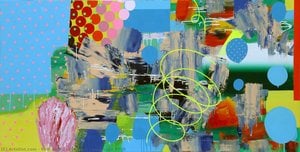
In the mesmerizing realm of Janaina Tschäpe’s "Pol," viewers are invited into a dreamscape where the boundaries between the organic and the abstract dissolve into a rhythmic dance of color. Created in 2012, this piece serves as a profound exploration of movement and metamorphosis, characteristic of Tschäpe’s unique ability to blend aquatic imagery with botanical whispers. The composition is anchored by a striking blue and yellow color scheme, a duality that evokes both the deep, tranquil mysteries of an underwater world and the vibrant, sun-drenched energy of life in bloom. At its heart lies a central, commanding circle, surrounded by a constellation of smaller celestial or cellular forms that seem to drift across the canvas like organisms suspended in a liquid medium.
The painting’s visual language is one of delightful surprise and whimsical complexity. Amidst the swirling geometric shapes and circular motifs, the unexpected presence of two bananas—one nestled near the top left and another drifting toward the bottom right—injects a playful, surrealist element into the work. These organic fragments act as anchors of reality within an otherwise ethereal abstraction, challenging the viewer to find meaning in the intersection of the mundane and the magnificent. This juxtaposition is a hallmark of Tschä-pe’s practice, where she utilizes gestural movement to replicate the mutation and flux found in nature's most hidden corners.
Technique and the Essence of Nature
Tschäpe’s technique in "Pol" reflects her deep-seated fascination with the relationship between the human body and the material world. The application of color suggests a liquid appearance, where edges are not rigid but rather fluid, mimicking the contours of minerals, plants, or even the undulating movement of sea creatures. This sense of "shaping fluid" allows the artwork to breathe, creating an atmosphere that feels less like a static image and more like a captured moment of biological transformation. The interplay between the bold yellows and the deep, immersive blues creates a visual tension that is both soothing and stimulating, making it a centerpiece capable of commanding attention in any sophisticated interior.
For the discerning collector or interior designer, this piece offers much more than mere decoration; it provides an emotional gateway. The artwork resonates with themes of harmony, growth, and the cyclical nature of life. Whether placed in a contemporary gallery setting or used to add a layer of intellectual depth to a residential living space, "Pol" acts as a window into a world of endless possibility. It is a work that rewards prolonged contemplation, inviting one to lose themselves in its circular rhythms and discover the quiet beauty of the abstract metamorphosis occurring right before their eyes.
Q&A
Janaina Tschäpe作「Pol」は、どのような情緒や感情を表現していますか?
Janaina Tschäpe作「Pol」は、全体的なPlayfulなムードの中に、Playfulな感情を伝えています。
Janaina Tschäpe作「Pol」の色味の強さはどの程度ですか?
Janaina Tschäpe作「Pol」は、Balancedな色彩の強さを備えています。
原画「Pol」のサイズはどのくらいですか?
「Pol」の原画のサイズは55 x 76 cmです。原画の寸法は、複製画のサイズをお選びいただく際の参考としてお役立ていただけます。
関連作品




作家略歴
A Universe of Metamorphosis
Janaina Tschäpe exists within a realm where the boundaries between the organic and the abstract dissolve into a rhythmic dance of color and form. Born in Munich, Germany, and raised in São Paulo, Brazil, her identity as a Brazilian/German artist informs a practice that is profoundly interdisciplinary. Her work does not merely sit upon a surface; it breathes, shifting between representation, fantasy, and abstraction to create what can be described as a holistic cosmology. Through painting, drawing, photography, video, and sculpture, Tschäpe invites viewers into dreamscapes where the distinction between the human body, botanical whispers, and aquatic mysteries becomes beautifully blurred.
Her artistic journey is marked by a deep fascination with the concept of metamorphosis. In her early photographic and video works, such as One Hundred Little Deaths, she explored themes of mortality and transformation, often staging herself or models as nebulous, mysterious beings. These creatures, adorned with appendages made from fabric, water-filled latex, or inflatables, inhabit landscapes that serve as narrative sources where the whimsical and the actual coexist. This exploration of the body—often reflecting a feminist resistance to the policing of the female form—allows her to excavate the nature of landscape and the complex interactions between humanity and the natural world.
Technique and the Fluidity of Nature
The visual language of Tschäpe is one of delightful surprise and whimsical complexity. In her paintings, particularly her vibrant watercolors, she captures the transformative properties of water through a meticulous application of media including watercolor, casein, colored pencil, and pastel. Her canvases often possess a liquid appearance, where edges are not rigid but fluid, mimicking the undulating movement of sea creatures or the contours of minerals. This sense of shaping fluid allows her work to evoke both the deep, tranquil mysteries of an underwater world and the sun-drenched energy of life in bloom.
There is a dynamic tension inherent in her compositions: a struggle between loose, luscious forms that pervade the canvas and precise systems of markings that overlay and unify the piece. This technique creates a sensation of movement, where biomorphic shapes function as emotive signifiers of her interior thoughts. Whether she is utilizing saturated colors to suggest growth or incorporating unexpected elements—like the surrealist presence of fruit within an abstract field—her work remains anchored in the exploration of how life transitions and mutates.
Legacy and Global Presence
Since moving to New York in 1997, Tschäpe has established a significant presence in the international art world. Her multidisciplinary oeuvre is not merely a collection of individual pieces but a gesamtkunstwerk—a total work of art—where each creation plays a supporting role in a grand evolutionary opera. Her ability to collapse scale, making the grand cosmos feel as intimate as the infinitesimal cellular level, has earned her recognition in some of the most prestigious institutions globally.
Her profound contributions to contemporary art are reflected in the permanent collections of numerous world-renowned museums, including:
- Centre Pompidou, Paris, France
- Solomon R. Guggenheim Museum, New York
- National Gallery of Art, Washington, D.C.
- Museo Nacional Centro de Arte Reina Sofía, Madrid, Spain
- Harvard Art Museum, Cambridge, Massachusetts
- Moderna Museet, Stockholm, Sweden
- Thyssen-Bornemisza Art Contemporary, Vienna, Austria

Janaina Tschäpe
1973 -