


 設置イメージを確認
 送る
送る シェア
シェア
 詳細情報
詳細情報 ガイドを表示

 画像をダウンロード
 似ている作品
 X線調査
X線調査 スライドショー
 統計情報
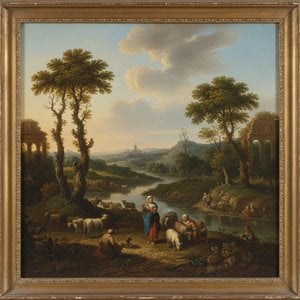
統計情報River Scene
 Oil On Canvas
- WallArt
- Baroque
 1660
1660- Early Modern
 42.0 x 54.0 cm
 ウォールラフ・リヒャルトス美術館
 続きを読む
続きを読む
手描き油彩複製画
当社のアーティストが、お客様のご希望のサイズと額縁に合わせて、キャンバスに手描きで制作する油彩画です。 ( プリント版に切り替え デジタル画像販売へ切り替え)




































作品のオリジナル比率に合わせた、当店の規定サイズからお選びください。

フレームや壁のスペースに合わせて、ご希望の幅と高さを入力してください。本作品は手描きのため、異なる比率のサイズをご希望の場合、絵画の周囲を少し広げて描くか、あるいは端を少しカットして調整することが可能です。お客様のご要望に合わせます。制作を開始する前に、仕上がりを確認するためのデジタルモックアップをお送りいたします。このページに表示されている画像は完成品の実物ではなく、あくまでモックアップによるイメージです。
ご注文後、ArtsDot.com チームより詳細な指示をお送りするとともに、仕上がりイメージ(モックアップ)をご提供いたします。


 ガラスオプションは、110cm未満のサイズでのみご利用いただけます。

River Scene
再現技法
複製画サイズ一覧
-


合計金額
¥ 53447
The Painting's Composition
The scene is dominated by a tranquil river that meanders through the landscape, its calm waters reflecting the surrounding trees and hills. On either side of the river, lush greenery thrives, with trees standing tall and bushes dotting the landscape. The artist has used a palette rich in greens and browns to bring this natural setting to life. In the foreground, several figures are engaged in various activities, adding a sense of scale and life to the otherwise tranquil landscape.Similar Works by Other Artists
Other notable artists have also created stunning river scenes, such as Salomon Van Ruysdael's River with Fishermen, which can be found on ArtsDot.com. Additionally, Claude Lorrain (Claude Gellée)'s Landscape with the Magdalene is another beautiful example of Baroque landscape painting.- The use of light and shadow in River Scene adds dimension to the painting, making the elements appear three-dimensional.
- The artist's skill in capturing nature's beauty and human activity within it is a hallmark of his work.
- Handmade oil paintings reproductions of River Scene can be found on ArtsDot.com, allowing art lovers to own a piece of history.
The beauty and tranquility of River Scene make it a must-see for art lovers, and its availability as a handmade oil painting reproduction on ArtsDot.com makes it accessible to everyone.
よくあるご質問
原画のJan Hackaert作「River Scene」のサイズ(寸法)を教えてください。
「River Scene」の原画のサイズは42 x 54 cmです。原画の寸法は、複製画のサイズを選ぶ際の参考としてお役立ていただけます。
「River Scene」のLandscape形式は、どのような場所に飾るのがおすすめですか?
Jan Hackaert作「River Scene」のLandscape形式は、Living Roomに飾る際におすすめです。作品の形式と空間の調和が、複製画を配置する際の指針となります。
「River Scene」にはどのような感情が込められていますか?
Jan Hackaert作「River Scene」は、Tranquilな情緒を伝えています。
関連作品


アーティストについて
Jan Hackaert: Weaver of Light and Shadow in the Dutch Golden Age
Jan Hackaert, a name perhaps less familiar than those of Rembrandt or Vermeer, nevertheless stands as a significant figure within the vibrant tapestry of the Dutch Golden Age. Born in Amsterdam around 1628 and tragically passing away in 1685, Hackaert’s life was one dedicated to capturing the essence of landscape – not merely depicting scenes, but imbuing them with atmosphere, light, and a subtle, almost mystical quality. His career unfolded across Germany and Switzerland, yet his most enduring legacy lies in the meticulously rendered Italianate landscapes that defined much of his output.
Early biographical details about Hackaert are scarce, shrouded in the typical obscurity that often accompanies artists working during this period. He seems to have embarked on a series of journeys, notably traveling through Switzerland and Germany, likely seeking inspiration and opportunities. It’s within these foreign lands that his distinctive style began to take shape – a synthesis of observation and artistic license. A particularly intriguing anecdote reveals the complexities of his work; accounts suggest he was occasionally met with suspicion by local miners when sketching their operations in the mountains. The workers, understandably perplexed by his detailed renderings, viewed him as either a spy or even a practitioner of dark arts, leading to complaints and highlighting the potential for misinterpretation inherent in representing unfamiliar subjects.
Hackaert’s contribution to the artistic landscape extended beyond individual paintings. He frequently served as a landscape painter for other prominent artists, acting as a crucial collaborator. His skill was particularly valued by Nicolas Berchem and Adriaen van de Velde, who relied on his expertise to create atmospheric backgrounds that elevated their compositions. This role underscores Hackaert’s understanding of composition and color theory – he wasn't simply painting pretty pictures; he was contributing to the overall narrative and emotional impact of larger works.
The Italianate Influence and a Misunderstood Lake
A defining characteristic of Hackaert’s work is his embrace of the Italianate style, which was immensely fashionable during the Dutch Golden Age. This wasn't merely imitation; rather, he skillfully adapted Italian techniques to the Dutch landscape tradition. He masterfully employed light and shadow, creating a sense of depth and drama that mirrored the works of Venetian masters. The influence of the Italian Renaissance is evident in his use of perspective, color palettes, and the depiction of classical ruins or distant mountains – elements frequently incorporated into his compositions.
Interestingly, one particular painting—his depiction of Lake Zurich—became a source of considerable confusion for decades. Due to Hackaert’s adeptness at simulating southern Italian light and atmosphere, the lake was mistakenly identified as an Italian lake for years after its creation. This anecdote serves as a testament to his technical skill and the widespread fascination with Italian landscapes during that era.
Technique and Materials
Hackaert's paintings are characterized by a meticulous attention to detail and a sophisticated understanding of color mixing. He primarily worked in oil on panel, utilizing layering techniques to build up rich textures and luminous effects. His brushwork is often subtle yet remarkably expressive, conveying the feel of wind, water, and sunlight with remarkable precision. Hackaert’s use of glazes—thin layers of translucent paint applied over dried underlayers—allowed him to achieve a remarkable level of depth and luminosity, capturing the fleeting qualities of light in natural settings.
He was known for his ability to render foliage with astonishing realism, creating a sense of immersion within the depicted landscapes. His compositions frequently feature elements such as winding paths, distant hills, and shimmering water surfaces, all rendered with a remarkable degree of accuracy and atmospheric perspective. The integration of figures—often shepherds or hunters—added a human element to these idyllic scenes, further enhancing their appeal.
Legacy and Significance
While Jan Hackaert may not be as widely celebrated as some of his contemporaries, his contributions to the Dutch landscape tradition are undeniable. His paintings offer a captivating glimpse into the beauty of the German and Swiss countryside during the 17th century, imbued with the spirit of the Golden Age. He demonstrated an exceptional ability to capture the essence of light and atmosphere, creating works that continue to resonate with viewers today.
Hackaert’s legacy extends beyond his individual paintings; he played a vital role in shaping the artistic landscape by collaborating with other prominent artists. His work serves as a valuable example of how artists could adapt foreign styles while maintaining their own unique vision. His meticulous approach to detail and atmospheric rendering cemented his place as a skilled and influential figure within the Dutch Golden Age art world.

Jan Hackaert
1628 - 1685 , Netherlands
アーティスト情報
- Artistic Movement Or Style: Dutch Golden Age, Italianate landscapes
- Artists Or Movements Influenced By This Artist: ['Baroque']
- Artists Who Influenced This Artist:
- Nicolas Berchem
- Adriaen van de Velde
- Date Of Birth: 1628
- Date Of Death: 1685
- Full Name: Jan Hackaert
- Nationality: Dutch
- Notable Artworks:
- Hunters in the Woods
- The Avenue of Birches
- Place Of Birth: Amsterdam, Netherlands
関連記事
Nicolaes Berchem: Dutch Golden Age Pastoralism & the Evolution of Landscape Painting
Explore the captivating world of Nicolaes Berchem, a leading Dutch Golden Age painter. Discover his idyllic landscapes, masterful technique & lasting influence on art history. Learn more at ArtsDot.
Cornelis van Poelenburch: Bridging Mannerism & the Dutch Baroque Landscape
Discover Cornelis van Poelenburch, a pivotal Dutch Baroque landscape painter bridging Mannerism & Italianate styles. Explore his life, key works, and lasting influence on 17th-century art with ArtsDot.

Golden Age Reflections: Dutch Baroque Painting & Cultural Innovation
Explore the Dutch Golden Age of painting! Discover key artists like Vermeer & ter Borch, their innovative techniques, and the rich cultural context behind these Baroque masterpieces. Learn about collecting & appreciating this iconic art period.

Dutch Baroque Masters: 10 Paintings That Shaped an Era | ArtsDot
Journey through the Golden Age with our guide to the Top 10 Dutch Baroque masterpieces! Explore iconic paintings by Rembrandt, Vermeer & Frans Hals. Find museum-quality art reproductions and elevate your home decor at ArtsDot.com.

Jan van Goyen: Master of Dutch Landscape & Atmospheric Perspective
Discover Jan van Goyen, the master of Dutch landscape painting. Explore his subtle technique, atmospheric realism & lasting influence on art history. Learn about this 17th-century pioneer at ArtsDot.