


 設置イメージを確認
 送る
送る シェア
シェア
 詳細情報
詳細情報 ガイドを表示

 画像をダウンロード
 似ている作品
 X線調査
X線調査 スライドショー
 統計情報
統計情報Untitled


 続きを読む
続きを読む
このページに掲載されている作品は著作権法によって保護されており、当社の許可なく同一の複製物を制作または販売することは法律で禁じられています。この保護は、以下のような国際条約に基づき執行されます。 ベルヌ条約 および、以下の条項に定められたものを含む各国の法律により、 米国著作権法 第17編。
敬意を払った法的な代替手段として、私たちはオリジナルにインスピレーションを与えられた、カスタムの手描きアートワークを提供しています。私たちの熟練したプロのアーティストは、元の作品が持つスタイル、情緒、そして芸術的なエッセンスを注意深く研究し、独自の創作物でありながら、同じ感性を呼び起こすような、新しくユニークな作品を作り上げます。
この手法は、著作権で保護された作品の複製や複写を伴わないため、著作権法に完全に準拠しています。これは単なる模倣ではなく、創造的な再解釈です。元の作品からインスピレーションを受けつつも、それとは異なる、全く新しい絵画を生み出すものです。
手描き油彩複製画
当社のアーティストが、お客様のご希望のサイズと額縁に合わせて、キャンバスに手描きで制作する油彩画です。 ( プリント版に切り替え デジタル画像販売へ切り替え)




P118B ¥10

P118H ¥10

P118W ¥10

P438Z ¥10

P508JH ¥12

P508YH ¥12

P805H ¥10

P805Z ¥10

P919BZ ¥10

P919G ¥10

P919XJ ¥10

P959ZH ¥10

P968JZ ¥12

W106C ¥8

W218G ¥10

W218JH ¥8

W218Y ¥10

W307PJ ¥10

W316G ¥10

W316PJ ¥8

W316Y ¥10

W398PJ ¥8

W4111J ¥10

W500HY ¥15

W500JH ¥15

W692G ¥12

W849H ¥8

W940BG ¥15

W953PJ ¥8




作品のオリジナル比率に合わせた、当店の規定サイズからお選びください。

フレームや壁のスペースに合わせて、ご希望の幅と高さを入力してください。本作品は手描きのため、異なる比率のサイズをご希望の場合、絵画の周囲を少し広げて描くか、あるいは端を少しカットして調整することが可能です。お客様のご要望に合わせます。制作を開始する前に、仕上がりを確認するためのデジタルモックアップをお送りいたします。このページに表示されている画像は完成品の実物ではなく、あくまでモックアップによるイメージです。
ご注文後、ArtsDot.com チームより詳細な指示をお送りするとともに、仕上がりイメージ(モックアップ)をご提供いたします。


 ガラスオプションは、110cm未満のサイズでのみご利用いただけます。

Untitled
再現技法
複製画サイズ一覧
-


合計金額
¥ 41735
関連作品


アーティストについて
The Architect of Geometric Light: The Life and Legacy of Jacques Villon
Jacques Villon, born Émile Méry Frédéric Gaston Duchamp, was far more than a mere participant in the avant-garde; he was a foundational architect of modern visual language. Born in 1875 in the quiet region of Normandy, his early life was steeped in an artistic lineage that would eventually shape the course of twentieth-century art. As the elder brother to the legendary Marcel Duchamp, the sculptor Raymond Duchamp-Villon, and the painter Suzanne Duchamp-Crotti, Villon emerged from a family where creativity was as much a vocation as a way of life. To distinguish his identity from his siblings, he adopted the pseudonym of the medieval poet François Villon, a choice that hinted at the rebellious, bohemian spirit that would define his journey through the radical art movements of Paris. His early years were characterized by a fascinating tension between tradition and rebellion. While he initially pursued a legal education at the University of Paris, the magnetic pull of Montmartre’s artistic fervor proved irresistible. Before fully committing to the canvas, Villon honed his craft through graphic media, contributing sharp, witty illustrations to Parisian satirical newspapers like Le Couriente français. This period of printmaking was crucial; it instilled in him a profound understanding of line, contrast, and the structural power of black and white—elements that would later become hallmarks of his Cubist explorations. His early influences were diverse, ranging from the meticulous Symbolism of Gustave Moreau to the vibrant energy of the Belle Époque, creating a stylistic foundation that was both intellectually rigorous and visually evocative.The Puteaux Group and the Geometry of Vision
As the twentieth century dawned, Villon became a central figure in one of art history's most transformative movements: Cubism. Moving to the outskirts of Paris, he joined the influential Puteaux Group, a circle of artists including his brother Marcel and the masters Picasso and Braque. Unlike the more fragmented approach of early Analytic Cubism, Villon’s contribution was marked by a unique preoccupation with tonal modulation and mathematical rhythm. He sought to dismantle the physical world into geometric fragments not merely to destroy form, but to reconstruct it through a lens of light and depth. His mastery of technique allowed him to bridge the gap between the tangible and the abstract. In his printmaking, particularly his work with drypoint, he achieved a velvety, atmospheric quality that gave weight to his geometric compositions. He utilized subtle shifts in color intensity and carefully orchestrated tonal gradients to convey a sense of atmosphere that felt almost sculptural. This approach allowed him to explore the intersection of structure and sensation, creating works where the rigid boundaries of Cubist planes seemed to vibrate with an inner light. His ability to balance the intellectual precision of geometry with an emotional, almost ethereal resonance set him apart from his contemporaries.A Lasting Impression on Modernity
The historical significance of Jacques Villon lies in his role as a bridge between eras. He did not merely follow trends; he helped synthesize them. From his early roots in Symbolism to his pivotal role in the birth of Cubism and his eventual explorations into abstract expression, his oeuvre represents a continuous dialogue with the evolution of modern perception. His work serves as a testament to the idea that abstraction need not be devoid of soul, and that geometry can be a vessel for profound atmospheric beauty. Today, Villon is remembered as a master of form and light, an artist whose disciplined approach to composition paved the way for the abstract movements that followed. His legacy is found in every line that seeks to find order within chaos and every shade that attempts to capture the fleeting essence of light. Through his paintings, prints, and drawings, he remains a monumental figure, reminding us that the true power of art lies in its ability to reshape the very way we see the world.
Jacques Villon
1875 - 1963
アーティスト情報
- Artistic Movement Or Style: Cubism
- Artists Or Movements Influenced By This Artist: ['Neo-classical Architecture']
- Artists Who Influenced This Artist:
- Pablo Picasso
- Georges Braque
- Date Of Birth: 1875
- Date Of Death: 1963
- Full Name: Jacques Villon
- Nationality: French
- Notable Artworks:
- Untitled
- Portrait of Jacques Villon
- Gaby
- Place Of Birth: Paris
関連記事

Dark Masterpieces: 10 Iconic Paintings Dominated by Black Tones |
Explore 10 iconic paintings dominated by black tones, from Rembrandt’s chiaroscuro to Goya's dark expressions. Discover the stories behind these masterpieces & find museum-quality art reproductions for your home at .

Monochrome Visions: Exploring the Aesthetic & Historical Significance of Black & White Photography
Explore the rich history & artistic power of black and white photography. From early techniques to iconic masters like Ansel Adams, discover why monochrome continues to captivate art lovers today. Expert insights for collectors.
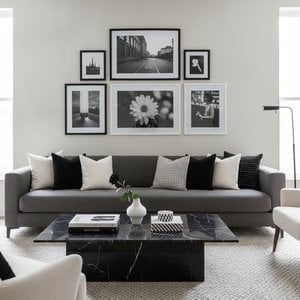
Timeless & Chic: Elevating Your New Home with the Sophistication of Black and White Photography
Transform your new home with the timeless allure of black and white photography. ArtsDot.com specializes in elegant monochrome decor and custom hand-painted wedding portraits that turn cherished milestones into lasting, soulful masterpieces. Elevate your space with ease.
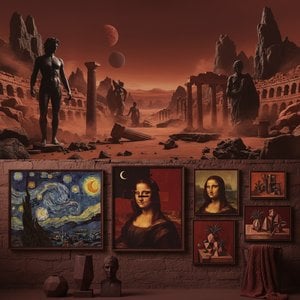
Mars Black Masterpieces: 10 Iconic Paintings & Timeless Art Decor Ideas
Delve into the power of 'Mars Black' with 10 iconic paintings by masters like Rembrandt & Caravaggio. Explore dramatic chiaroscuro, gothic art, and timeless beauty. Find museum-quality reproductions & elevate your home decor on .

White on Canvas: 10 Masterpieces & Timeless Elegance for Your Home Decor
Explore 10 iconic white paintings by Monet, Whistler & Rothko! Discover the stories behind these serene masterpieces and their impact on art history. Find museum-quality reproductions for your home decor at .