


 設置イメージを確認
 送る
送る シェア
シェア
 詳細情報
詳細情報 ガイドを表示

 画像をダウンロード
 似ている作品
 X線調査
X線調査 スライドショー
 統計情報
統計情報ユース グループ
 キャンバスにアクリル絵具
- ウォールアート
- Renaissance Portraiture
 23.0 x 18.0 cm
 ジョージ・イーストマン博物館
 続きを読む
続きを読む
手描き油彩複製画
当社のアーティストが、お客様のご希望のサイズと額縁に合わせて、キャンバスに手描きで制作する油彩画です。 ( プリント版に切り替え デジタル画像販売へ切り替え)




P118B $10

P118H $10

P118W $10

P438Z $10

P508JH $12

P508YH $12

P805H $10

P805Z $10

P919BZ $10

P919G $10

P919XJ $10

P959ZH $10

P968JZ $12

W106C $8

W218G $10

W218JH $8

W218Y $10

W307PJ $10

W316G $10

W316PJ $8

W316Y $10

W398PJ $8

W4111J $10

W500HY $15

W500JH $15

W692G $12

W849H $8

W940BG $15

W953PJ $8




作品のオリジナル比率に合わせた、当店の規定サイズからお選びください。

特定のフレームやスペースに合わせて、ご希望のサイズをご入力いただけます。選択されたサイズが元の画像の比率と異なる場合、アートワークをトリミングするか、手描きで要素を追加して絵画を拡張いたします。デジタルモックアップ を制作し、制作開始前にご確認(承認)をいただきます。
画面上のプレビューは、実際のトリミングや拡張を正確に反映しているものではありません。最終的な構図は、モックアップによってのみ正確にご確認いただけます。
カスタムサイズもご利用いただけますが、元の比率を維持するためには、あらかじめ用意されたリストからサイズを選択することをお勧めいたします。
ご注文後、ArtsDot.com チームより詳細な指示をお送りするとともに、仕上がりイメージ(モックアップ)をご提供いたします。


 ガラスオプションは、110cm未満のサイズでのみご利用いただけます。

ユース グループ
再現技法
複製画サイズ一覧
-


合計金額
$ 263
ユースグループ、ハーレム:ジャコブ・リオンの繊細な色彩と情熱的な表現
この作品は、アメリカ合衆国ニューヨーク州ハーレムで撮影された黒白写真です。複数の少年たちが建物の前にある階段に立ち並び、一部はスカウト隊員として衣装を着ています。彼らは全員同じように立ち並び、左から右へ伸びる線を描いています。階段の近くにはベンチがあり、左端には椅子があります。少年たちはきちんとした服装をしており、この特別な機会を誇らしげに表現しています。この写真は、アメリカン・スクールバンドの活動の一環として撮影されたものであり、当時のハーレム社会における子供たちの日常を描いています。- アーティスト: ジャコブ・リオン
- 生誕年: 1586年
- 没年: 1648年
- 生誕都市: アムステルダム
- 生誕国: オランダ
関連作品


アーティストについて
Lucas Cranach the Younger: A Master of Renaissance Portraiture and Religious Drama
Born in Eisleben, Saxony, around 1506 and tragically dying in Wittenberg in 1586, Lucas Cranach the Younger stands as a pivotal figure in the German Renaissance. Often overshadowed by his more famous father, Lucas Cranach the Elder, he nonetheless forged a distinctive artistic path, becoming renowned for his captivating portraits, dramatic religious scenes, and significant contributions to the visual culture of his time. His legacy rests not just on technical skill but also on his astute understanding of humanist ideals and his ability to capture the complexities of human emotion within the framework of both secular and sacred subjects.
Cranach’s early artistic development was deeply influenced by his father, a leading painter in Leipzig and later Wittenberg. However, Lucas the Younger quickly established his own style, characterized by a vibrant palette, dynamic compositions, and an unparalleled ability to imbue his figures with psychological depth. Unlike the more austere Mannerism prevalent elsewhere in Europe at the time, Cranach’s work retained a strong connection to the naturalism of the High Renaissance, particularly drawing inspiration from Italian masters like Leonardo da Vinci and Raphael. This influence is evident in his meticulous attention to detail, his skillful use of light and shadow, and his graceful rendering of human forms.
His career unfolded against the backdrop of a rapidly changing Germany, marked by religious upheaval and political intrigue. Wittenberg, where he spent most of his life, was the seat of Martin Luther’s Reformation, and Cranach found himself deeply involved in the theological debates of the era. He became a staunch supporter of the Reformation, providing portraits for prominent reformers like Luther himself and producing numerous prints that disseminated Protestant ideas throughout Germany. These prints – often featuring biblical scenes or allegorical representations of religious concepts – were crucial tools in shaping public opinion and solidifying the new religious order.
The Portraitist: Capturing Character and Power
While Cranach’s religious works are undeniably significant, he is perhaps best remembered for his remarkably astute and psychologically penetrating portraits. He possessed a rare gift for capturing not just physical likeness but also the character, personality, and social standing of his subjects. His portraits of figures like Martin Luther, Philip Melanchthon, Erasmus, and numerous members of the Saxon court are considered masterpieces of Renaissance portraiture. These works demonstrate an extraordinary ability to convey inner thoughts and emotions through subtle gestures, facial expressions, and carefully chosen attire.
Cranach’s approach to portraiture was deeply informed by humanist ideals, which emphasized the importance of individual identity and self-expression. He frequently employed innovative compositional techniques – such as asymmetrical arrangements and dynamic diagonals – to create a sense of movement and vitality within his portraits. Furthermore, he skillfully integrated symbolic elements into his paintings, using clothing, objects, and settings to communicate hidden meanings and allude to the subject’s virtues or vices.
His portraiture wasn't limited to religious figures; he also painted numerous secular subjects, including nobility, merchants, and artists. These portraits offer a fascinating glimpse into the social and cultural life of 16th-century Germany, revealing the ambitions, anxieties, and aspirations of individuals from all walks of life.
Religious Drama: Myth, Allegory, and Biblical Narrative
Beyond his portraiture, Cranach’s religious paintings are characterized by their dramatic intensity and masterful use of color. He frequently depicted scenes from the Bible, the lives of saints, and allegorical representations of Christian virtues and vices. These works were not merely decorative; they served as powerful visual sermons, designed to educate and inspire viewers. His depictions of the Passion of Christ, for example, are particularly moving in their emotional intensity and psychological realism.
Cranach’s religious paintings often drew upon classical mythology and medieval iconography, blending these traditions with his own distinctive artistic style. He frequently employed allegorical figures – such as Justice, Faith, and Charity – to convey complex theological concepts. His use of vibrant colors, dynamic compositions, and expressive gestures created a sense of immediacy and drama that captivated audiences.
Notable works in this category include his series of paintings depicting the *Life of St. Elizabeth*, commissioned by the Wittenberg town council, which showcases his ability to combine religious piety with humanist ideals. His depictions of the *Martyrdom of St. Catherine* and *St. Sebastian* are also considered highlights of his oeuvre.
Legacy and Influence
Lucas Cranach the Younger’s influence on subsequent generations of German artists was profound. His dynamic compositions, vibrant color palettes, and psychological realism set a new standard for portraiture and religious painting in Germany. He mentored numerous students, including Lucas Fernau and Christoph Brand, who went on to become accomplished artists in their own right.
His work continues to be studied and admired by art historians and scholars today. Cranach’s paintings offer a valuable window into the cultural and intellectual life of 16th-century Germany, reflecting the complex interplay between religious reform, humanist ideals, and artistic innovation. He remains a vital figure in the history of German Renaissance art, celebrated for his technical skill, his psychological insight, and his enduring contribution to the visual language of the era.

jacob lyon
1586 - 1648 , Netherlands
アーティスト情報
- Artistic Movement Or Style: Genre, village scenes
- Artists Or Movements Influenced By This Artist: ['Flemish landscape painting']
- Artists Who Influenced This Artist:
- Esaias van de Velde
- Pieter Brueghel the Elder
- Pieter Brueghel the Younger
- David Vinckboons
- Date Of Birth: c. 1586
- Date Of Death: 1666
- Full Name: Joost Cornelisz Droochsloot
- Nationality: Dutch
- Notable Artworks:
- Village street scene
- Moral allegories
- Biblical stories
- Place Of Birth: Badajoz, Spain
関連記事

Monochrome Visions: Exploring the Aesthetic & Historical Significance of Black & White Photography
Explore the rich history & artistic power of black and white photography. From early techniques to iconic masters like Ansel Adams, discover why monochrome continues to captivate art lovers today. Expert insights for collectors.

Dark Masterpieces: 10 Iconic Paintings Dominated by Black Tones |
Explore 10 iconic paintings dominated by black tones, from Rembrandt’s chiaroscuro to Goya's dark expressions. Discover the stories behind these masterpieces & find museum-quality art reproductions for your home at .

Documentary Photography's Defining Moments: 10 Masterpieces for Your Home |
Explore 10 defining documentary photography masterpieces – from Dorothea Lange to Robert Capa. Discover powerful stories, iconic images & timeless art for your home. Museum-quality prints at .
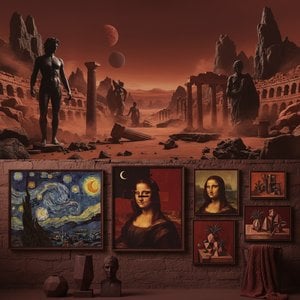
Mars Black Masterpieces: 10 Iconic Paintings & Timeless Art Decor Ideas
Delve into the power of 'Mars Black' with 10 iconic paintings by masters like Rembrandt & Caravaggio. Explore dramatic chiaroscuro, gothic art, and timeless beauty. Find museum-quality reproductions & elevate your home decor on .

Aaron Siskind: Deconstructing Reality – A Photographic Exploration of Texture, Form & the Abstract Landscape
Explore the transformative journey of Aaron Siskind, from social realism to pioneering abstract photography. Discover his iconic series & lasting influence on modern art. A guide for collectors.
